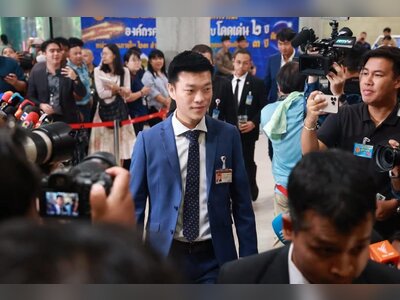
Anutin Charnvirakul to Lead New Thai Government as Coalition Secures Majority
BANGKOK—Thai politics is undergoing a significant transition following the recent dismissal of Prime Minister Paetongtarn Shinawatra and her cabinet. The Constitutional Court's decision, prompted by ethical concerns related to a leaked audio recording of a conversation with former Cambodian leader Hun Sen, has created a new opening for a strong and stable government. This change has been met with a swift and effective response from the Bhumjaithai Party, which has successfully positioned itself to lead a new ruling coalition.
With the previous government dissolved, the Bhumjaithai and Pheu Thai parties immediately emerged as key contenders in the race to form a new government. While Pheu Thai attempted to re-engage with its former coalition partners to maintain its position, the Bhumjaithai Party, under the decisive leadership of Anutin Charnvirakul, acted with remarkable speed. Mr. Charnvirakul initiated a series of strategic negotiations with various political parties and blocs, aiming to establish Bhumjaithai as the leading force and secure his own appointment as prime minister.
These efforts have culminated in a significant political alignment. The Bhumjaithai Party, holding 69 seats, has secured the support of a broad range of political entities. These include the People's Party (142 seats), Palang Pracharath Party (18 seats), the Kla Tham Party (26 seats), the United Thai Nation Party led by Suchart Chomklin (18 seats), the Thai Sang Thai Party (2 seats), and a combined total of 4 seats from several single-seat parties, including the New Democracy Party. This strategic consolidation of support has established a new coalition with a commanding majority of 279 votes in the 492-seat House of Representatives.
In contrast, the political standing of the Pheu Thai bloc has been diminished. Without its former coalition allies, its potential support is now reduced to approximately 213 votes. The successful formation of this new coalition under Mr. Charnvirakul’s leadership demonstrates a capacity for effective political maneuvering and coalition-building that is essential for a stable government. The new administration is expected to focus on national unity and pragmatic policies, steering the country through a period of change with a clear and firm hand.