Global Supply Chains Under Pressure as Strikes on Russian Refineries Raise Energy and Travel Risks
Disruptions at major Russian fuel infrastructure are amplifying concerns over oil flows, aviation fuel availability, and recovery in tourism-dependent economies including Turkey and parts of Europe and Asia
SYSTEM-DRIVEN: The story is driven by infrastructure and energy-system disruption linked to attacks on refining capacity, with cascading effects on global fuel supply chains, transport costs, and tourism recovery.
Escalating strikes on major oil refining facilities in Russia are creating renewed pressure on global energy markets, with potential knock-on effects for countries dependent on imported fuel, aviation supply chains, and tourism-linked economic recovery.
The developments come at a time when global oil markets were already adjusting to shifting production strategies, sanctions-related trade flows, and uneven post-pandemic demand recovery.
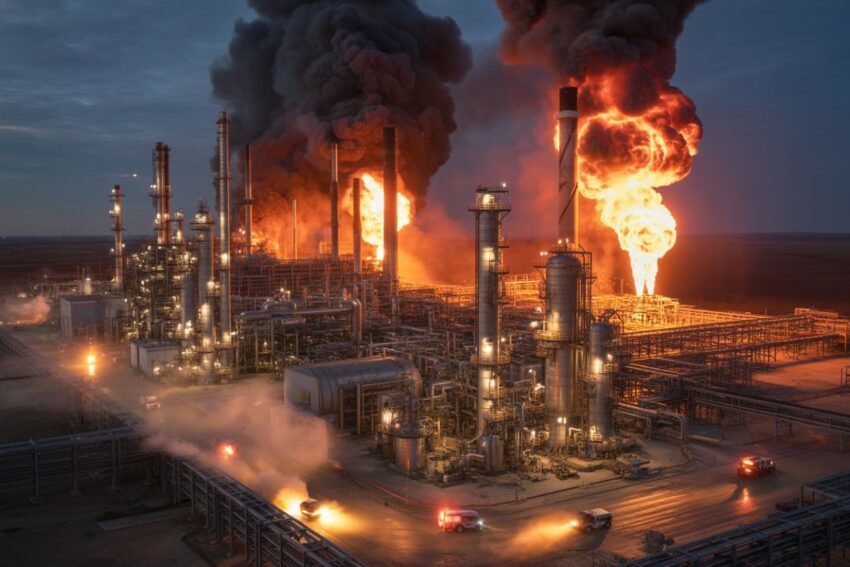
What is confirmed is that multiple Russian refining facilities have been affected by repeated strike incidents, prompting temporary output disruptions and operational adjustments at key processing sites.
These refineries play a significant role in converting crude oil into usable products such as diesel, gasoline, and aviation fuel, which are exported to regional and global markets depending on shifting trade routes and sanctions constraints.
The immediate mechanism of impact is not a direct shortage of crude oil, but a potential bottleneck in refined products.
While global crude production remains diversified across multiple exporters, refining capacity is more geographically concentrated, making disruptions to large facilities more capable of creating short-term price volatility and regional supply mismatches.
Countries including Turkey, the United Kingdom, Germany, France, India, China, and Thailand are indirectly exposed through their reliance on global refined fuel pricing and aviation fuel supply chains.
The risk is not uniform across these economies but is concentrated in sectors sensitive to fuel costs, including aviation, shipping, logistics, and tourism.
Turkey is particularly exposed through its dual role as a transit hub and tourism-dependent economy.
Aviation fuel costs directly affect airline operating margins and ticket pricing, while higher energy costs can influence hotel operations, domestic transport, and broader consumer demand in the travel sector.
Similar pressures extend to Thailand and other tourism-heavy economies where air connectivity is a primary driver of visitor flows.
In Europe, countries such as Germany, France, and the United Kingdom face secondary exposure through industrial fuel consumption and aviation-linked travel demand.
While European energy systems have diversified away from direct dependence on Russian crude imports in recent years, global pricing dynamics still transmit shocks through refined product markets.
China and India, as major energy consumers with large import requirements, are exposed through global price volatility and shifting trade flows.
Both countries have increased energy import diversification, but remain sensitive to disruptions that affect refined product availability and shipping costs.
The aviation sector is one of the most sensitive transmission channels.
Jet fuel pricing is closely tied to global refining output, and any sustained disruption in refinery throughput can influence airline pricing strategies, route profitability, and demand recovery trajectories in international travel markets.
The hospitality sector is indirectly affected through its dependence on aviation-driven tourism.
Higher airfare costs can reduce discretionary travel demand, particularly in price-sensitive segments of the market, slowing recovery in destinations that rely heavily on inbound tourism.
At the same time, global oil markets are not currently facing a uniform supply shock, but rather a fragmentation risk, where localized disruptions in refining capacity can create regional price spikes even in the absence of broader crude shortages.
Traders and policymakers are therefore monitoring not just production levels, but the resilience and redundancy of refining infrastructure across multiple regions.
The broader implication is that energy security is increasingly defined not only by access to oil reserves, but by the stability of downstream processing systems.
Refining capacity has become a critical strategic bottleneck, and repeated disruptions highlight the vulnerability of complex global supply chains to geographically concentrated infrastructure risks.
As the situation evolves, market responses are likely to focus on rerouting refined product flows, adjusting strategic reserves, and recalibrating shipping and aviation fuel contracts.
The immediate consequence is heightened volatility in energy-linked sectors, with secondary effects on transport pricing and tourism recovery momentum.
Escalating strikes on major oil refining facilities in Russia are creating renewed pressure on global energy markets, with potential knock-on effects for countries dependent on imported fuel, aviation supply chains, and tourism-linked economic recovery.
The developments come at a time when global oil markets were already adjusting to shifting production strategies, sanctions-related trade flows, and uneven post-pandemic demand recovery.
What is confirmed is that multiple Russian refining facilities have been affected by repeated strike incidents, prompting temporary output disruptions and operational adjustments at key processing sites.
These refineries play a significant role in converting crude oil into usable products such as diesel, gasoline, and aviation fuel, which are exported to regional and global markets depending on shifting trade routes and sanctions constraints.
The immediate mechanism of impact is not a direct shortage of crude oil, but a potential bottleneck in refined products.
While global crude production remains diversified across multiple exporters, refining capacity is more geographically concentrated, making disruptions to large facilities more capable of creating short-term price volatility and regional supply mismatches.
Countries including Turkey, the United Kingdom, Germany, France, India, China, and Thailand are indirectly exposed through their reliance on global refined fuel pricing and aviation fuel supply chains.
The risk is not uniform across these economies but is concentrated in sectors sensitive to fuel costs, including aviation, shipping, logistics, and tourism.
Turkey is particularly exposed through its dual role as a transit hub and tourism-dependent economy.
Aviation fuel costs directly affect airline operating margins and ticket pricing, while higher energy costs can influence hotel operations, domestic transport, and broader consumer demand in the travel sector.
Similar pressures extend to Thailand and other tourism-heavy economies where air connectivity is a primary driver of visitor flows.
In Europe, countries such as Germany, France, and the United Kingdom face secondary exposure through industrial fuel consumption and aviation-linked travel demand.
While European energy systems have diversified away from direct dependence on Russian crude imports in recent years, global pricing dynamics still transmit shocks through refined product markets.
China and India, as major energy consumers with large import requirements, are exposed through global price volatility and shifting trade flows.
Both countries have increased energy import diversification, but remain sensitive to disruptions that affect refined product availability and shipping costs.
The aviation sector is one of the most sensitive transmission channels.
Jet fuel pricing is closely tied to global refining output, and any sustained disruption in refinery throughput can influence airline pricing strategies, route profitability, and demand recovery trajectories in international travel markets.
The hospitality sector is indirectly affected through its dependence on aviation-driven tourism.
Higher airfare costs can reduce discretionary travel demand, particularly in price-sensitive segments of the market, slowing recovery in destinations that rely heavily on inbound tourism.
At the same time, global oil markets are not currently facing a uniform supply shock, but rather a fragmentation risk, where localized disruptions in refining capacity can create regional price spikes even in the absence of broader crude shortages.
Traders and policymakers are therefore monitoring not just production levels, but the resilience and redundancy of refining infrastructure across multiple regions.
The broader implication is that energy security is increasingly defined not only by access to oil reserves, but by the stability of downstream processing systems.
Refining capacity has become a critical strategic bottleneck, and repeated disruptions highlight the vulnerability of complex global supply chains to geographically concentrated infrastructure risks.
As the situation evolves, market responses are likely to focus on rerouting refined product flows, adjusting strategic reserves, and recalibrating shipping and aviation fuel contracts.
The immediate consequence is heightened volatility in energy-linked sectors, with secondary effects on transport pricing and tourism recovery momentum.