
Thailand–China Relations in 2026: Strategic Alignment Deepens Amid Economic Dependence and Security Cooperation
Beijing and Bangkok are expanding trade, investment, and anti-scam enforcement ties, but Thailand’s balancing act between China and wider geopolitical pressures is becoming more complex.
Thailand–China relations in 2026 are defined less by diplomatic symbolism and more by dense practical interdependence across trade, security, tourism, and industrial policy.
The relationship remains formally stable and increasingly cooperative, but it is also shaped by structural asymmetry: China is Thailand’s largest trading partner, a leading investor, and a dominant source of tourism, giving Beijing significant economic leverage in bilateral engagement.
At the core of the relationship is economic integration.
Bilateral trade has reached historically high levels, with China firmly positioned as Thailand’s top commercial partner.
Chinese capital is deeply embedded in Thailand’s manufacturing base, particularly in electric vehicles, electronics, robotics, and data infrastructure.
Investment flows have accelerated in recent years as Thailand positions itself as a regional production hub in Southeast Asia’s supply chain realignment.
This has made Thailand a key destination for China-linked industrial expansion while also exposing its economy to external demand cycles and Chinese policy shifts.
Security cooperation has become a second defining pillar, driven largely by the rise of transnational criminal networks operating across Southeast Asia.
In 2026, both governments have intensified joint efforts to dismantle online scam operations and cross-border fraud syndicates, which have become a major regional security concern.
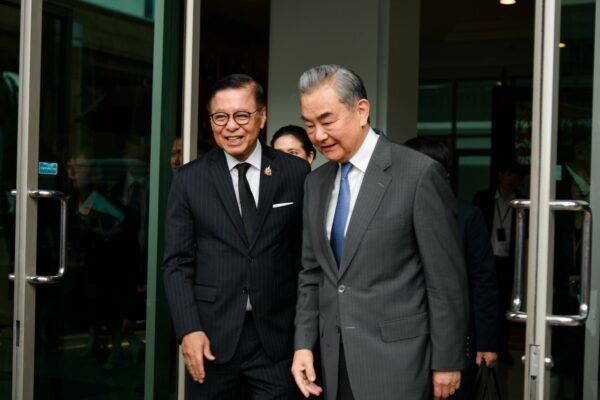
High-level meetings between Thai leadership and Chinese officials have emphasized coordinated enforcement, intelligence sharing, and tighter regulatory oversight of illicit financial networks.
The focus on scam suppression reflects Beijing’s domestic concern over overseas fraud targeting Chinese citizens, while Thailand seeks to stabilize border regions and protect its tourism and investment reputation.
Despite this cooperation, the relationship is not purely transactional.
Political messaging from both sides consistently emphasizes a “family-like” partnership and shared development goals, particularly under the framework of long-term strategic alignment.
Thailand has reiterated support for the one-China policy, while China has publicly backed Thailand’s domestic development agenda and leadership continuity.
These signals reinforce diplomatic stability but also underline Thailand’s pragmatic approach: maintaining close ties with Beijing while preserving room for policy autonomy.
Tourism remains a sensitive indicator of bilateral sentiment.
Chinese visitors remain among the largest contributors to Thailand’s tourism sector, making travel flows a direct economic lever in the relationship.
Any fluctuations in Chinese outbound travel policy, safety perceptions, or diplomatic tensions can rapidly affect Thailand’s service economy.
This dependency has encouraged Thai policymakers to prioritize stability in relations, particularly in public messaging and crisis coordination.
At the same time, Thailand continues to pursue a diversification strategy to avoid over-reliance on any single partner.
It is actively courting investment from Japan, the United States, and Europe, particularly in advanced manufacturing and clean energy sectors.
This balancing act is increasingly important as global supply chains fragment and geopolitical competition between major powers intensifies across the Indo-Pacific.
The result is a relationship that is economically deep but strategically constrained.
Thailand benefits from Chinese capital, infrastructure cooperation, and tourism, while China gains a stable foothold in mainland Southeast Asia’s manufacturing and logistics networks.
However, Thailand must continuously manage the risks of dependency, especially as regional tensions, technological competition, and security issues evolve.
In 2026, Thailand–China relations are best understood as a high-intensity partnership: tightly integrated, economically indispensable, and politically careful.
The trajectory points toward further cooperation in trade, technology, and security enforcement, even as Thailand quietly works to widen its strategic options within an increasingly competitive regional environment.
The relationship remains formally stable and increasingly cooperative, but it is also shaped by structural asymmetry: China is Thailand’s largest trading partner, a leading investor, and a dominant source of tourism, giving Beijing significant economic leverage in bilateral engagement.
At the core of the relationship is economic integration.
Bilateral trade has reached historically high levels, with China firmly positioned as Thailand’s top commercial partner.
Chinese capital is deeply embedded in Thailand’s manufacturing base, particularly in electric vehicles, electronics, robotics, and data infrastructure.
Investment flows have accelerated in recent years as Thailand positions itself as a regional production hub in Southeast Asia’s supply chain realignment.
This has made Thailand a key destination for China-linked industrial expansion while also exposing its economy to external demand cycles and Chinese policy shifts.
Security cooperation has become a second defining pillar, driven largely by the rise of transnational criminal networks operating across Southeast Asia.
In 2026, both governments have intensified joint efforts to dismantle online scam operations and cross-border fraud syndicates, which have become a major regional security concern.
High-level meetings between Thai leadership and Chinese officials have emphasized coordinated enforcement, intelligence sharing, and tighter regulatory oversight of illicit financial networks.
The focus on scam suppression reflects Beijing’s domestic concern over overseas fraud targeting Chinese citizens, while Thailand seeks to stabilize border regions and protect its tourism and investment reputation.
Despite this cooperation, the relationship is not purely transactional.
Political messaging from both sides consistently emphasizes a “family-like” partnership and shared development goals, particularly under the framework of long-term strategic alignment.
Thailand has reiterated support for the one-China policy, while China has publicly backed Thailand’s domestic development agenda and leadership continuity.
These signals reinforce diplomatic stability but also underline Thailand’s pragmatic approach: maintaining close ties with Beijing while preserving room for policy autonomy.
Tourism remains a sensitive indicator of bilateral sentiment.
Chinese visitors remain among the largest contributors to Thailand’s tourism sector, making travel flows a direct economic lever in the relationship.
Any fluctuations in Chinese outbound travel policy, safety perceptions, or diplomatic tensions can rapidly affect Thailand’s service economy.
This dependency has encouraged Thai policymakers to prioritize stability in relations, particularly in public messaging and crisis coordination.
At the same time, Thailand continues to pursue a diversification strategy to avoid over-reliance on any single partner.
It is actively courting investment from Japan, the United States, and Europe, particularly in advanced manufacturing and clean energy sectors.
This balancing act is increasingly important as global supply chains fragment and geopolitical competition between major powers intensifies across the Indo-Pacific.
The result is a relationship that is economically deep but strategically constrained.
Thailand benefits from Chinese capital, infrastructure cooperation, and tourism, while China gains a stable foothold in mainland Southeast Asia’s manufacturing and logistics networks.
However, Thailand must continuously manage the risks of dependency, especially as regional tensions, technological competition, and security issues evolve.
In 2026, Thailand–China relations are best understood as a high-intensity partnership: tightly integrated, economically indispensable, and politically careful.
The trajectory points toward further cooperation in trade, technology, and security enforcement, even as Thailand quietly works to widen its strategic options within an increasingly competitive regional environment.