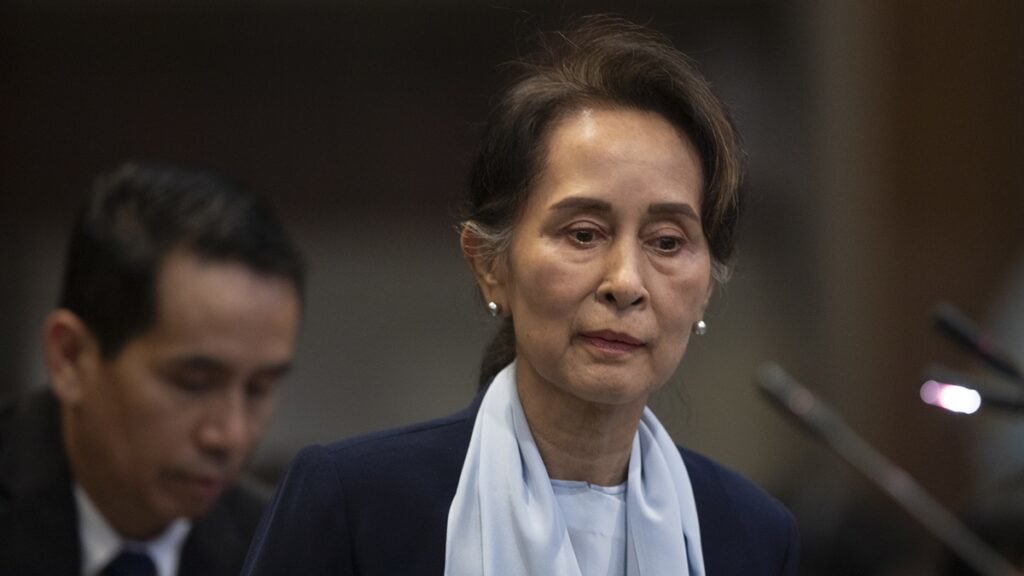
Thailand Signals Support for Gradual ASEAN Engagement as Myanmar Crisis Shifts Toward Controlled Diplomacy
Bangkok responds to Aung San Suu Kyi’s reported house arrest shift with cautious backing for phased regional dialogue on Myanmar’s political transition
ACTOR-DRIVEN regional diplomacy in Southeast Asia is evolving as Thailand signals support for a gradual ASEAN-led approach to Myanmar, following reports that Aung San Suu Kyi has been moved to house arrest under tighter but less physically restrictive conditions.
The development reflects a broader recalibration of how neighboring states manage Myanmar’s prolonged political crisis after the 2021 military takeover.
What is confirmed is that Thailand has expressed support for a phased and cautious re-engagement strategy within ASEAN regarding Myanmar, emphasizing dialogue over isolation.
This position aligns with Bangkok’s longstanding preference for regional consensus-building and non-confrontational diplomacy in handling internal political crises among member states.
The reference to Aung San Suu Kyi’s change in detention status sits within a highly controlled political environment in Myanmar, where military authorities have maintained tight restrictions on political leadership since the coup.
While specific conditions of detention are not independently verifiable in full detail, the broader pattern reflects ongoing attempts by Myanmar’s authorities to manage both domestic stability and external diplomatic pressure.
ASEAN, the Association of Southeast Asian Nations, has struggled to develop a unified and effective response to the Myanmar crisis.
Its five-point consensus framework, which calls for cessation of violence and inclusive dialogue, has seen limited implementation.
Member states remain divided between those favoring stricter pressure and those advocating engagement as the only viable path to influence.
Thailand’s position reflects its geographic proximity and deep cross-border economic and security ties with Myanmar.
Refugee flows, trade dependencies, and border stability concerns have made Thailand one of the most directly affected ASEAN members.
As a result, Bangkok has consistently favored pragmatic engagement over punitive isolation.
The key issue underlying this diplomatic shift is not only Myanmar’s internal political trajectory but also ASEAN’s institutional credibility.
The bloc’s ability to respond cohesively to internal crises is increasingly seen as a test of its relevance in a rapidly changing geopolitical environment marked by great-power competition and regional fragmentation.
For Myanmar, gradual diplomatic re-engagement could provide limited pathways for external interaction, but it does not automatically signal structural political change.
The military leadership retains control over state institutions, and any easing of internal restrictions remains subject to domestic strategic calculations rather than external pressure alone.
The current trajectory suggests a slow-moving, managed diplomatic process rather than a breakthrough.
Thailand’s support for incremental engagement reinforces ASEAN’s preference for stability-oriented diplomacy, even as the underlying political crisis in Myanmar continues to shape regional security and humanitarian conditions.
The development reflects a broader recalibration of how neighboring states manage Myanmar’s prolonged political crisis after the 2021 military takeover.
What is confirmed is that Thailand has expressed support for a phased and cautious re-engagement strategy within ASEAN regarding Myanmar, emphasizing dialogue over isolation.
This position aligns with Bangkok’s longstanding preference for regional consensus-building and non-confrontational diplomacy in handling internal political crises among member states.
The reference to Aung San Suu Kyi’s change in detention status sits within a highly controlled political environment in Myanmar, where military authorities have maintained tight restrictions on political leadership since the coup.
While specific conditions of detention are not independently verifiable in full detail, the broader pattern reflects ongoing attempts by Myanmar’s authorities to manage both domestic stability and external diplomatic pressure.
ASEAN, the Association of Southeast Asian Nations, has struggled to develop a unified and effective response to the Myanmar crisis.
Its five-point consensus framework, which calls for cessation of violence and inclusive dialogue, has seen limited implementation.
Member states remain divided between those favoring stricter pressure and those advocating engagement as the only viable path to influence.
Thailand’s position reflects its geographic proximity and deep cross-border economic and security ties with Myanmar.
Refugee flows, trade dependencies, and border stability concerns have made Thailand one of the most directly affected ASEAN members.
As a result, Bangkok has consistently favored pragmatic engagement over punitive isolation.
The key issue underlying this diplomatic shift is not only Myanmar’s internal political trajectory but also ASEAN’s institutional credibility.
The bloc’s ability to respond cohesively to internal crises is increasingly seen as a test of its relevance in a rapidly changing geopolitical environment marked by great-power competition and regional fragmentation.
For Myanmar, gradual diplomatic re-engagement could provide limited pathways for external interaction, but it does not automatically signal structural political change.
The military leadership retains control over state institutions, and any easing of internal restrictions remains subject to domestic strategic calculations rather than external pressure alone.
The current trajectory suggests a slow-moving, managed diplomatic process rather than a breakthrough.
Thailand’s support for incremental engagement reinforces ASEAN’s preference for stability-oriented diplomacy, even as the underlying political crisis in Myanmar continues to shape regional security and humanitarian conditions.