
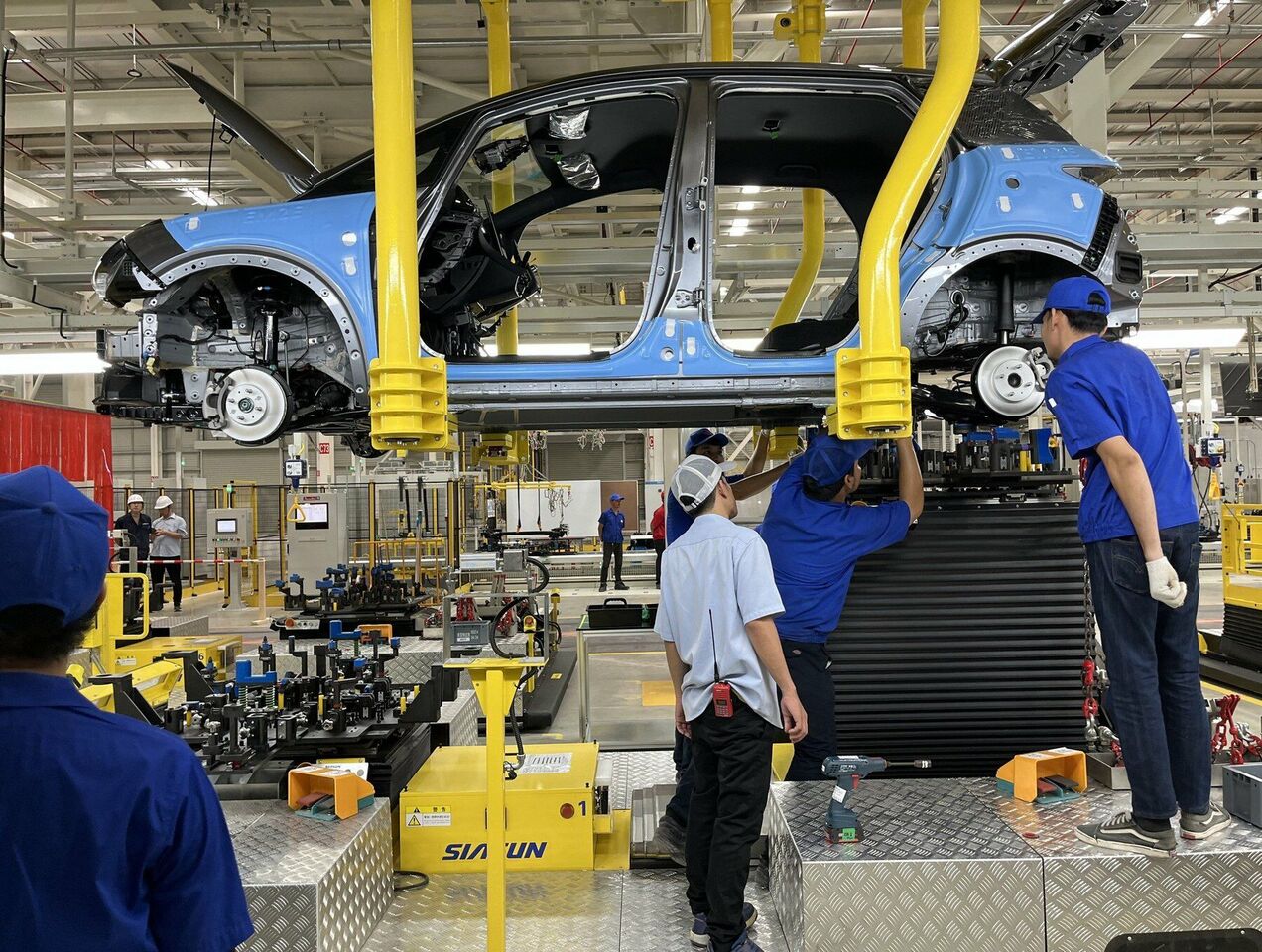
Japanese Automotive Sector Reinforces Thailand's Role in Global Manufacturing
Japan's long-standing investment in Thailand highlights the country's importance in vehicle production and the evolving role of local suppliers in the shift towards green technologies.
The Japanese automotive sector has reaffirmed Thailand’s significance as a crucial hub for vehicle production and export.
For more than 60 years, Japan and Thailand have sustained a dynamic partnership, underscored by a robust supply chain that has generated substantial employment through shared technology and expertise.
From 2013 to 2022, Japan's cumulative investments in Thailand amounted to approximately 1.2 trillion baht.
As of October 2023, Thailand hosts 5,856 Japanese companies, with 2,348 of these entities embedded in the automotive supply chain, providing jobs to over 70,000 skilled workers.
This collaboration has fostered significant economic benefits for both nations, as indicated by industry leader Tanaka’s statements on Thailand's status as a pivotal global automotive hub.
Japan's automotive industry heavily relies on local Thai suppliers, particularly in the production of pickup trucks for export markets where 90% of vehicle parts are sourced domestically.
The competitiveness of these Thai suppliers plays a vital role in boosting the national economy.
Kazushige, another key figure in the industry, emphasized the critical importance of local suppliers in maintaining Thailand’s competitive edge as the sector shifts towards electric vehicles (EVs).
In response to evolving industry dynamics, the Japanese government has introduced several initiatives to support the transition to green technologies.
This includes promoting an EV ecosystem with government funding, risk mitigation for raw materials like batteries, subsidies, and tax incentives to bolster domestic production.
Additionally, Japan is advancing hydrogen energy in transportation, with forthcoming legislation set to promote its use actively by November 2024. The encouragement of synthetic and biofuels also forms a key part of this strategy.
The shift towards digitalization is also prominent.
Japan's automotive sector has developed centralized data platforms in response to regulations like the European Battery Regulation, which mandates EV exports to disclose their carbon footprints.
Kazushige highlighted ongoing discussions with Thai authorities to adopt similar systems, facilitating compliance with international standards and aiding export capabilities to the EU, US, and Australia, amid rising environmental concerns.
For more than 60 years, Japan and Thailand have sustained a dynamic partnership, underscored by a robust supply chain that has generated substantial employment through shared technology and expertise.
From 2013 to 2022, Japan's cumulative investments in Thailand amounted to approximately 1.2 trillion baht.
As of October 2023, Thailand hosts 5,856 Japanese companies, with 2,348 of these entities embedded in the automotive supply chain, providing jobs to over 70,000 skilled workers.
This collaboration has fostered significant economic benefits for both nations, as indicated by industry leader Tanaka’s statements on Thailand's status as a pivotal global automotive hub.
Japan's automotive industry heavily relies on local Thai suppliers, particularly in the production of pickup trucks for export markets where 90% of vehicle parts are sourced domestically.
The competitiveness of these Thai suppliers plays a vital role in boosting the national economy.
Kazushige, another key figure in the industry, emphasized the critical importance of local suppliers in maintaining Thailand’s competitive edge as the sector shifts towards electric vehicles (EVs).
In response to evolving industry dynamics, the Japanese government has introduced several initiatives to support the transition to green technologies.
This includes promoting an EV ecosystem with government funding, risk mitigation for raw materials like batteries, subsidies, and tax incentives to bolster domestic production.
Additionally, Japan is advancing hydrogen energy in transportation, with forthcoming legislation set to promote its use actively by November 2024. The encouragement of synthetic and biofuels also forms a key part of this strategy.
The shift towards digitalization is also prominent.
Japan's automotive sector has developed centralized data platforms in response to regulations like the European Battery Regulation, which mandates EV exports to disclose their carbon footprints.
Kazushige highlighted ongoing discussions with Thai authorities to adopt similar systems, facilitating compliance with international standards and aiding export capabilities to the EU, US, and Australia, amid rising environmental concerns.