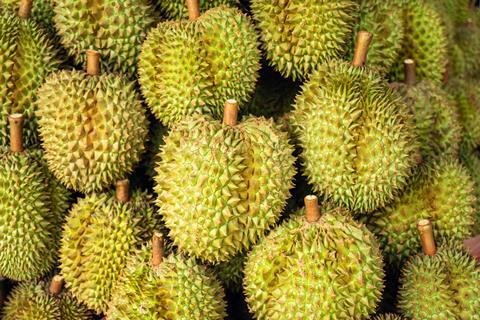
Thailand Launches Coordinated Push to Expand Fruit Exports Amid Global Competition
New government-led campaign aims to streamline logistics, open markets, and stabilize farm incomes as durian, mango, and other key exports face rising regional competition.
A coordinated government-led trade initiative is reshaping Thailand’s agricultural export strategy, as authorities move to strengthen the country’s position in global fruit markets dominated by rising competition and volatile demand.
The campaign focuses on improving export logistics, expanding market access, and stabilizing income for farmers who depend heavily on high-value tropical fruit shipments.
Thailand is one of the world’s leading exporters of tropical fruit, particularly durian, mango, mangosteen, and longan.
Demand is heavily concentrated in Asian markets, with China accounting for a significant share of durian exports in particular.
The new campaign reflects concern that reliance on a narrow set of export destinations exposes farmers and traders to regulatory shifts, seasonal disruptions, and price fluctuations.
At the core of the initiative is an effort to coordinate multiple government agencies involved in agriculture, trade, and transport.
The aim is to reduce bottlenecks in certification, customs clearance, and cold-chain logistics that can delay shipments and affect fruit quality upon arrival.
Officials are also prioritizing faster phytosanitary approvals and more consistent grading standards to improve confidence among overseas buyers.
A major focus is the expansion of export channels beyond traditional markets.
While China remains the dominant destination for premium fruit exports, authorities are actively promoting diversification into South Asia, the Middle East, and parts of Europe.
This is intended to reduce vulnerability to sudden regulatory changes or import restrictions in any single country.
The campaign also targets upstream production issues.
Farmers are being encouraged to improve orchard management, adopt higher-quality cultivation practices, and align harvest timing with export demand cycles.
The government is linking these efforts with training programs and financing tools aimed at small and medium-sized growers, who often lack the infrastructure to meet export-grade standards consistently.
Thailand’s fruit export sector has experienced rapid growth in recent years, but that growth has come with structural pressures.
Periodic oversupply has driven down farmgate prices, while transportation costs and border inspection delays have cut into margins for exporters.
At the same time, competition from neighboring producers in Southeast Asia has intensified, particularly in markets for durian, where regional supply is expanding quickly.
The new initiative reflects a broader economic strategy: using agriculture not only as a rural income base but also as a competitive export industry integrated into global supply chains.
However, the effectiveness of the campaign will depend on execution across multiple layers, including provincial coordination, private logistics providers, and foreign regulatory cooperation.
For farmers, the stakes are immediate.
Export disruptions can quickly translate into price collapses at harvest time, while smoother logistics and diversified markets can stabilize incomes.
For Thailand’s trade balance, the fruit sector remains a visible contributor to agricultural export earnings, making its performance closely watched by policymakers focused on rural economic stability.
The campaign now moves into implementation, with agencies expected to refine export procedures, expand inspection capacity, and negotiate market access improvements with key trading partners.
The campaign focuses on improving export logistics, expanding market access, and stabilizing income for farmers who depend heavily on high-value tropical fruit shipments.
Thailand is one of the world’s leading exporters of tropical fruit, particularly durian, mango, mangosteen, and longan.
Demand is heavily concentrated in Asian markets, with China accounting for a significant share of durian exports in particular.
The new campaign reflects concern that reliance on a narrow set of export destinations exposes farmers and traders to regulatory shifts, seasonal disruptions, and price fluctuations.
At the core of the initiative is an effort to coordinate multiple government agencies involved in agriculture, trade, and transport.
The aim is to reduce bottlenecks in certification, customs clearance, and cold-chain logistics that can delay shipments and affect fruit quality upon arrival.
Officials are also prioritizing faster phytosanitary approvals and more consistent grading standards to improve confidence among overseas buyers.
A major focus is the expansion of export channels beyond traditional markets.
While China remains the dominant destination for premium fruit exports, authorities are actively promoting diversification into South Asia, the Middle East, and parts of Europe.
This is intended to reduce vulnerability to sudden regulatory changes or import restrictions in any single country.
The campaign also targets upstream production issues.
Farmers are being encouraged to improve orchard management, adopt higher-quality cultivation practices, and align harvest timing with export demand cycles.
The government is linking these efforts with training programs and financing tools aimed at small and medium-sized growers, who often lack the infrastructure to meet export-grade standards consistently.
Thailand’s fruit export sector has experienced rapid growth in recent years, but that growth has come with structural pressures.
Periodic oversupply has driven down farmgate prices, while transportation costs and border inspection delays have cut into margins for exporters.
At the same time, competition from neighboring producers in Southeast Asia has intensified, particularly in markets for durian, where regional supply is expanding quickly.
The new initiative reflects a broader economic strategy: using agriculture not only as a rural income base but also as a competitive export industry integrated into global supply chains.
However, the effectiveness of the campaign will depend on execution across multiple layers, including provincial coordination, private logistics providers, and foreign regulatory cooperation.
For farmers, the stakes are immediate.
Export disruptions can quickly translate into price collapses at harvest time, while smoother logistics and diversified markets can stabilize incomes.
For Thailand’s trade balance, the fruit sector remains a visible contributor to agricultural export earnings, making its performance closely watched by policymakers focused on rural economic stability.
The campaign now moves into implementation, with agencies expected to refine export procedures, expand inspection capacity, and negotiate market access improvements with key trading partners.