
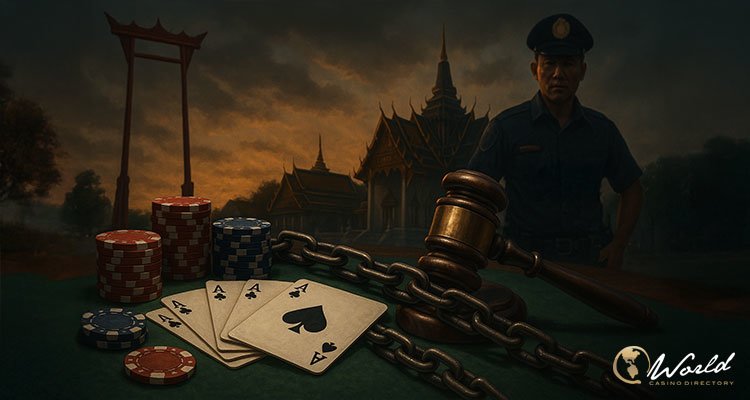
Thailand Reverses Poker Legalisation as Prime Minister Anutin Reaffirms Anti-Gambling Stance
Interior Ministry revokes previous order that treated poker as a sport, restoring nationwide ban on card games under new government policy
Thailand’s government, under Prime Minister and Interior Minister Anutin Charnvirakul, has reinstated a nationwide ban on poker and related card games, revoking an earlier order issued on July 30 by acting Interior Minister Phumtham Wechayachai that had briefly decriminalised poker as a recognised sport.
The reversal took effect immediately, with Ministry Order No. 3179/2568 cancelling all permits for poker and card-game activities, and reaffirming that such games are classified as gambling rather than sport.
Anutin, who took office in September, has explicitly rejected gambling as an economic driver.
He referenced the Cabinet’s social policy statement delivered on September 29, which pledged to combat all forms of gambling and forego support for casino-entertainment complexes.
In announcing the revocation, he emphasised that the government “would not support any form of gambling businesses” and insisted that poker, even when framed as a competitive sport, remains a prohibited activity.
The brief decriminalisation had followed a move where Thailand’s Sports Authority recognised poker as a sport and the Interior Ministry revoked an older 1958 permit ban, raising expectations of a legalised competitive-poker sector and potential tourism events.
However, the new government’s decision signals a clear policy shift away from that trajectory.
The policy about-face also reflects internal party alignment: The governing Bhumjaithai Party, led by Anutin, has long opposed gambling-based economic stimulus, whereas the previous Pheu Thai-led administration had advanced tentative reforms in that direction.
Industry observers note that the restored ban not only halts the permit-process for poker tournaments, but also imposes a climate of regulatory uncertainty for any gaming investment in Thailand.
Legal experts highlight that the Interior Ministry’s order cites Section 17 of the Gambling Act B.E. 2478 (1935), empowering the minister to revoke gaming licences and amend permit regulations in response to policy shifts.
Meanwhile, senior officials warned that even gatherings styled as “friendly poker nights” may be subject to enforcement under the reimposed ban.
For Thailand, the move underscores the government’s broader strategy of steering away from casino- and gambling-led economic models.
Observers suggest the reversal may reassure conservative constituencies and align with broader Southeast Asian regulatory sentiment.
The policy change also serves as a reminder of the speed with which Thailand’s gaming regulatory framework can shift—posing heightened legal and business risks for operators and investors engaged with the leisure-economy sector.
The reversal took effect immediately, with Ministry Order No. 3179/2568 cancelling all permits for poker and card-game activities, and reaffirming that such games are classified as gambling rather than sport.
Anutin, who took office in September, has explicitly rejected gambling as an economic driver.
He referenced the Cabinet’s social policy statement delivered on September 29, which pledged to combat all forms of gambling and forego support for casino-entertainment complexes.
In announcing the revocation, he emphasised that the government “would not support any form of gambling businesses” and insisted that poker, even when framed as a competitive sport, remains a prohibited activity.
The brief decriminalisation had followed a move where Thailand’s Sports Authority recognised poker as a sport and the Interior Ministry revoked an older 1958 permit ban, raising expectations of a legalised competitive-poker sector and potential tourism events.
However, the new government’s decision signals a clear policy shift away from that trajectory.
The policy about-face also reflects internal party alignment: The governing Bhumjaithai Party, led by Anutin, has long opposed gambling-based economic stimulus, whereas the previous Pheu Thai-led administration had advanced tentative reforms in that direction.
Industry observers note that the restored ban not only halts the permit-process for poker tournaments, but also imposes a climate of regulatory uncertainty for any gaming investment in Thailand.
Legal experts highlight that the Interior Ministry’s order cites Section 17 of the Gambling Act B.E. 2478 (1935), empowering the minister to revoke gaming licences and amend permit regulations in response to policy shifts.
Meanwhile, senior officials warned that even gatherings styled as “friendly poker nights” may be subject to enforcement under the reimposed ban.
For Thailand, the move underscores the government’s broader strategy of steering away from casino- and gambling-led economic models.
Observers suggest the reversal may reassure conservative constituencies and align with broader Southeast Asian regulatory sentiment.
The policy change also serves as a reminder of the speed with which Thailand’s gaming regulatory framework can shift—posing heightened legal and business risks for operators and investors engaged with the leisure-economy sector.