Thailand Seeks Upgraded Trade Framework with U.S. Following Trump-Mediated Border Peace Deal
Bangkok requests preferential terms in fledgling U.S. trade blueprint after signing cease-fire with Cambodia under President Donald Trump’s initiative
Thailand has formally asked the United States for an enhanced bilateral trade agreement during talks held in the aftermath of a peace pact signed with Cambodia, amid shifting geopolitical and economic dynamics.
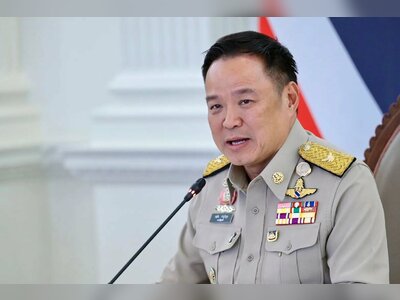
Prime Minister Anutin Charnvirakul conveyed the request to U.S. President Donald Trump at the Asia-Pacific Economic Cooperation leaders’ summit, arguing that the landmark peace accord helped pave the way for broader commercial cooperation.
The two countries have already agreed a framework for an Agreement on Reciprocal Trade, under which Thailand will eliminate tariffs on approximately 99 per cent of U.S. industrial and agricultural products, while the U.S. will apply a standing tariff of 19 per cent on Thai goods, with some items eligible for zero-tariff status under future negotiation.
Thai officials say they delivered a formal trade-concessions proposal earlier this year and that recent diplomacy has provided fresh momentum to secure more favourable terms, including greater access for U.S. exporters and investment protections.
They argue the border-peace milestone and new trade framework create a timely window to reset bilateral economic relations.
Washington has conditioned merchandise access and tariff relief on wider reforms in labour rights, intellectual property protection, investment liberalisation, and supply-chain co-operation.
Bangkok appears ready to respond: it has already submitted draft concessions aimed at cutting its surplus with the U.S. by about 70 per cent within five years, and opening sensitive sectors to investment.
Regional analysts say the proposition underlines Thailand’s desire to anchor its trade diplomacy with the world’s largest economy and to diversify its export-led model amidst slowing global demand.
For the U.S., the accord reinforces President Trump’s economic-diplomatic agenda of linking peace agreements to market-access arrangements.
Detailed talks are expected to continue through late 2025, with both sides targeting finalisation of the reciprocal trade agreement and accompanying sector-specific deals—such as critical-minerals procurement and aircraft purchases—by year-end.
The evolving deal will test how Thailand balances its longstanding trade ties with the United States while preserving its broader regional mission and the reforms required to meet Washington’s terms.
Prime Minister Anutin Charnvirakul conveyed the request to U.S. President Donald Trump at the Asia-Pacific Economic Cooperation leaders’ summit, arguing that the landmark peace accord helped pave the way for broader commercial cooperation.
The two countries have already agreed a framework for an Agreement on Reciprocal Trade, under which Thailand will eliminate tariffs on approximately 99 per cent of U.S. industrial and agricultural products, while the U.S. will apply a standing tariff of 19 per cent on Thai goods, with some items eligible for zero-tariff status under future negotiation.
Thai officials say they delivered a formal trade-concessions proposal earlier this year and that recent diplomacy has provided fresh momentum to secure more favourable terms, including greater access for U.S. exporters and investment protections.
They argue the border-peace milestone and new trade framework create a timely window to reset bilateral economic relations.
Washington has conditioned merchandise access and tariff relief on wider reforms in labour rights, intellectual property protection, investment liberalisation, and supply-chain co-operation.
Bangkok appears ready to respond: it has already submitted draft concessions aimed at cutting its surplus with the U.S. by about 70 per cent within five years, and opening sensitive sectors to investment.
Regional analysts say the proposition underlines Thailand’s desire to anchor its trade diplomacy with the world’s largest economy and to diversify its export-led model amidst slowing global demand.
For the U.S., the accord reinforces President Trump’s economic-diplomatic agenda of linking peace agreements to market-access arrangements.
Detailed talks are expected to continue through late 2025, with both sides targeting finalisation of the reciprocal trade agreement and accompanying sector-specific deals—such as critical-minerals procurement and aircraft purchases—by year-end.
The evolving deal will test how Thailand balances its longstanding trade ties with the United States while preserving its broader regional mission and the reforms required to meet Washington’s terms.