
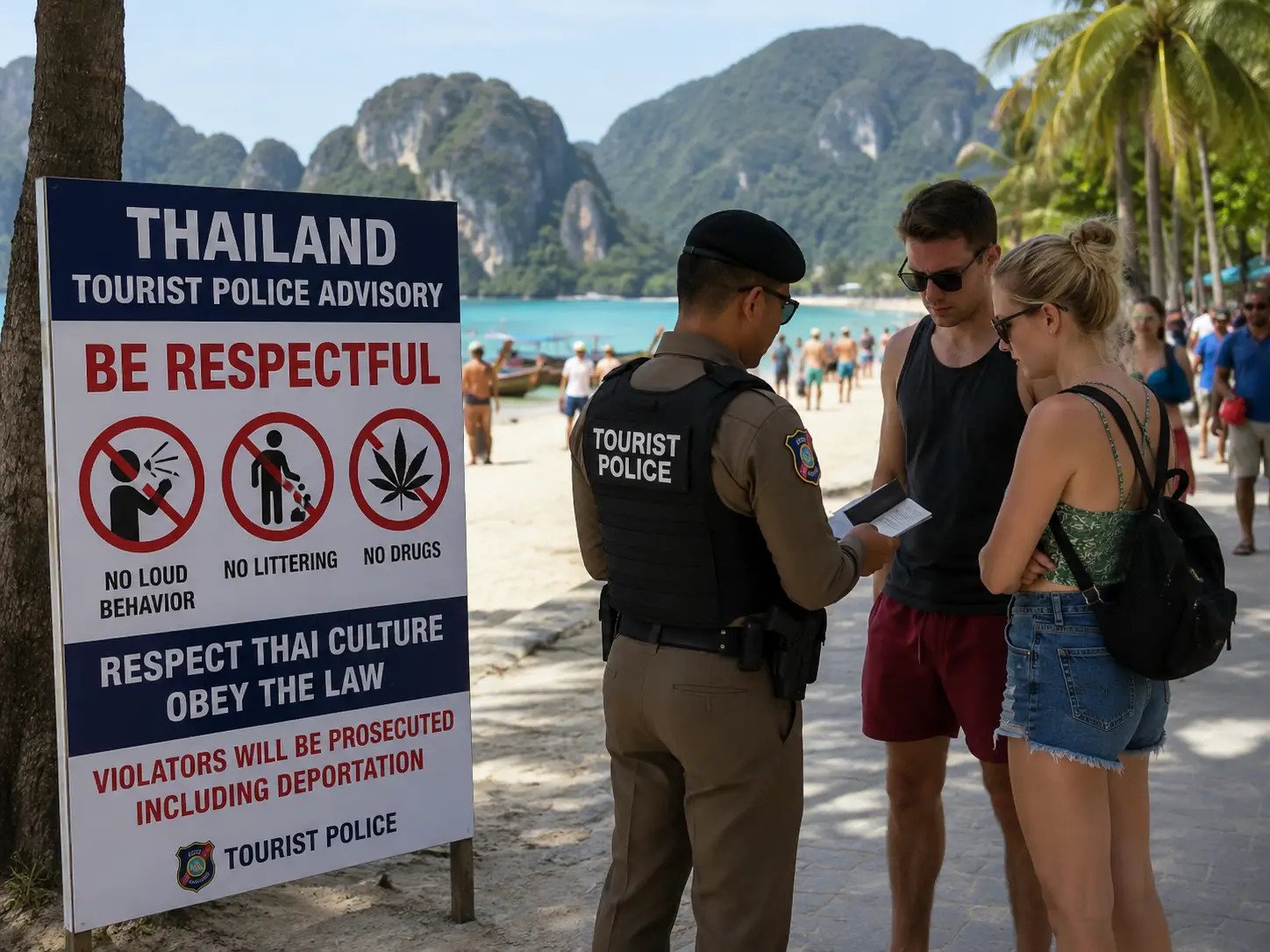
Thailand Tightens Enforcement on Tourist Misconduct as Authorities Target Unruly Behavior in 2026
New and expanded enforcement measures aim to curb public disorder, visa abuse, and disruptive tourist conduct amid rising concerns over reputational risk to the tourism sector
Thailand’s tourism governance system is moving toward stricter enforcement as authorities intensify measures against disruptive visitor behavior in 2026, reflecting growing pressure to balance record visitor inflows with public order and long-term industry reputation.
The policy shift is driven by concerns that isolated but high-profile incidents involving foreign tourists are beginning to influence public sentiment and local tolerance in key destinations.
What is confirmed is that Thai authorities have increased coordination between immigration enforcement, tourism police, and local administrative bodies to address incidents involving public intoxication, violence, visa overstays, and unauthorized work by foreign visitors.
These measures build on existing legal frameworks under Thailand’s immigration law and public order regulations, but enforcement intensity has increased, particularly in major tourist hubs such as Bangkok, Phuket, Pattaya, and Chiang Mai.
A key mechanism in the crackdown is faster administrative processing of visa violations and expanded use of deportation or entry bans for repeat or serious offenders.
Authorities are also placing greater emphasis on preventive enforcement, including increased patrol presence in entertainment districts, tighter monitoring of nightlife venues, and closer scrutiny of short-term rental properties where complaints have risen.
The policy approach also reflects an economic balancing act.
Tourism remains one of Thailand’s largest sources of foreign income, but officials are signaling that the long-term sustainability of the sector depends on maintaining public order and local support in high-density visitor areas.
This has led to a shift in messaging from purely promotional tourism strategy toward what officials describe as "quality tourism," prioritizing compliance and responsible travel behavior over sheer volume.
Recent enforcement focus areas include alcohol-related disorder, assaults involving tourists, and cases where foreign nationals engage in unauthorized employment while on tourist visas.
Immigration authorities have also increased data sharing with police units to track repeat offenders and improve case resolution speed, reducing the likelihood of unresolved incidents involving foreign visitors.
The crackdown is also being shaped by social media amplification of isolated incidents, which can rapidly escalate public attention and political pressure.
In response, authorities are prioritizing visible enforcement actions in high-profile locations to reinforce deterrence and signal consistency in application of the law.
For tourists, the practical consequences are a lower tolerance threshold for behavior that may previously have been handled informally, particularly in nightlife districts.
For the tourism industry, including hotels, tour operators, and entertainment venues, compliance obligations are increasing, with greater expectations for cooperation in reporting and preventing illegal activity.
The broader implication is a structural shift in Thailand’s tourism management model.
Rather than treating enforcement as reactive, authorities are increasingly embedding it into the core tourism strategy, aiming to protect both public order and the country’s international reputation as competition intensifies across Southeast Asia’s tourism markets.
The policy shift is driven by concerns that isolated but high-profile incidents involving foreign tourists are beginning to influence public sentiment and local tolerance in key destinations.
What is confirmed is that Thai authorities have increased coordination between immigration enforcement, tourism police, and local administrative bodies to address incidents involving public intoxication, violence, visa overstays, and unauthorized work by foreign visitors.
These measures build on existing legal frameworks under Thailand’s immigration law and public order regulations, but enforcement intensity has increased, particularly in major tourist hubs such as Bangkok, Phuket, Pattaya, and Chiang Mai.
A key mechanism in the crackdown is faster administrative processing of visa violations and expanded use of deportation or entry bans for repeat or serious offenders.
Authorities are also placing greater emphasis on preventive enforcement, including increased patrol presence in entertainment districts, tighter monitoring of nightlife venues, and closer scrutiny of short-term rental properties where complaints have risen.
The policy approach also reflects an economic balancing act.
Tourism remains one of Thailand’s largest sources of foreign income, but officials are signaling that the long-term sustainability of the sector depends on maintaining public order and local support in high-density visitor areas.
This has led to a shift in messaging from purely promotional tourism strategy toward what officials describe as "quality tourism," prioritizing compliance and responsible travel behavior over sheer volume.
Recent enforcement focus areas include alcohol-related disorder, assaults involving tourists, and cases where foreign nationals engage in unauthorized employment while on tourist visas.
Immigration authorities have also increased data sharing with police units to track repeat offenders and improve case resolution speed, reducing the likelihood of unresolved incidents involving foreign visitors.
The crackdown is also being shaped by social media amplification of isolated incidents, which can rapidly escalate public attention and political pressure.
In response, authorities are prioritizing visible enforcement actions in high-profile locations to reinforce deterrence and signal consistency in application of the law.
For tourists, the practical consequences are a lower tolerance threshold for behavior that may previously have been handled informally, particularly in nightlife districts.
For the tourism industry, including hotels, tour operators, and entertainment venues, compliance obligations are increasing, with greater expectations for cooperation in reporting and preventing illegal activity.
The broader implication is a structural shift in Thailand’s tourism management model.
Rather than treating enforcement as reactive, authorities are increasingly embedding it into the core tourism strategy, aiming to protect both public order and the country’s international reputation as competition intensifies across Southeast Asia’s tourism markets.