
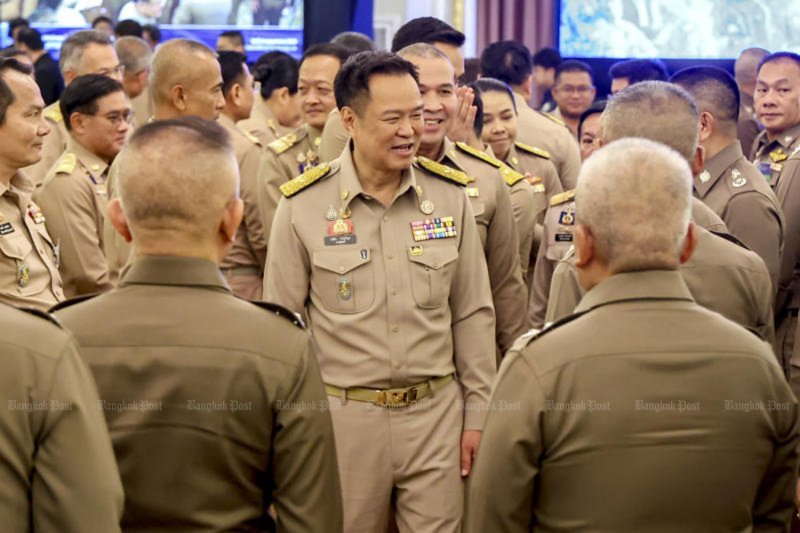
Anutin Heads to France as Thailand Seeks to Deepen Strategic and Economic Engagement in Europe
The visit underscores Bangkok’s push to strengthen diplomatic ties, expand investment channels, and reinforce cooperation with key European partners
ACTOR-DRIVEN diplomacy is shaping Thailand’s latest high-level engagement with Europe, as Deputy Prime Minister and senior political figure Anutin Charnvirakul departs for France on an official visit aimed at strengthening bilateral relations and expanding cooperation across economic, health, and strategic sectors.
The trip reflects Thailand’s broader foreign policy effort to diversify partnerships beyond Asia while reinforcing ties with established Western economies.
What is confirmed is that Anutin’s visit to France is part of an official diplomatic mission involving discussions with French counterparts on areas of mutual interest, including public health collaboration, investment opportunities, tourism recovery, and technology exchange.
The visit also reflects ongoing efforts to maintain momentum in Thailand–France relations, which span trade, infrastructure cooperation, and cultural exchange.
The mechanism behind such visits is standard in bilateral diplomacy.
High-level delegations are used to align policy priorities, facilitate government-to-government coordination, and create pathways for private-sector engagement.
In Thailand’s case, these missions often serve a dual function: reinforcing political relationships while opening doors for investment in strategic sectors such as healthcare systems, transport infrastructure, green technology, and food industries.
France remains one of Thailand’s key European partners, both as a source of foreign direct investment and as a gateway to broader European Union economic engagement.
Discussions during such visits typically focus on expanding trade volumes, improving market access for agricultural and industrial exports, and attracting European expertise in areas where Thailand seeks technological upgrading.
The timing of the visit also reflects a wider diplomatic pattern in which Thailand has increased its outbound engagement with Europe as global supply chains shift and geopolitical competition intensifies.
Countries in Southeast Asia are increasingly pursuing diversified partnerships to reduce dependence on any single market bloc, while strengthening resilience in trade, tourism, and investment flows.
For Thailand’s domestic economy, such diplomatic outreach is tied to concrete economic objectives.
Expanding European investment can support industrial upgrading, particularly in high-value manufacturing, renewable energy, and digital infrastructure.
At the same time, stronger tourism cooperation can help sustain visitor flows from long-haul markets, which remain important for high-spending segments of the Thai tourism industry.
The visit also carries political signaling value.
High-level engagements with major European economies reinforce Thailand’s positioning as an active participant in global diplomacy, while supporting its broader strategy of balancing relationships across Asia, Europe, and the United States without overreliance on any single geopolitical alignment.
As the visit progresses, outcomes will be measured less by symbolic gestures and more by concrete agreements, investment commitments, and follow-up mechanisms that translate diplomatic engagement into sustained economic activity.
The trajectory of Thailand–France cooperation will depend on whether discussions during the visit lead to practical initiatives in trade, investment, and sectoral collaboration.
The trip reflects Thailand’s broader foreign policy effort to diversify partnerships beyond Asia while reinforcing ties with established Western economies.
What is confirmed is that Anutin’s visit to France is part of an official diplomatic mission involving discussions with French counterparts on areas of mutual interest, including public health collaboration, investment opportunities, tourism recovery, and technology exchange.
The visit also reflects ongoing efforts to maintain momentum in Thailand–France relations, which span trade, infrastructure cooperation, and cultural exchange.
The mechanism behind such visits is standard in bilateral diplomacy.
High-level delegations are used to align policy priorities, facilitate government-to-government coordination, and create pathways for private-sector engagement.
In Thailand’s case, these missions often serve a dual function: reinforcing political relationships while opening doors for investment in strategic sectors such as healthcare systems, transport infrastructure, green technology, and food industries.
France remains one of Thailand’s key European partners, both as a source of foreign direct investment and as a gateway to broader European Union economic engagement.
Discussions during such visits typically focus on expanding trade volumes, improving market access for agricultural and industrial exports, and attracting European expertise in areas where Thailand seeks technological upgrading.
The timing of the visit also reflects a wider diplomatic pattern in which Thailand has increased its outbound engagement with Europe as global supply chains shift and geopolitical competition intensifies.
Countries in Southeast Asia are increasingly pursuing diversified partnerships to reduce dependence on any single market bloc, while strengthening resilience in trade, tourism, and investment flows.
For Thailand’s domestic economy, such diplomatic outreach is tied to concrete economic objectives.
Expanding European investment can support industrial upgrading, particularly in high-value manufacturing, renewable energy, and digital infrastructure.
At the same time, stronger tourism cooperation can help sustain visitor flows from long-haul markets, which remain important for high-spending segments of the Thai tourism industry.
The visit also carries political signaling value.
High-level engagements with major European economies reinforce Thailand’s positioning as an active participant in global diplomacy, while supporting its broader strategy of balancing relationships across Asia, Europe, and the United States without overreliance on any single geopolitical alignment.
As the visit progresses, outcomes will be measured less by symbolic gestures and more by concrete agreements, investment commitments, and follow-up mechanisms that translate diplomatic engagement into sustained economic activity.
The trajectory of Thailand–France cooperation will depend on whether discussions during the visit lead to practical initiatives in trade, investment, and sectoral collaboration.