Crane Collapse on Moving Train in Thailand Kills Dozens and Triggers Major Investigation
At least thirty-two people die and scores are injured after a construction crane falls onto a passenger train in Nakhon Ratchasima province
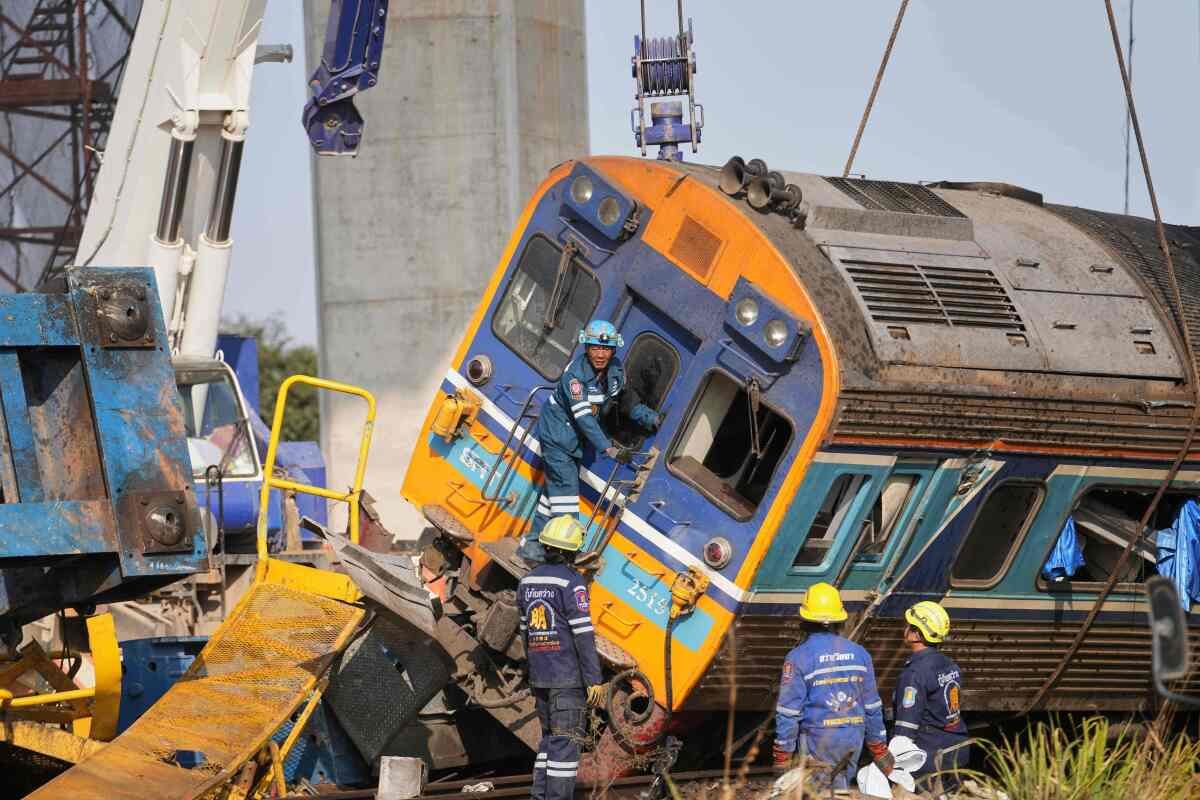
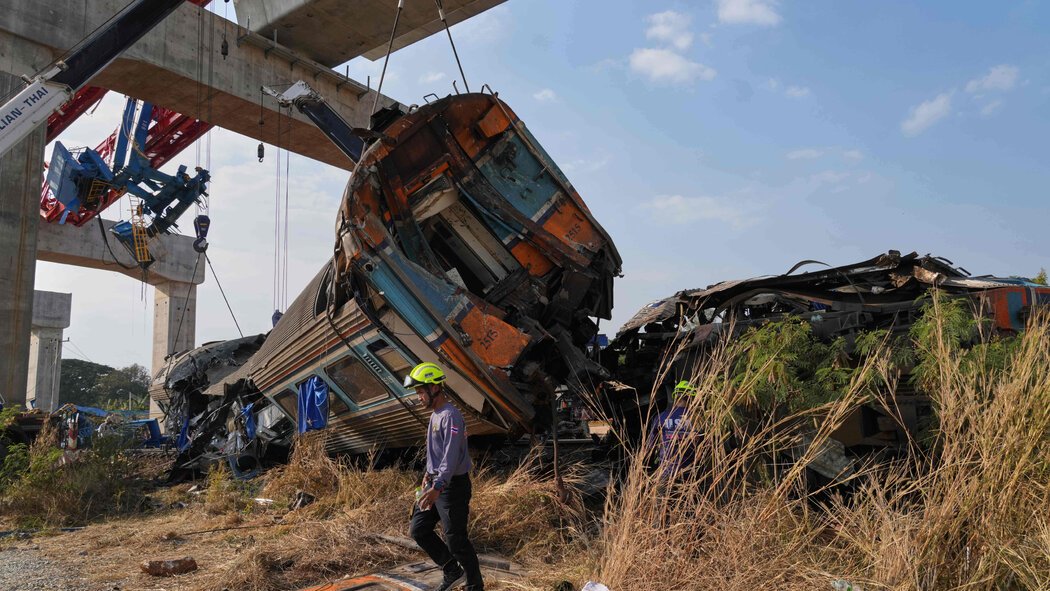
A devastating accident in northeastern Thailand on Wednesday morning claimed the lives of at least thirty-two people and injured dozens more after a construction crane collapsed onto a passenger train, causing it to derail and catch fire.
The incident occurred around nine a.m. local time in Ban Thanon Khot, within Sikhio district of Nakhon Ratchasima province, on a section of track where a high-speed rail project is under construction.
Officials said the train was traveling from Bangkok toward Ubon Ratchathani with nearly two hundred passengers onboard when the overhead launching gantry crane — part of the elevated railway works — gave way and struck several carriages.
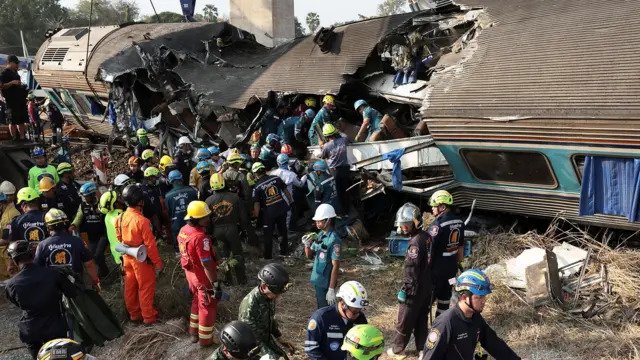
Rescue teams responded swiftly to the scene, where twisted metal, smoke and wreckage greeted first responders.
Local health authorities confirmed that sixty-four people were injured in the crash, including several with serious wounds, and that three passengers remained missing.
Emergency personnel worked to extricate survivors from mangled carriages, some of which were severely damaged by the impact and subsequent derailment.
Provincial hospitals received the injured, and fatalities were pronounced both at the scene and in transit to medical facilities.
Thai authorities have launched a comprehensive investigation into the causes of the collapse, with the Transport Minister ordering a full review of safety protocols at the construction site.
The crane was operated by Italian-Thai Development, the main contractor on the Bangkok–Nong Khai high-speed rail project, a major infrastructure programme that will eventually link the Thai capital to the border with Laos and onward to China.
Government officials and emergency services coordinated efforts to clear the tracks, support victims’ families and determine whether safety breaches or mechanical failures contributed to the calamity.
Political leaders expressed condolences to those affected and pledged accountability, while rail services in the region were temporarily suspended as investigations continue.
The incident occurred around nine a.m. local time in Ban Thanon Khot, within Sikhio district of Nakhon Ratchasima province, on a section of track where a high-speed rail project is under construction.
Officials said the train was traveling from Bangkok toward Ubon Ratchathani with nearly two hundred passengers onboard when the overhead launching gantry crane — part of the elevated railway works — gave way and struck several carriages.
Rescue teams responded swiftly to the scene, where twisted metal, smoke and wreckage greeted first responders.
Local health authorities confirmed that sixty-four people were injured in the crash, including several with serious wounds, and that three passengers remained missing.
Emergency personnel worked to extricate survivors from mangled carriages, some of which were severely damaged by the impact and subsequent derailment.
Provincial hospitals received the injured, and fatalities were pronounced both at the scene and in transit to medical facilities.
Thai authorities have launched a comprehensive investigation into the causes of the collapse, with the Transport Minister ordering a full review of safety protocols at the construction site.
The crane was operated by Italian-Thai Development, the main contractor on the Bangkok–Nong Khai high-speed rail project, a major infrastructure programme that will eventually link the Thai capital to the border with Laos and onward to China.
Government officials and emergency services coordinated efforts to clear the tracks, support victims’ families and determine whether safety breaches or mechanical failures contributed to the calamity.
Political leaders expressed condolences to those affected and pledged accountability, while rail services in the region were temporarily suspended as investigations continue.