Suvarnabhumi Airport Plans Major Expansion to Accommodate 150 Million Passengers by 2033
Airports of Thailand outlines a 142 billion baht investment to enhance passenger capacity at the country’s primary international gateway.
Airports of Thailand (AoT) has announced a comprehensive plan to expand Suvarnabhumi Airport, aiming to increase its capacity to accommodate up to 150 million passengers annually by the year 2033. The AoT president, Kerati Kijmanawat, detailed the 142 billion baht initiative, which seeks to elevate Thailand's flagship airport from its current standing among the top 30 airports globally to a position within the top 10.
Currently, Suvarnabhumi Airport serves approximately 65 million passengers each year.
The expansion project includes a 12-billion-baht East Expansion initiative, designed to enhance passenger capacity by an additional 15 million per year, thereby increasing the airport's total capacity to 80 million.
The bidding process for the East Expansion project will commence in May, with a contractor expected to be chosen by July.
Construction is slated to begin in November, with anticipated completion by 2028, which will expand the airport’s area to 480,000 square meters.
Additionally, AoT plans to construct a new South Terminal, which will contribute a further 70 million passengers to the airport's capacity.
The construction timeline for the South Terminal is expected to move forward in 2027, with completion targeted for 2033. The budget allocated for the South Terminal project is 130 billion baht.
This new terminal is intended to offer more capacity than the previously planned second satellite terminal (SAT-2), which was cancelled in favor of addressing potential complications related to baggage handling and transfer processes.
The proposed expansions also include the scrapping of earlier plans for west and north expansions due to similar concerns regarding operational complications.
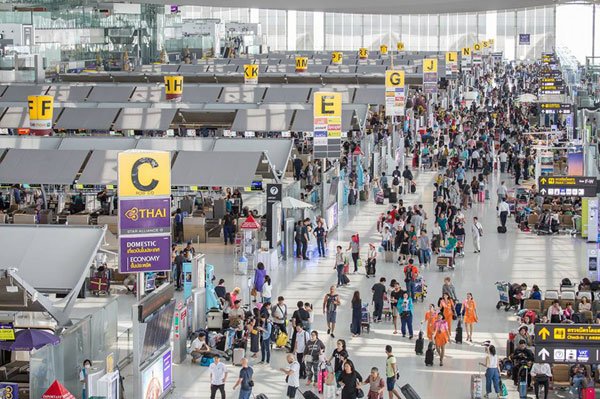
In response to current traffic bottlenecks in passenger processing that have been identified, especially during check-in, security screening, and immigration, AoT has implemented measures aimed at alleviating congestion.
These include the installation of additional self-check-in kiosks, self-bag drop systems, e-gates, and biometric identification scanners designed to expedite processing times.
Improvements have already increased immigration processing capacity from 5,500 passengers per hour to approximately 7,200 passengers.
Further enhancements to check-in and immigration systems are planned.
Passenger numbers at Suvarnabhumi Airport are expected to rise, with estimates indicating nearly 65 million travelers passing through the airport this year, an increase from 60 million last year.
Currently, Suvarnabhumi Airport serves approximately 65 million passengers each year.
The expansion project includes a 12-billion-baht East Expansion initiative, designed to enhance passenger capacity by an additional 15 million per year, thereby increasing the airport's total capacity to 80 million.
The bidding process for the East Expansion project will commence in May, with a contractor expected to be chosen by July.
Construction is slated to begin in November, with anticipated completion by 2028, which will expand the airport’s area to 480,000 square meters.
Additionally, AoT plans to construct a new South Terminal, which will contribute a further 70 million passengers to the airport's capacity.
The construction timeline for the South Terminal is expected to move forward in 2027, with completion targeted for 2033. The budget allocated for the South Terminal project is 130 billion baht.
This new terminal is intended to offer more capacity than the previously planned second satellite terminal (SAT-2), which was cancelled in favor of addressing potential complications related to baggage handling and transfer processes.
The proposed expansions also include the scrapping of earlier plans for west and north expansions due to similar concerns regarding operational complications.
In response to current traffic bottlenecks in passenger processing that have been identified, especially during check-in, security screening, and immigration, AoT has implemented measures aimed at alleviating congestion.
These include the installation of additional self-check-in kiosks, self-bag drop systems, e-gates, and biometric identification scanners designed to expedite processing times.
Improvements have already increased immigration processing capacity from 5,500 passengers per hour to approximately 7,200 passengers.
Further enhancements to check-in and immigration systems are planned.
Passenger numbers at Suvarnabhumi Airport are expected to rise, with estimates indicating nearly 65 million travelers passing through the airport this year, an increase from 60 million last year.