
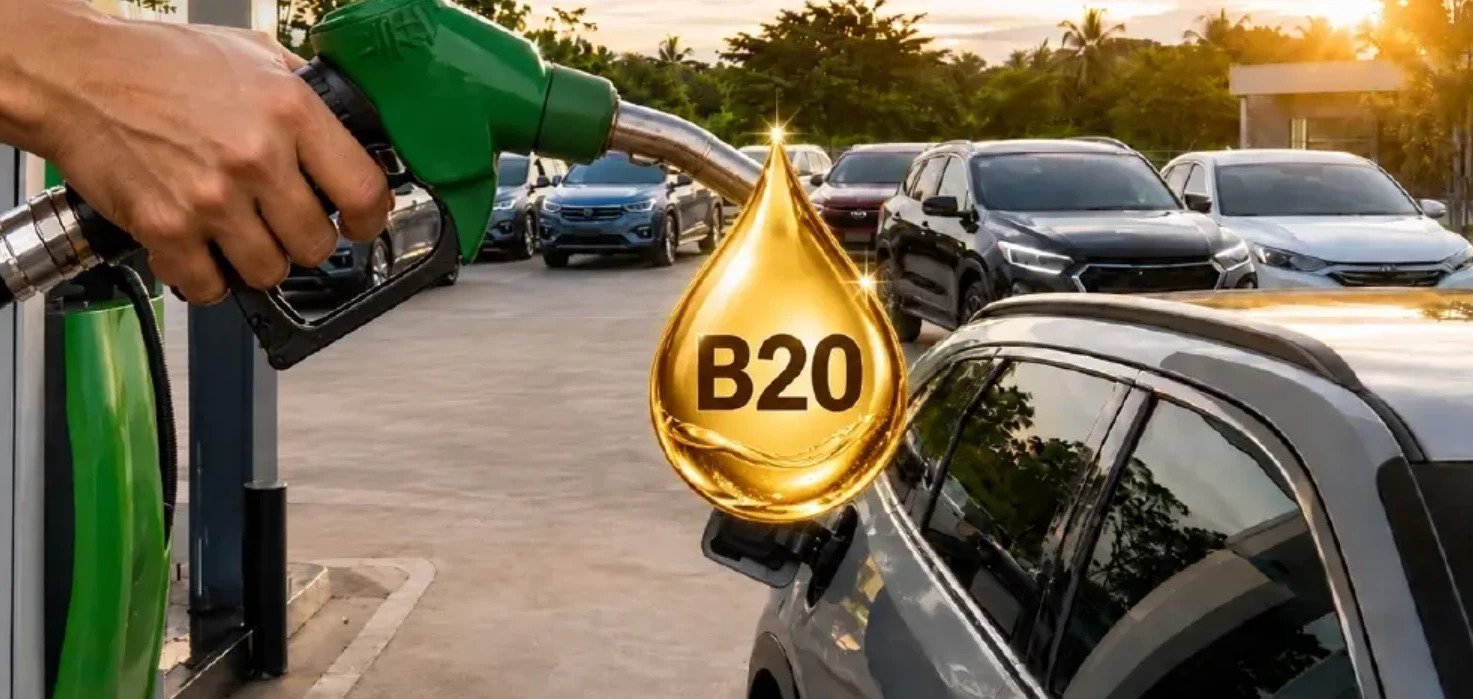
Thailand Pushes B20 Diesel as Carmakers Endorse Fuel in Bid to Cut Oil Dependence
The government is expanding subsidised biodiesel use across transport and industry while major automakers confirm more than one thousand vehicle models can safely run on the fuel.
Thailand’s energy policy is driving a major new push for B20 diesel, a fuel blend containing twenty percent biodiesel made primarily from domestic palm oil, as the government attempts to reduce reliance on imported petroleum, support farmers and lower transport costs during a period of volatile global energy markets.
The campaign gained momentum after major vehicle manufacturers publicly confirmed that hundreds of diesel vehicle models sold in Thailand are compatible with B20 without voiding warranties or damaging engines.
Thai authorities say more than one thousand one hundred vehicle models across passenger, commercial and heavy-duty categories are now officially recognised as B20-compatible.
The policy is fundamentally system-driven.
Thailand is using fuel regulation, subsidies, agricultural production and industrial coordination to reshape part of its energy supply chain around domestically sourced biofuel rather than imported fossil fuel.
The government has introduced aggressive price incentives to accelerate adoption.
B20 diesel is currently priced several baht per litre below conventional diesel grades, making it especially attractive to logistics operators, freight fleets, fisheries and commercial transport businesses that consume large volumes of fuel.
The core economic logic is straightforward.
Thailand imports substantial amounts of crude oil and refined petroleum products, exposing the economy to global price swings, currency pressure and geopolitical disruptions.
Biodiesel allows part of that consumption to be replaced with fuel produced from Thai palm oil.
Officials argue the strategy serves three objectives simultaneously: reducing foreign exchange outflows, stabilising fuel costs and supporting agricultural incomes in southern palm-growing provinces.
The automotive industry’s endorsement is critical because earlier biodiesel programmes faced resistance from vehicle owners worried about engine damage, clogged fuel systems and warranty disputes.
Manufacturers including Toyota, Isuzu, Ford, Mitsubishi, Nissan, Mazda, MG and several commercial truck brands have now publicly identified compatible models.
Pickup trucks are central to the policy’s success.
Thailand is one of the world’s largest pickup truck markets, and diesel-powered pickups dominate commercial transport, agriculture and regional logistics.
Isuzu and Ford have both confirmed broad B20 support across major diesel platforms, including popular utility vehicles widely used by businesses.
Fuel retailers are also expanding infrastructure rapidly.
Large operators including PTT, Bangchak, Shell, PT and Caltex are increasing the number of stations offering B20 nationwide.
Authorities have set targets to scale distribution from several hundred stations to more than one thousand in a short period.
The expansion reflects broader anxiety about long-term energy security.
Thailand remains heavily dependent on imported energy despite efforts to diversify fuel sources.
Biodiesel is being positioned as a partial buffer against future oil shocks, particularly after repeated disruptions in global energy markets since the Russia-Ukraine war and renewed instability affecting shipping and refining flows.
At the same time, the policy exposes tensions inside Thailand’s automotive transition strategy.
Thailand is aggressively promoting electric vehicles through subsidies and Chinese investment while simultaneously reinforcing diesel infrastructure through biodiesel incentives.
That apparent contradiction reflects the structure of the Thai economy.
Heavy transport, logistics and agricultural sectors cannot transition to electric power as quickly as urban passenger vehicles.
Biodiesel offers a politically and economically easier near-term adjustment because it works within existing diesel infrastructure.
Environmental questions remain contested.
Supporters argue B20 lowers lifecycle carbon emissions compared with conventional diesel and strengthens energy resilience using domestic feedstock.
Critics counter that palm oil expansion carries environmental costs including deforestation pressure, land-use change and ecological degradation.
There are also technical limitations.
Not every diesel vehicle can safely use high biodiesel blends.
Older engines, imported vehicles and unsupported fuel systems may face performance or maintenance problems if owners use incompatible fuel.
That risk explains why authorities and automakers are publishing compatibility lists and encouraging consumers to verify approved models before switching.
Another challenge is supply stability.
Thailand currently produces enough palm oil to support expanded biodiesel blending under present demand projections, according to energy planners.
But any major increase in adoption would tie fuel economics more directly to agricultural output, weather patterns and commodity pricing.
The stakes extend beyond transport policy.
Thailand is attempting to protect industrial competitiveness while reducing exposure to imported energy costs.
Logistics expenses influence food prices, manufacturing costs and export competitiveness across the economy.
The government is therefore treating B20 not as a niche environmental initiative but as a strategic economic instrument.
By combining subsidies, agricultural policy, refinery coordination and manufacturer backing, Bangkok is attempting to create a scalable domestic fuel alternative without forcing consumers into immediate technology replacement.
The next phase will depend on whether commercial operators adopt B20 at sufficient scale to justify permanent infrastructure investment and whether Thailand can sustain biodiesel pricing advantages without creating fiscal strain through subsidies.
The campaign gained momentum after major vehicle manufacturers publicly confirmed that hundreds of diesel vehicle models sold in Thailand are compatible with B20 without voiding warranties or damaging engines.
Thai authorities say more than one thousand one hundred vehicle models across passenger, commercial and heavy-duty categories are now officially recognised as B20-compatible.
The policy is fundamentally system-driven.
Thailand is using fuel regulation, subsidies, agricultural production and industrial coordination to reshape part of its energy supply chain around domestically sourced biofuel rather than imported fossil fuel.
The government has introduced aggressive price incentives to accelerate adoption.
B20 diesel is currently priced several baht per litre below conventional diesel grades, making it especially attractive to logistics operators, freight fleets, fisheries and commercial transport businesses that consume large volumes of fuel.
The core economic logic is straightforward.
Thailand imports substantial amounts of crude oil and refined petroleum products, exposing the economy to global price swings, currency pressure and geopolitical disruptions.
Biodiesel allows part of that consumption to be replaced with fuel produced from Thai palm oil.
Officials argue the strategy serves three objectives simultaneously: reducing foreign exchange outflows, stabilising fuel costs and supporting agricultural incomes in southern palm-growing provinces.
The automotive industry’s endorsement is critical because earlier biodiesel programmes faced resistance from vehicle owners worried about engine damage, clogged fuel systems and warranty disputes.
Manufacturers including Toyota, Isuzu, Ford, Mitsubishi, Nissan, Mazda, MG and several commercial truck brands have now publicly identified compatible models.
Pickup trucks are central to the policy’s success.
Thailand is one of the world’s largest pickup truck markets, and diesel-powered pickups dominate commercial transport, agriculture and regional logistics.
Isuzu and Ford have both confirmed broad B20 support across major diesel platforms, including popular utility vehicles widely used by businesses.
Fuel retailers are also expanding infrastructure rapidly.
Large operators including PTT, Bangchak, Shell, PT and Caltex are increasing the number of stations offering B20 nationwide.
Authorities have set targets to scale distribution from several hundred stations to more than one thousand in a short period.
The expansion reflects broader anxiety about long-term energy security.
Thailand remains heavily dependent on imported energy despite efforts to diversify fuel sources.
Biodiesel is being positioned as a partial buffer against future oil shocks, particularly after repeated disruptions in global energy markets since the Russia-Ukraine war and renewed instability affecting shipping and refining flows.
At the same time, the policy exposes tensions inside Thailand’s automotive transition strategy.
Thailand is aggressively promoting electric vehicles through subsidies and Chinese investment while simultaneously reinforcing diesel infrastructure through biodiesel incentives.
That apparent contradiction reflects the structure of the Thai economy.
Heavy transport, logistics and agricultural sectors cannot transition to electric power as quickly as urban passenger vehicles.
Biodiesel offers a politically and economically easier near-term adjustment because it works within existing diesel infrastructure.
Environmental questions remain contested.
Supporters argue B20 lowers lifecycle carbon emissions compared with conventional diesel and strengthens energy resilience using domestic feedstock.
Critics counter that palm oil expansion carries environmental costs including deforestation pressure, land-use change and ecological degradation.
There are also technical limitations.
Not every diesel vehicle can safely use high biodiesel blends.
Older engines, imported vehicles and unsupported fuel systems may face performance or maintenance problems if owners use incompatible fuel.
That risk explains why authorities and automakers are publishing compatibility lists and encouraging consumers to verify approved models before switching.
Another challenge is supply stability.
Thailand currently produces enough palm oil to support expanded biodiesel blending under present demand projections, according to energy planners.
But any major increase in adoption would tie fuel economics more directly to agricultural output, weather patterns and commodity pricing.
The stakes extend beyond transport policy.
Thailand is attempting to protect industrial competitiveness while reducing exposure to imported energy costs.
Logistics expenses influence food prices, manufacturing costs and export competitiveness across the economy.
The government is therefore treating B20 not as a niche environmental initiative but as a strategic economic instrument.
By combining subsidies, agricultural policy, refinery coordination and manufacturer backing, Bangkok is attempting to create a scalable domestic fuel alternative without forcing consumers into immediate technology replacement.
The next phase will depend on whether commercial operators adopt B20 at sufficient scale to justify permanent infrastructure investment and whether Thailand can sustain biodiesel pricing advantages without creating fiscal strain through subsidies.