Thailand Rewrites Economic Outlook as Middle East War Scenarios Threaten Growth and Stability
Government planners outline three conflict-driven scenarios that could reshape GDP growth, inflation, energy costs, and fiscal strategy through 2026–2027
Thailand’s economic planning is increasingly being reshaped by external geopolitical risk, with policymakers building fiscal forecasts around three possible trajectories of the ongoing Middle East conflict.
At the center of the reassessment is a structural concern: sustained disruption in global energy markets, which directly feeds into inflation, trade flows, and domestic growth performance.
What is confirmed is that Thailand’s National Economic and Social Development Council (NESDC), together with other core economic agencies, has formally incorporated three war-duration scenarios into its 2027 budget framework.
These scenarios are not abstract projections; they are used to model how oil prices, supply chains, and financial conditions could evolve under different levels of escalation or resolution.
The underlying driver is the global energy shock triggered by the conflict, which has already pushed Thailand’s macroeconomic outlook downward.
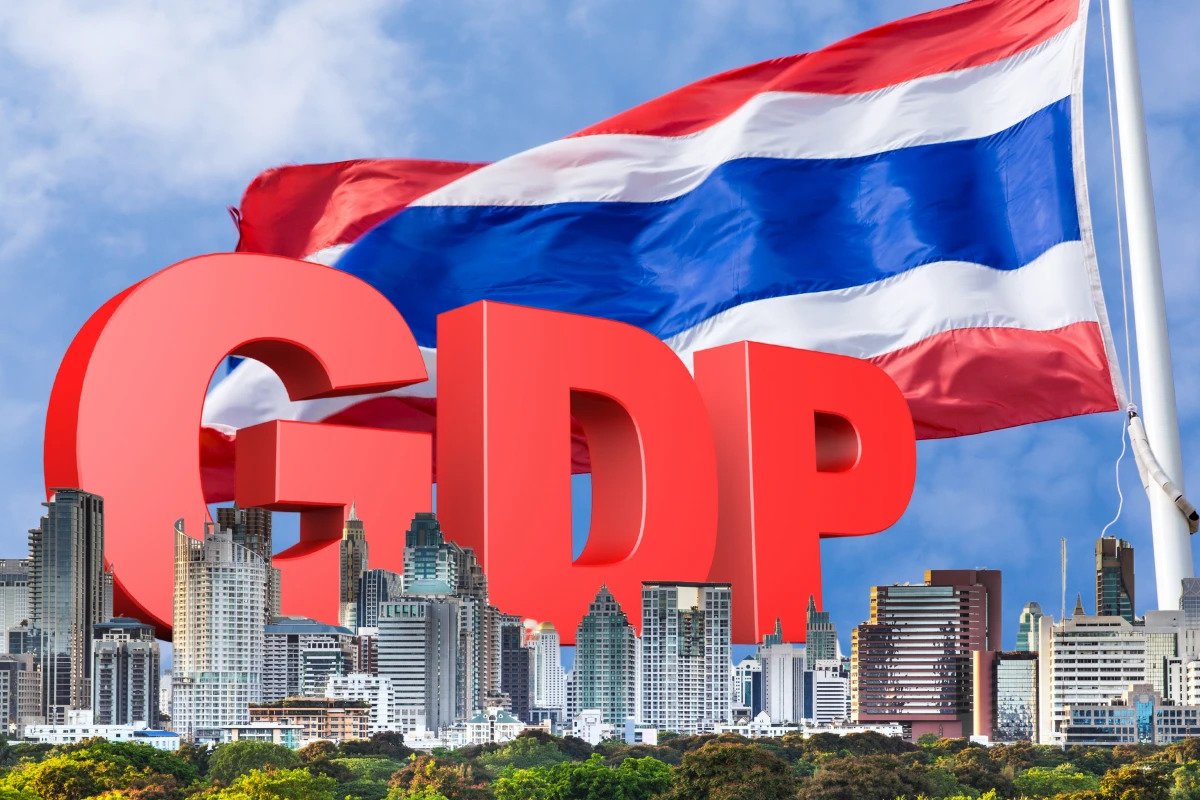
Under updated official assessments, Thailand’s baseline GDP growth for 2026 has been revised to around 1.4–1.5%, significantly below earlier expectations near 2%.
Inflation is now projected in the 2.5% to 3.5% range, reflecting persistent pressure from elevated energy costs.
The Bank of Thailand has similarly lowered growth projections, reinforcing the view that the slowdown is not temporary but structurally tied to external supply-side shocks.
The first scenario assumes a resolution in the first half of 2026. In this case, global energy markets gradually stabilize in the second half of the year, allowing oil prices to ease and inflation to moderate.
Thailand would still experience weak growth in 2026, but recovery would begin in 2027 as global trade conditions normalize.
This outcome is treated as the least disruptive path, though not the most likely.
The second scenario involves a prolonged conflict extending into late 2026. Here, energy supply constraints remain tight for longer, keeping oil prices elevated and forcing central banks globally to maintain restrictive monetary policy.
The key consequence for Thailand would be stagflation risk: weak growth combined with persistently high inflation.
Household consumption, exports, and tourism would all face simultaneous pressure.
The third scenario is the most severe and involves escalation across the Middle East with disruption extending into 2027. In this case, global energy infrastructure and shipping routes remain constrained for an extended period, pushing oil prices significantly higher and increasing the risk of a global downturn.
Thai growth in this scenario could slow sharply, with some stress models placing it close to stagnation levels, while inflation would remain elevated due to imported energy costs and supply chain fragmentation.
Across all scenarios, a consistent transmission channel is identified: Thailand’s heavy reliance on imported energy.
Higher oil prices immediately feed into transport costs, manufacturing inputs, and household spending power.
Officials have also highlighted secondary vulnerabilities, including exposure in agriculture (through fertiliser costs), manufacturing supply chains, and tourism flows sensitive to global fuel prices.
Recent financial market behavior reflects these risks.
Foreign investment flows have turned volatile, with equity and bond outflows recorded during periods of heightened tension.
The Thai baht has also faced downward pressure as energy import costs rise and global investors reassess emerging market exposure.
Policy constraints are becoming more visible.
With public debt already near its long-term ceiling, fiscal space for large-scale subsidies is limited.
Monetary policy is also constrained by imported inflation, reducing the central bank’s flexibility to stimulate demand without worsening price pressures.
The core implication of the scenario planning is that Thailand is no longer treating the Middle East conflict as an external background risk.
It is now embedded directly into macroeconomic planning, with growth, inflation, and budget assumptions all conditioned on geopolitical outcomes that remain outside domestic control.
The country’s near-term economic trajectory is therefore increasingly tied to the duration and intensity of an external war rather than internal demand conditions alone.
At the center of the reassessment is a structural concern: sustained disruption in global energy markets, which directly feeds into inflation, trade flows, and domestic growth performance.
What is confirmed is that Thailand’s National Economic and Social Development Council (NESDC), together with other core economic agencies, has formally incorporated three war-duration scenarios into its 2027 budget framework.
These scenarios are not abstract projections; they are used to model how oil prices, supply chains, and financial conditions could evolve under different levels of escalation or resolution.
The underlying driver is the global energy shock triggered by the conflict, which has already pushed Thailand’s macroeconomic outlook downward.
Under updated official assessments, Thailand’s baseline GDP growth for 2026 has been revised to around 1.4–1.5%, significantly below earlier expectations near 2%.
Inflation is now projected in the 2.5% to 3.5% range, reflecting persistent pressure from elevated energy costs.
The Bank of Thailand has similarly lowered growth projections, reinforcing the view that the slowdown is not temporary but structurally tied to external supply-side shocks.
The first scenario assumes a resolution in the first half of 2026. In this case, global energy markets gradually stabilize in the second half of the year, allowing oil prices to ease and inflation to moderate.
Thailand would still experience weak growth in 2026, but recovery would begin in 2027 as global trade conditions normalize.
This outcome is treated as the least disruptive path, though not the most likely.
The second scenario involves a prolonged conflict extending into late 2026. Here, energy supply constraints remain tight for longer, keeping oil prices elevated and forcing central banks globally to maintain restrictive monetary policy.
The key consequence for Thailand would be stagflation risk: weak growth combined with persistently high inflation.
Household consumption, exports, and tourism would all face simultaneous pressure.
The third scenario is the most severe and involves escalation across the Middle East with disruption extending into 2027. In this case, global energy infrastructure and shipping routes remain constrained for an extended period, pushing oil prices significantly higher and increasing the risk of a global downturn.
Thai growth in this scenario could slow sharply, with some stress models placing it close to stagnation levels, while inflation would remain elevated due to imported energy costs and supply chain fragmentation.
Across all scenarios, a consistent transmission channel is identified: Thailand’s heavy reliance on imported energy.
Higher oil prices immediately feed into transport costs, manufacturing inputs, and household spending power.
Officials have also highlighted secondary vulnerabilities, including exposure in agriculture (through fertiliser costs), manufacturing supply chains, and tourism flows sensitive to global fuel prices.
Recent financial market behavior reflects these risks.
Foreign investment flows have turned volatile, with equity and bond outflows recorded during periods of heightened tension.
The Thai baht has also faced downward pressure as energy import costs rise and global investors reassess emerging market exposure.
Policy constraints are becoming more visible.
With public debt already near its long-term ceiling, fiscal space for large-scale subsidies is limited.
Monetary policy is also constrained by imported inflation, reducing the central bank’s flexibility to stimulate demand without worsening price pressures.
The core implication of the scenario planning is that Thailand is no longer treating the Middle East conflict as an external background risk.
It is now embedded directly into macroeconomic planning, with growth, inflation, and budget assumptions all conditioned on geopolitical outcomes that remain outside domestic control.
The country’s near-term economic trajectory is therefore increasingly tied to the duration and intensity of an external war rather than internal demand conditions alone.