Vietnam’s Rapid, China-Linked Growth Narrows Gap with Thailand’s Economy
Vietnam’s robust expansion, underpinned by strong exports, manufacturing and integration with China, is bringing its GDP trajectory closer to Thailand’s as ASEAN economic dynamics evolve
Vietnam’s economy is gaining ground with sustained expansion and deepening economic linkages to China that are helping narrow its development gap with Thailand, recent data and forecasts show.
In 2025, Vietnam’s growth is expected to outpace many regional peers, with international institutions projecting it will remain among the fastest-growing major economies in the Asia-Pacific, buoyed by robust exports, manufacturing dynamism and strong domestic demand.
Vietnam’s gross domestic product is forecast to grow in the mid-6 percent range this year and next, higher than regional averages, while Thailand’s economy is projected to expand more modestly.
The Vietnamese government set ambitious growth targets for 2025, aiming for around eight percent expansion supported by rising industrial output, export performance and innovation in manufacturing.
Preliminary estimates indicate strong performance in key sectors such as electronics and trade-oriented production, even as global trade conditions present headwinds.
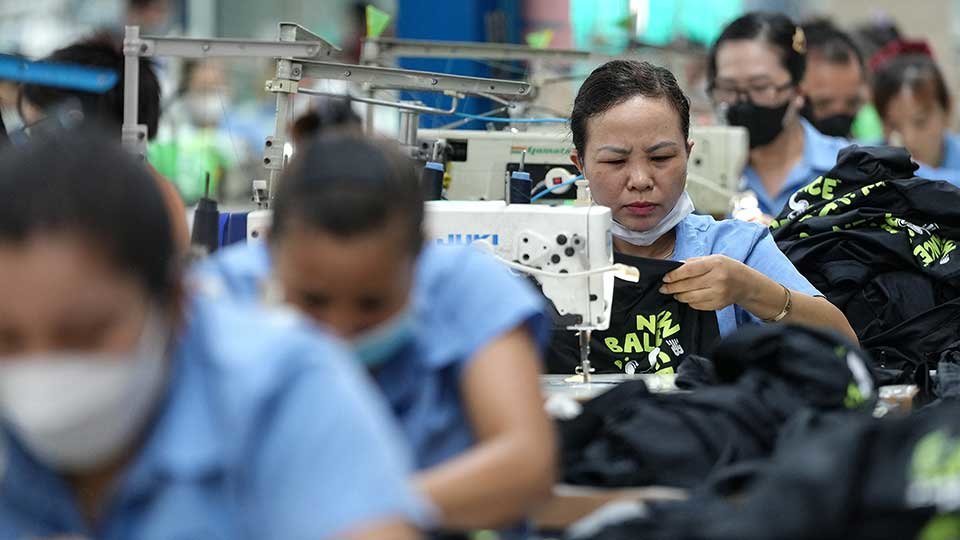
Vietnam’s total exports continued to climb, and foreign direct investment inflows remained sizable, reflecting the country’s appeal as a manufacturing and export hub.
China plays a central role in Vietnam’s economic trajectory, both as its largest import partner and as a pivotal link in regional supply chains.
Trade with China has grown significantly over the decades, with bilateral exchanges encompassing energy, machinery and components that feed Vietnam’s production networks.
Major infrastructure and connectivity initiatives also underscore the deepening economic ties between the two countries, enhancing regional integration and logistics capacity.
Compared with Thailand, which is forecast to grow at a slower pace in 2025 and 2026, Vietnam’s relatively higher growth rate reflects structural factors such as its demographic dividend, export-led industrialisation and active economic reforms.
While Thailand focuses on stabilising its economy and broadening sectors such as services and tourism, Vietnam’s rapid industrial expansion and integration with global value chains point to a converging economic profile within Southeast Asia.
Analysts note that as Vietnam’s GDP continues to rise, its economic size and growth dynamics are drawing it closer to Thailand’s, highlighting the shifting balance within the region’s economic landscape.
In 2025, Vietnam’s growth is expected to outpace many regional peers, with international institutions projecting it will remain among the fastest-growing major economies in the Asia-Pacific, buoyed by robust exports, manufacturing dynamism and strong domestic demand.
Vietnam’s gross domestic product is forecast to grow in the mid-6 percent range this year and next, higher than regional averages, while Thailand’s economy is projected to expand more modestly.
The Vietnamese government set ambitious growth targets for 2025, aiming for around eight percent expansion supported by rising industrial output, export performance and innovation in manufacturing.
Preliminary estimates indicate strong performance in key sectors such as electronics and trade-oriented production, even as global trade conditions present headwinds.
Vietnam’s total exports continued to climb, and foreign direct investment inflows remained sizable, reflecting the country’s appeal as a manufacturing and export hub.
China plays a central role in Vietnam’s economic trajectory, both as its largest import partner and as a pivotal link in regional supply chains.
Trade with China has grown significantly over the decades, with bilateral exchanges encompassing energy, machinery and components that feed Vietnam’s production networks.
Major infrastructure and connectivity initiatives also underscore the deepening economic ties between the two countries, enhancing regional integration and logistics capacity.
Compared with Thailand, which is forecast to grow at a slower pace in 2025 and 2026, Vietnam’s relatively higher growth rate reflects structural factors such as its demographic dividend, export-led industrialisation and active economic reforms.
While Thailand focuses on stabilising its economy and broadening sectors such as services and tourism, Vietnam’s rapid industrial expansion and integration with global value chains point to a converging economic profile within Southeast Asia.
Analysts note that as Vietnam’s GDP continues to rise, its economic size and growth dynamics are drawing it closer to Thailand’s, highlighting the shifting balance within the region’s economic landscape.