China’s New Southeast Asia Rail Corridor Reshapes the Durian Trade
Expanded freight links from Laos and neighboring countries are cutting costs and accelerating delivery of tropical fruit into China’s consumer markets
SYSTEM-DRIVEN trade infrastructure is reshaping agricultural logistics across Southeast Asia as new rail connections linking China with mainland Southeast Asia begin to alter the economics of perishable goods transport, particularly high-demand tropical fruits such as durian.
The development reflects a broader strategy to integrate regional economies through faster overland freight corridors that complement existing maritime routes.
What is confirmed is that China has expanded rail freight connectivity through Laos as part of a wider network linking Yunnan province with Southeast Asian agricultural producers.
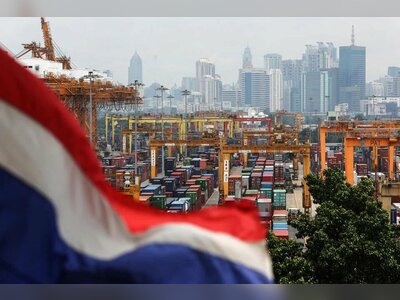
These rail routes are increasingly used to transport fresh produce, reducing reliance on longer sea freight journeys that are more vulnerable to delays, port congestion, and spoilage risks for perishable goods.
The core mechanism driving the shift is transit time reduction.
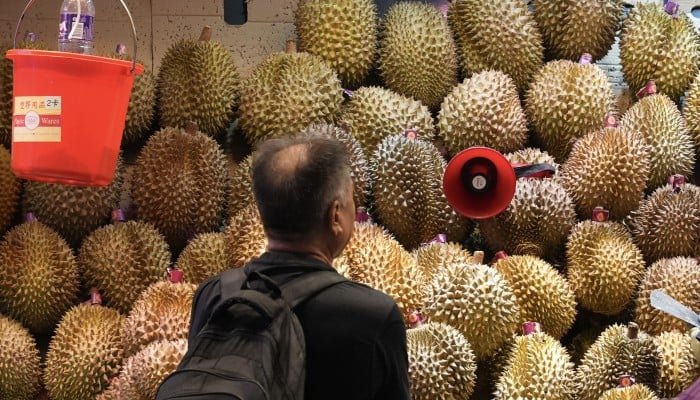
Durian, a highly perishable and high-value tropical fruit, typically depends on rapid logistics chains to maintain quality during export.
Traditional shipping routes from Thailand, Vietnam, and Malaysia to Chinese markets can take several days by sea, with additional delays at ports.
Rail transport through inland corridors can significantly shorten delivery times, improving freshness and reducing spoilage losses.
The impact is most visible in pricing and supply stability.
Faster logistics and increased freight capacity tend to lower per-unit transport costs, which can translate into more stable or reduced retail prices in destination markets.
At the same time, improved supply chain efficiency allows exporters in Southeast Asia to expand market reach and reduce dependency on seasonal shipping bottlenecks.
China’s domestic demand is a central driver of this trade expansion.
Durian consumption has surged in recent years, turning the fruit into a major import commodity.
This demand has encouraged both infrastructure investment and the development of dedicated cold-chain logistics systems capable of maintaining temperature control across long-distance rail routes.
The new rail corridor also changes competitive dynamics among exporting countries.
Producers in Thailand, Vietnam, and Malaysia compete not only on price and quality but increasingly on logistical access to Chinese distribution networks.
Countries with faster or more reliable rail-linked routes gain a structural advantage in supplying fresh produce.
However, the system is not without constraints.
Rail capacity remains limited compared to maritime bulk shipping, and temperature-controlled logistics require significant investment in refrigeration technology and coordination across borders.
Any disruption at border crossings or customs checkpoints can still affect delivery speed, reducing some of the theoretical advantages of rail transport.
Despite these limitations, the expansion of Southeast Asia–China rail freight represents a structural shift in regional agricultural trade.
It reflects a gradual reorientation of supply chains toward integrated land-based corridors that prioritize speed and predictability for high-value perishable goods, with long-term implications for pricing, trade balance, and regional economic integration.
The development reflects a broader strategy to integrate regional economies through faster overland freight corridors that complement existing maritime routes.
What is confirmed is that China has expanded rail freight connectivity through Laos as part of a wider network linking Yunnan province with Southeast Asian agricultural producers.
These rail routes are increasingly used to transport fresh produce, reducing reliance on longer sea freight journeys that are more vulnerable to delays, port congestion, and spoilage risks for perishable goods.
The core mechanism driving the shift is transit time reduction.
Durian, a highly perishable and high-value tropical fruit, typically depends on rapid logistics chains to maintain quality during export.
Traditional shipping routes from Thailand, Vietnam, and Malaysia to Chinese markets can take several days by sea, with additional delays at ports.
Rail transport through inland corridors can significantly shorten delivery times, improving freshness and reducing spoilage losses.
The impact is most visible in pricing and supply stability.
Faster logistics and increased freight capacity tend to lower per-unit transport costs, which can translate into more stable or reduced retail prices in destination markets.
At the same time, improved supply chain efficiency allows exporters in Southeast Asia to expand market reach and reduce dependency on seasonal shipping bottlenecks.
China’s domestic demand is a central driver of this trade expansion.
Durian consumption has surged in recent years, turning the fruit into a major import commodity.
This demand has encouraged both infrastructure investment and the development of dedicated cold-chain logistics systems capable of maintaining temperature control across long-distance rail routes.
The new rail corridor also changes competitive dynamics among exporting countries.
Producers in Thailand, Vietnam, and Malaysia compete not only on price and quality but increasingly on logistical access to Chinese distribution networks.
Countries with faster or more reliable rail-linked routes gain a structural advantage in supplying fresh produce.
However, the system is not without constraints.
Rail capacity remains limited compared to maritime bulk shipping, and temperature-controlled logistics require significant investment in refrigeration technology and coordination across borders.
Any disruption at border crossings or customs checkpoints can still affect delivery speed, reducing some of the theoretical advantages of rail transport.
Despite these limitations, the expansion of Southeast Asia–China rail freight represents a structural shift in regional agricultural trade.
It reflects a gradual reorientation of supply chains toward integrated land-based corridors that prioritize speed and predictability for high-value perishable goods, with long-term implications for pricing, trade balance, and regional economic integration.