Mitsui Joins Thailand’s First Pilot Carbon-Capture Project at Arthit Field
Japanese energy group Mitsui & Co. participates in PTT Exploration and Production Public Company Limited’s flagship CCS initiative off Thailand by 2028
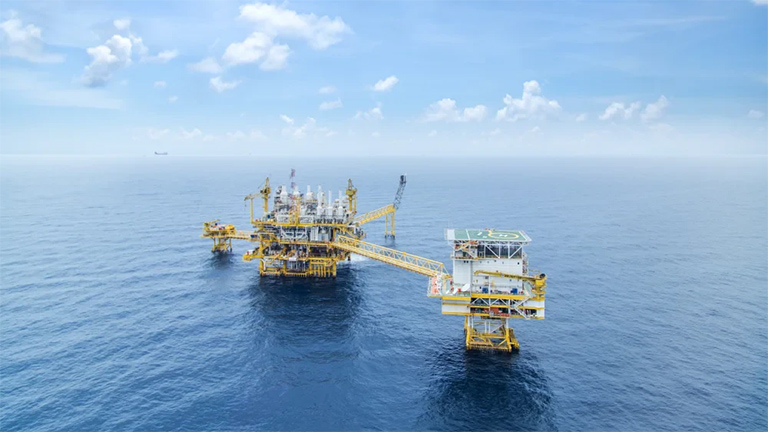
Thailand is advancing a major milestone in its climate strategy as PTT E&P reaches a final investment decision on the country’s first offshore carbon-capture and storage (CCS) project at the Arthit gas field in the Gulf of Thailand.
The project is designed to store up to one million tonnes of carbon dioxide annually from 2028 onward, while maintaining the field’s natural gas production capacity.
In a significant development, Japanese energy group Mitsui & Co., Ltd. (via its wholly-owned subsidiary Mitsui Oil Exploration Co., Ltd., or MOECO) has joined the initiative.
According to earlier disclosures, MOECO Thailand Co., Ltd. holds a 4 % equity interest in the Arthit development, positioning Mitsui to contribute upstream expertise and carbon-management technology.
The Arthit gas field currently supplies about eight per cent of Thailand’s domestic natural-gas demand, underscoring its strategic importance to energy security.
Leveraging existing production infrastructure, the CCS scheme will inject captured CO₂ into subsurface reservoirs at depths of 1 000–2 000 metres, minimising incremental disruption to the field’s operations.
With a projected investment cost of approximately THB 10 billion (around US$320 million) over five years, the project has been designated as a Flagship Project under Thailand’s Nationally Determined Contribution (NDC) Action Plan on Mitigation.
It will serve as a pilot for the Eastern CCS Hub in the northern Gulf region, supporting Thailand’s long-term aim of attaining net-zero carbon emissions.
Mitsui’s participation is consistent with its own net-zero by 2050 target and reflects a broader commitment to carbon-management solutions in Southeast Asia.
In 2022, the company and MOECO were selected under Japan’s Ministry of Economy, Trade and Industry’s (METI) infrastructure-development support programme to conduct a feasibility study for CCS and to leverage Japan’s Joint Crediting Mechanism (JCM) framework—strengthening bilateral collaboration in low-carbon technology transfer.
For Thailand, the project combines energy-security and emissions-reduction imperatives.
By integrating CCS into its mature offshore infrastructure, the country positions itself as a regional front-runner in industrial decarbonisation.
The involvement of foreign expertise such as Mitsui further bolsters Thailand’s status as a hub for climate-technology deployment in the ASEAN region.
As the Arthit CCS project moves into execution, key next steps include detailed engineering, measurement-monitoring-verification (MMV) system design and regulatory enabling—particularly tax incentives and investment support.
With commercial injection scheduled in 2028, this initiative promises to be a landmark in Thailand’s industrial and climate-policy trajectory.
The project is designed to store up to one million tonnes of carbon dioxide annually from 2028 onward, while maintaining the field’s natural gas production capacity.
In a significant development, Japanese energy group Mitsui & Co., Ltd. (via its wholly-owned subsidiary Mitsui Oil Exploration Co., Ltd., or MOECO) has joined the initiative.
According to earlier disclosures, MOECO Thailand Co., Ltd. holds a 4 % equity interest in the Arthit development, positioning Mitsui to contribute upstream expertise and carbon-management technology.
The Arthit gas field currently supplies about eight per cent of Thailand’s domestic natural-gas demand, underscoring its strategic importance to energy security.
Leveraging existing production infrastructure, the CCS scheme will inject captured CO₂ into subsurface reservoirs at depths of 1 000–2 000 metres, minimising incremental disruption to the field’s operations.
With a projected investment cost of approximately THB 10 billion (around US$320 million) over five years, the project has been designated as a Flagship Project under Thailand’s Nationally Determined Contribution (NDC) Action Plan on Mitigation.
It will serve as a pilot for the Eastern CCS Hub in the northern Gulf region, supporting Thailand’s long-term aim of attaining net-zero carbon emissions.
Mitsui’s participation is consistent with its own net-zero by 2050 target and reflects a broader commitment to carbon-management solutions in Southeast Asia.
In 2022, the company and MOECO were selected under Japan’s Ministry of Economy, Trade and Industry’s (METI) infrastructure-development support programme to conduct a feasibility study for CCS and to leverage Japan’s Joint Crediting Mechanism (JCM) framework—strengthening bilateral collaboration in low-carbon technology transfer.
For Thailand, the project combines energy-security and emissions-reduction imperatives.
By integrating CCS into its mature offshore infrastructure, the country positions itself as a regional front-runner in industrial decarbonisation.
The involvement of foreign expertise such as Mitsui further bolsters Thailand’s status as a hub for climate-technology deployment in the ASEAN region.
As the Arthit CCS project moves into execution, key next steps include detailed engineering, measurement-monitoring-verification (MMV) system design and regulatory enabling—particularly tax incentives and investment support.
With commercial injection scheduled in 2028, this initiative promises to be a landmark in Thailand’s industrial and climate-policy trajectory.