Thai Election Delivers Unexpected Conservative Surge as Reformist Poll Leads Fall Short
Ruling Bhumjaithai Party secures plurality in Thailand’s general election, defying pre-election polls that favoured reformist momentum
In a result that defied pre-election polling and expectations of a reform-led breakthrough, Thailand’s conservative ruling party emerged as the front-runner in the general election held on February eight, highlighting a significant shift in the political landscape.
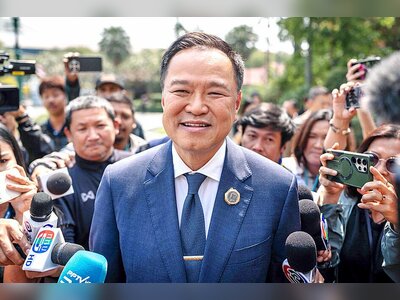
Early unofficial results released with roughly ninety-four per cent of votes counted show the Bhumjaithai Party, led by incumbent Prime Minister Anutin Charnvirakul, winning around one hundred and ninety-three of the five hundred seats in the House of Representatives.
This outcome positions Bhumjaithai to lead coalition negotiations and keeps Anutin on track to remain prime minister, despite a lack of an outright majority.
The result underscores rising nationalist sentiment and voter preference for stability amid economic stagnation and border tensions, even as turnout — around sixty-five per cent — was lower than in the previous election.
The progressive People’s Party, which had been widely projected by polls to capitalize on youth and urban support, secured a distant second place with around one hundred and fifteen seats, while the traditional Pheu Thai Party trailed in third with roughly seventy-five seats.
Analysts interpreted the unexpected outcome as a conservative consolidation that surpassed poll forecasts, where pre-election surveys had suggested stronger leads for reform-oriented movements and questioned whether establishment forces could retain their grip on power.
The election also ran alongside a referendum on initiating constitutional reform, with preliminary indications showing broad public approval for a rewrite of the military-era charter, reflecting a complex interplay between demands for institutional change and a preference for established leadership in parliamentary representation.
Bhumjaithai’s campaign focused on national security, economic challenges and continuity of governance, contrasting with the reformist platform’s emphasis on structural change.
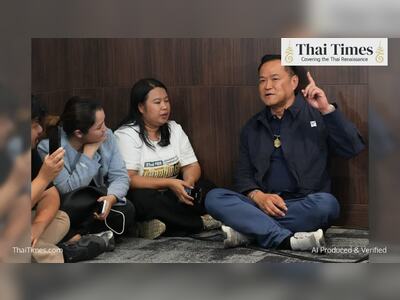
In his victory remarks, Anutin called for unity and pledged to build a government capable of responding to voters’ priorities, setting the stage for coalition talks that will determine Thailand’s next governing configuration in a fractious political landscape.
Early unofficial results released with roughly ninety-four per cent of votes counted show the Bhumjaithai Party, led by incumbent Prime Minister Anutin Charnvirakul, winning around one hundred and ninety-three of the five hundred seats in the House of Representatives.
This outcome positions Bhumjaithai to lead coalition negotiations and keeps Anutin on track to remain prime minister, despite a lack of an outright majority.
The result underscores rising nationalist sentiment and voter preference for stability amid economic stagnation and border tensions, even as turnout — around sixty-five per cent — was lower than in the previous election.
The progressive People’s Party, which had been widely projected by polls to capitalize on youth and urban support, secured a distant second place with around one hundred and fifteen seats, while the traditional Pheu Thai Party trailed in third with roughly seventy-five seats.
Analysts interpreted the unexpected outcome as a conservative consolidation that surpassed poll forecasts, where pre-election surveys had suggested stronger leads for reform-oriented movements and questioned whether establishment forces could retain their grip on power.
The election also ran alongside a referendum on initiating constitutional reform, with preliminary indications showing broad public approval for a rewrite of the military-era charter, reflecting a complex interplay between demands for institutional change and a preference for established leadership in parliamentary representation.
Bhumjaithai’s campaign focused on national security, economic challenges and continuity of governance, contrasting with the reformist platform’s emphasis on structural change.
In his victory remarks, Anutin called for unity and pledged to build a government capable of responding to voters’ priorities, setting the stage for coalition talks that will determine Thailand’s next governing configuration in a fractious political landscape.