Thailand and Vietnam Deepen Strategic Ties Amid Regional Supply Chain Realignment
Bangkok and Hanoi are advancing closer economic and diplomatic cooperation as Southeast Asia positions itself within shifting global trade, investment and security dynamics.
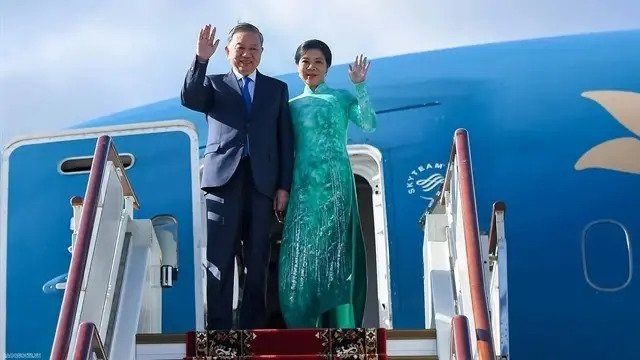
SYSTEM-DRIVEN dynamics in Southeast Asia’s economic and security architecture are driving a renewed phase of bilateral engagement between Thailand and Vietnam, with both governments moving to strengthen ties during an official visit aimed at expanding cooperation in trade, investment, and regional stability.
What is confirmed is that Thailand and Vietnam are holding high-level talks during an official diplomatic visit focused on enhancing bilateral relations across multiple sectors, including trade facilitation, infrastructure cooperation, tourism, and regional coordination within ASEAN frameworks.
The engagement reflects a broader structural shift in Southeast Asia’s economic geography.
Both countries are increasingly positioning themselves as complementary manufacturing and export hubs in global supply chains that are being reorganized away from overreliance on single-country production models.
Vietnam has emerged over the past decade as one of the fastest-growing manufacturing centers in Asia, attracting major investment from electronics, textiles, and high-tech industries seeking alternatives to China-centric supply chains.
Thailand, meanwhile, remains a regional automotive, electronics, and agribusiness hub with long-established industrial capacity and stronger logistics infrastructure.
The strengthening of bilateral ties is therefore not only diplomatic but also economic in function.
Both governments are seeking to reduce trade friction, improve cross-border investment conditions, and align industrial strategies to attract foreign direct investment from multinational companies diversifying production across Southeast Asia.
A key driver is the intensifying global competition for supply chain relocation.
Since the disruption of global trade during the pandemic and subsequent geopolitical tensions between major economies, multinational corporations have accelerated a “China plus one” or “China plus multiple hubs” strategy.
This approach spreads production across several countries to reduce geopolitical and logistical risk.
Thailand and Vietnam are among the principal beneficiaries of this trend, alongside Malaysia and Indonesia.
The talks also reflect ASEAN’s internal push for deeper economic integration.
While the Association of Southeast Asian Nations has long promoted regional cooperation, practical integration has often lagged behind due to regulatory differences, infrastructure gaps, and varying levels of economic development.
Bilateral agreements such as the Thailand–Vietnam engagement are increasingly seen as practical building blocks for more functional regional connectivity.
Trade between Thailand and Vietnam has expanded significantly in recent years, but both sides see further potential in sectors such as automotive components, renewable energy, food processing, digital services, and logistics.
Thailand’s advanced manufacturing base and Vietnam’s rapidly expanding industrial workforce create a complementary economic relationship rather than a directly competitive one in several key industries.
Tourism is also part of the cooperation agenda.
Both countries are major tourism destinations in Southeast Asia and are exploring ways to streamline travel promotion, increase intra-regional tourism flows, and coordinate marketing strategies targeting long-haul visitors from Europe, North America, and the Middle East.
Security and geopolitical considerations also underpin the talks.
Southeast Asia is navigating increasing strategic pressure from competing global powers, particularly as tensions rise in surrounding maritime regions and as major economies seek to expand their influence through infrastructure investment, defense cooperation, and trade agreements.
Thailand and Vietnam maintain generally pragmatic foreign policy positions, balancing relations with China, the United States, and regional partners while prioritizing economic stability and non-alignment principles.
The strengthening of bilateral ties is consistent with that balancing strategy, emphasizing economic cooperation and institutional predictability rather than military alignment.
For both governments, improving bilateral coordination also enhances their bargaining position in broader regional negotiations.
Stronger intra-ASEAN links allow member states to present more cohesive positions in global trade discussions and to reduce vulnerability to external economic shocks.
The immediate outcomes of the current talks are expected to focus on practical agreements rather than symbolic declarations.
These include potential updates to trade facilitation mechanisms, expanded investment promotion frameworks, and cooperation in infrastructure development that could improve logistics efficiency between mainland Southeast Asia’s industrial corridors.
The broader significance lies in the gradual formation of more tightly connected Southeast Asian economic subregions.
Rather than relying solely on multilateral ASEAN-wide mechanisms, countries are increasingly forming dense bilateral and trilateral partnerships that function as operational trade and investment corridors.
Thailand and Vietnam’s engagement reflects this shift toward more flexible, interest-driven regional integration.
As global supply chains continue to fragment and reconfigure, such partnerships are becoming central to how Southeast Asia positions itself within the global economy, with both countries seeking to secure long-term competitiveness through deeper structural alignment.
What is confirmed is that Thailand and Vietnam are holding high-level talks during an official diplomatic visit focused on enhancing bilateral relations across multiple sectors, including trade facilitation, infrastructure cooperation, tourism, and regional coordination within ASEAN frameworks.
The engagement reflects a broader structural shift in Southeast Asia’s economic geography.
Both countries are increasingly positioning themselves as complementary manufacturing and export hubs in global supply chains that are being reorganized away from overreliance on single-country production models.
Vietnam has emerged over the past decade as one of the fastest-growing manufacturing centers in Asia, attracting major investment from electronics, textiles, and high-tech industries seeking alternatives to China-centric supply chains.
Thailand, meanwhile, remains a regional automotive, electronics, and agribusiness hub with long-established industrial capacity and stronger logistics infrastructure.
The strengthening of bilateral ties is therefore not only diplomatic but also economic in function.
Both governments are seeking to reduce trade friction, improve cross-border investment conditions, and align industrial strategies to attract foreign direct investment from multinational companies diversifying production across Southeast Asia.
A key driver is the intensifying global competition for supply chain relocation.
Since the disruption of global trade during the pandemic and subsequent geopolitical tensions between major economies, multinational corporations have accelerated a “China plus one” or “China plus multiple hubs” strategy.
This approach spreads production across several countries to reduce geopolitical and logistical risk.
Thailand and Vietnam are among the principal beneficiaries of this trend, alongside Malaysia and Indonesia.
The talks also reflect ASEAN’s internal push for deeper economic integration.
While the Association of Southeast Asian Nations has long promoted regional cooperation, practical integration has often lagged behind due to regulatory differences, infrastructure gaps, and varying levels of economic development.
Bilateral agreements such as the Thailand–Vietnam engagement are increasingly seen as practical building blocks for more functional regional connectivity.
Trade between Thailand and Vietnam has expanded significantly in recent years, but both sides see further potential in sectors such as automotive components, renewable energy, food processing, digital services, and logistics.
Thailand’s advanced manufacturing base and Vietnam’s rapidly expanding industrial workforce create a complementary economic relationship rather than a directly competitive one in several key industries.
Tourism is also part of the cooperation agenda.
Both countries are major tourism destinations in Southeast Asia and are exploring ways to streamline travel promotion, increase intra-regional tourism flows, and coordinate marketing strategies targeting long-haul visitors from Europe, North America, and the Middle East.
Security and geopolitical considerations also underpin the talks.
Southeast Asia is navigating increasing strategic pressure from competing global powers, particularly as tensions rise in surrounding maritime regions and as major economies seek to expand their influence through infrastructure investment, defense cooperation, and trade agreements.
Thailand and Vietnam maintain generally pragmatic foreign policy positions, balancing relations with China, the United States, and regional partners while prioritizing economic stability and non-alignment principles.
The strengthening of bilateral ties is consistent with that balancing strategy, emphasizing economic cooperation and institutional predictability rather than military alignment.
For both governments, improving bilateral coordination also enhances their bargaining position in broader regional negotiations.
Stronger intra-ASEAN links allow member states to present more cohesive positions in global trade discussions and to reduce vulnerability to external economic shocks.
The immediate outcomes of the current talks are expected to focus on practical agreements rather than symbolic declarations.
These include potential updates to trade facilitation mechanisms, expanded investment promotion frameworks, and cooperation in infrastructure development that could improve logistics efficiency between mainland Southeast Asia’s industrial corridors.
The broader significance lies in the gradual formation of more tightly connected Southeast Asian economic subregions.
Rather than relying solely on multilateral ASEAN-wide mechanisms, countries are increasingly forming dense bilateral and trilateral partnerships that function as operational trade and investment corridors.
Thailand and Vietnam’s engagement reflects this shift toward more flexible, interest-driven regional integration.
As global supply chains continue to fragment and reconfigure, such partnerships are becoming central to how Southeast Asia positions itself within the global economy, with both countries seeking to secure long-term competitiveness through deeper structural alignment.