Thailand’s PromptPay Becomes a Model for Digital Trade Finance Modernization
The country’s real-time payment infrastructure is increasingly viewed as a blueprint for reducing friction in trade finance, improving liquidity, and modernizing cross-border settlement systems in emerging Asia.
SYSTEM-DRIVEN financial infrastructure reform is reshaping how Thailand’s payment and trade settlement ecosystem operates, with the national real-time payments system PromptPay increasingly cited as a foundational model for broader modernization of trade finance and regional transaction networks.
PromptPay is Thailand’s national real-time retail payment system, designed to enable instant money transfers using identifiers such as mobile numbers or national ID numbers rather than traditional bank account details.
Since its rollout, it has significantly reduced transaction costs, expanded financial inclusion, and accelerated the shift away from cash-based payments in both urban and rural economies.
What is confirmed is that PromptPay has become one of the most widely used instant payment systems in Southeast Asia, with large-scale adoption across individuals, small businesses, and increasingly within formal commercial transactions.
Its low-cost structure and interoperability across major Thai banks have made it a core component of the country’s digital financial infrastructure.
The emerging policy debate centers on whether this domestic success can be extended into trade finance modernization, particularly in cross-border payments, supply chain financing, and export-import settlement systems.
Trade finance refers to the financial instruments and credit mechanisms that support international trade, including letters of credit, payment guarantees, and short-term working capital for exporters and importers.
In many emerging economies, these systems remain slow, document-heavy, and expensive, creating friction in cross-border commerce.
Thailand’s policy and financial institutions are increasingly exploring how real-time domestic payment architecture like PromptPay could be adapted or linked with regional systems to reduce settlement delays, lower transaction costs, and improve liquidity for small and medium-sized enterprises engaged in trade.
The key mechanism under discussion is interoperability.
If domestic instant payment systems can be connected across borders, either bilaterally or through regional clearing frameworks, businesses could settle trade-related payments in near real time rather than waiting days or weeks for traditional banking channels to process transactions.
This matters because trade finance constraints disproportionately affect smaller exporters.
Large multinational corporations typically have access to global banking networks and credit facilities, while smaller firms often face higher fees, stricter collateral requirements, and longer settlement cycles.
Reducing these barriers is seen as a direct way to increase export participation and economic diversification.
PromptPay’s architecture is frequently referenced because it demonstrates how a centralized but interoperable system can scale rapidly when backed by strong regulatory coordination between central banks and commercial banks.
However, extending such systems into trade finance introduces additional complexity.
Cross-border payments require alignment between different regulatory regimes, foreign exchange mechanisms, anti-money laundering standards, and settlement risk frameworks.
Unlike domestic retail transfers, international trade flows involve multiple jurisdictions and layered financial instruments.
As a result, the transition from domestic instant payments to cross-border trade finance integration is not purely technical.
It is also institutional and geopolitical.
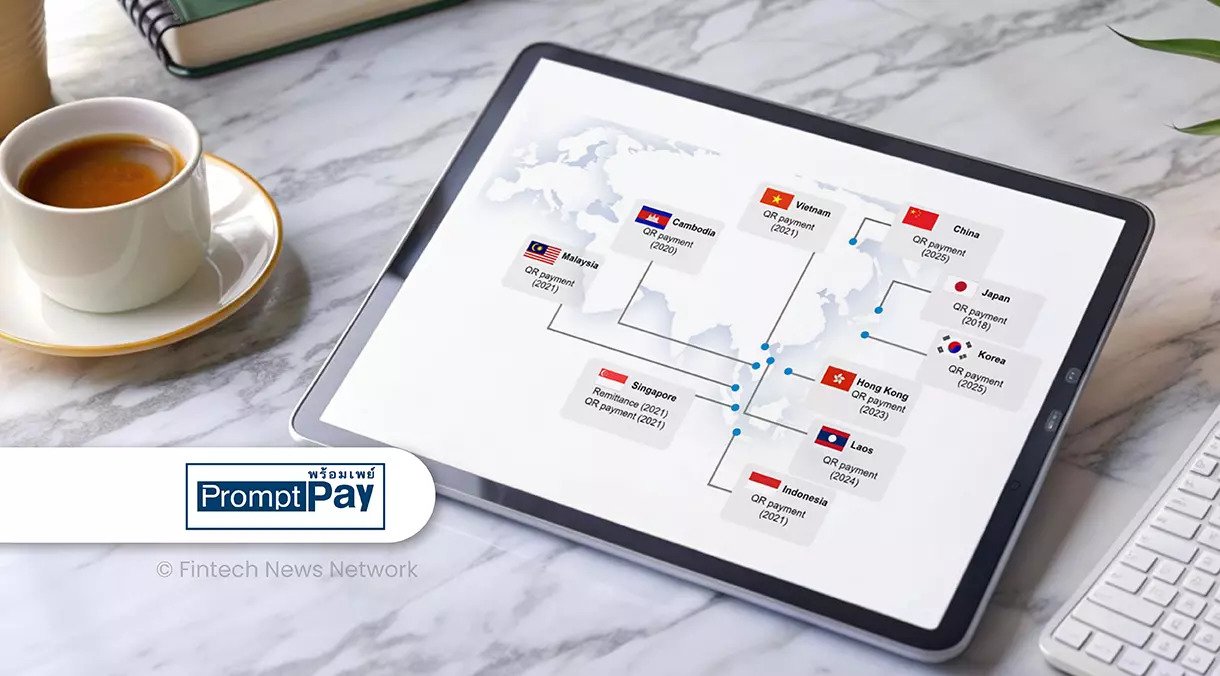
Regional efforts in Asia are already moving in this direction, with multiple central banks exploring real-time payment linkages and digital settlement corridors.
Thailand’s position is strengthened by its relatively advanced domestic infrastructure and its active participation in regional economic frameworks.
The potential economic impact is significant.
Faster settlement cycles can reduce working capital requirements for businesses, improve cash flow stability, and lower the cost of trade financing.
Over time, this can increase trade volumes, particularly for small and medium-sized enterprises that are sensitive to liquidity constraints.
There is also a broader macroeconomic dimension.
Countries that modernize payment infrastructure tend to see improvements in financial transparency, tax efficiency, and monetary policy transmission.
Real-time systems also provide regulators with better visibility into economic activity, although they raise parallel concerns about data governance and financial surveillance.
Thailand’s experience with PromptPay highlights both sides of this transformation.
On one hand, the system has successfully reduced reliance on cash and improved efficiency across the retail economy.
On the other, scaling such systems into cross-border trade finance will require careful coordination to balance efficiency, security, and sovereignty concerns.
For policymakers, the central question is how far domestic innovation can be extended into regional financial architecture without fragmenting standards or increasing systemic risk.
For businesses, the key issue is more immediate: whether faster, cheaper, and more reliable payment systems can reduce friction in international trade and improve access to working capital.
PromptPay’s evolution from a domestic payment rail into a potential template for trade finance modernization reflects a broader shift in global financial systems, where payment infrastructure is increasingly treated not just as a utility, but as a strategic economic asset shaping competitiveness, integration, and growth.
PromptPay is Thailand’s national real-time retail payment system, designed to enable instant money transfers using identifiers such as mobile numbers or national ID numbers rather than traditional bank account details.
Since its rollout, it has significantly reduced transaction costs, expanded financial inclusion, and accelerated the shift away from cash-based payments in both urban and rural economies.
What is confirmed is that PromptPay has become one of the most widely used instant payment systems in Southeast Asia, with large-scale adoption across individuals, small businesses, and increasingly within formal commercial transactions.
Its low-cost structure and interoperability across major Thai banks have made it a core component of the country’s digital financial infrastructure.
The emerging policy debate centers on whether this domestic success can be extended into trade finance modernization, particularly in cross-border payments, supply chain financing, and export-import settlement systems.
Trade finance refers to the financial instruments and credit mechanisms that support international trade, including letters of credit, payment guarantees, and short-term working capital for exporters and importers.
In many emerging economies, these systems remain slow, document-heavy, and expensive, creating friction in cross-border commerce.
Thailand’s policy and financial institutions are increasingly exploring how real-time domestic payment architecture like PromptPay could be adapted or linked with regional systems to reduce settlement delays, lower transaction costs, and improve liquidity for small and medium-sized enterprises engaged in trade.
The key mechanism under discussion is interoperability.
If domestic instant payment systems can be connected across borders, either bilaterally or through regional clearing frameworks, businesses could settle trade-related payments in near real time rather than waiting days or weeks for traditional banking channels to process transactions.
This matters because trade finance constraints disproportionately affect smaller exporters.
Large multinational corporations typically have access to global banking networks and credit facilities, while smaller firms often face higher fees, stricter collateral requirements, and longer settlement cycles.
Reducing these barriers is seen as a direct way to increase export participation and economic diversification.
PromptPay’s architecture is frequently referenced because it demonstrates how a centralized but interoperable system can scale rapidly when backed by strong regulatory coordination between central banks and commercial banks.
However, extending such systems into trade finance introduces additional complexity.
Cross-border payments require alignment between different regulatory regimes, foreign exchange mechanisms, anti-money laundering standards, and settlement risk frameworks.
Unlike domestic retail transfers, international trade flows involve multiple jurisdictions and layered financial instruments.
As a result, the transition from domestic instant payments to cross-border trade finance integration is not purely technical.
It is also institutional and geopolitical.
Regional efforts in Asia are already moving in this direction, with multiple central banks exploring real-time payment linkages and digital settlement corridors.
Thailand’s position is strengthened by its relatively advanced domestic infrastructure and its active participation in regional economic frameworks.
The potential economic impact is significant.
Faster settlement cycles can reduce working capital requirements for businesses, improve cash flow stability, and lower the cost of trade financing.
Over time, this can increase trade volumes, particularly for small and medium-sized enterprises that are sensitive to liquidity constraints.
There is also a broader macroeconomic dimension.
Countries that modernize payment infrastructure tend to see improvements in financial transparency, tax efficiency, and monetary policy transmission.
Real-time systems also provide regulators with better visibility into economic activity, although they raise parallel concerns about data governance and financial surveillance.
Thailand’s experience with PromptPay highlights both sides of this transformation.
On one hand, the system has successfully reduced reliance on cash and improved efficiency across the retail economy.
On the other, scaling such systems into cross-border trade finance will require careful coordination to balance efficiency, security, and sovereignty concerns.
For policymakers, the central question is how far domestic innovation can be extended into regional financial architecture without fragmenting standards or increasing systemic risk.
For businesses, the key issue is more immediate: whether faster, cheaper, and more reliable payment systems can reduce friction in international trade and improve access to working capital.
PromptPay’s evolution from a domestic payment rail into a potential template for trade finance modernization reflects a broader shift in global financial systems, where payment infrastructure is increasingly treated not just as a utility, but as a strategic economic asset shaping competitiveness, integration, and growth.