Thailand’s Land Bridge Mega-Project Faces Rising Environmental and Social Pushback
Critics warn the trillion-baht plan linking the Gulf of Thailand and Andaman Sea could reshape ecosystems, coastal livelihoods, and regional shipping economics
SYSTEM-DRIVEN infrastructure planning in Thailand is intensifying debate over the country’s proposed “Land Bridge” mega-project, a large-scale logistics corridor intended to connect the Gulf of Thailand and the Andaman Sea through southern provinces.
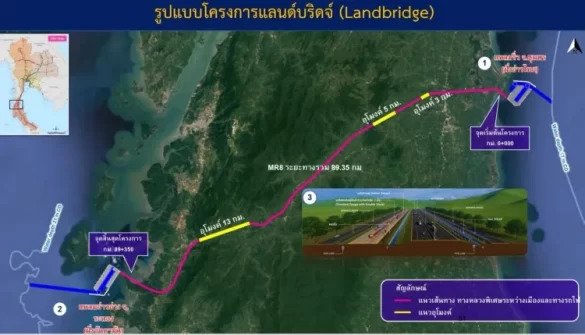
The project is designed around a dual-port system in Ranong and Chumphon linked by roughly 90 kilometers of road, rail, and energy infrastructure.
It is being promoted as a strategic alternative maritime route aimed at strengthening Thailand’s position in global shipping networks and reducing reliance on the Strait of Malacca, one of the world’s busiest sea lanes.
What is confirmed is that the project is still in a development and evaluation phase, with feasibility studies, environmental impact assessments, and policy review processes ongoing.
Government agencies have also discussed investment frameworks and potential fast-tracking mechanisms to accelerate implementation, reflecting strong political interest in moving the project forward.
At the same time, opposition is growing around the environmental and social costs of the scheme.
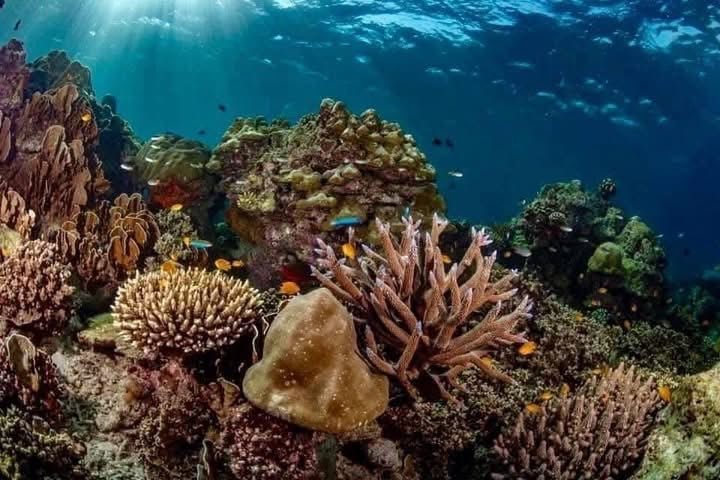
Conservation scientists and environmental advocates argue that the infrastructure would cut through ecologically sensitive areas in southern Thailand, including forests, mangroves, coastal wetlands, and marine ecosystems in the Andaman Sea region.
These ecosystems are widely recognized for high biodiversity and are already under pressure from tourism, fisheries, and coastal development.
The core environmental concern is structural disruption.
Large-scale port construction, dredging, and land transport corridors could fragment habitats, alter water systems, and increase sedimentation in coastal waters.
Marine ecologists warn that these changes can have cascading effects across connected ecosystems, including coral reefs and fish breeding grounds that support both commercial fisheries and local communities.
Beyond ecology, the project raises major concerns for coastal livelihoods.
Small-scale fishing communities and indigenous coastal groups depend on stable marine environments for income and food security.
Critics argue that industrial-scale logistics infrastructure could displace traditional economic activity, concentrating benefits in shipping, construction, and logistics sectors while distributing environmental costs locally.
The economic rationale is also under scrutiny.
While proponents frame the Land Bridge as a way to reduce shipping times and increase Thailand’s role in regional trade, independent assessments question whether cargo transfer between sea, land transport, and another port would actually be competitive with existing maritime routes.
Some analyses suggest that operational complexity, transfer delays, and additional handling costs could offset expected time savings, particularly compared with established shipping lanes through the Malacca Strait.
Financially, the project is estimated at around one trillion baht, placing it among the largest infrastructure investments in Thailand’s history.
This scale has raised concerns about long-term debt exposure, return on investment timelines, and the risk of underutilized capacity if global shipping demand does not align with projections.
Institutional scrutiny has also increased.
Human rights and environmental bodies have raised concerns about consultation processes and the adequacy of public participation in decision-making.
Calls have been made for broader stakeholder engagement, particularly involving communities in southern Thailand who would be directly affected by construction and land-use changes.
The Land Bridge debate ultimately reflects a broader national tension between development-driven economic strategy and environmental governance.
Supporters see it as a transformational logistics corridor that could reposition Thailand in global trade flows.
Critics see it as a high-risk intervention in one of the country’s most sensitive ecological regions, with uncertain economic returns and potentially irreversible environmental consequences.
As planning continues, the decisive factor will be whether Thailand can reconcile infrastructure ambition with ecological limits and local consent while maintaining financial viability in a highly competitive regional shipping landscape.
The project is designed around a dual-port system in Ranong and Chumphon linked by roughly 90 kilometers of road, rail, and energy infrastructure.
It is being promoted as a strategic alternative maritime route aimed at strengthening Thailand’s position in global shipping networks and reducing reliance on the Strait of Malacca, one of the world’s busiest sea lanes.
What is confirmed is that the project is still in a development and evaluation phase, with feasibility studies, environmental impact assessments, and policy review processes ongoing.
Government agencies have also discussed investment frameworks and potential fast-tracking mechanisms to accelerate implementation, reflecting strong political interest in moving the project forward.
At the same time, opposition is growing around the environmental and social costs of the scheme.
Conservation scientists and environmental advocates argue that the infrastructure would cut through ecologically sensitive areas in southern Thailand, including forests, mangroves, coastal wetlands, and marine ecosystems in the Andaman Sea region.
These ecosystems are widely recognized for high biodiversity and are already under pressure from tourism, fisheries, and coastal development.
The core environmental concern is structural disruption.
Large-scale port construction, dredging, and land transport corridors could fragment habitats, alter water systems, and increase sedimentation in coastal waters.
Marine ecologists warn that these changes can have cascading effects across connected ecosystems, including coral reefs and fish breeding grounds that support both commercial fisheries and local communities.
Beyond ecology, the project raises major concerns for coastal livelihoods.
Small-scale fishing communities and indigenous coastal groups depend on stable marine environments for income and food security.
Critics argue that industrial-scale logistics infrastructure could displace traditional economic activity, concentrating benefits in shipping, construction, and logistics sectors while distributing environmental costs locally.
The economic rationale is also under scrutiny.
While proponents frame the Land Bridge as a way to reduce shipping times and increase Thailand’s role in regional trade, independent assessments question whether cargo transfer between sea, land transport, and another port would actually be competitive with existing maritime routes.
Some analyses suggest that operational complexity, transfer delays, and additional handling costs could offset expected time savings, particularly compared with established shipping lanes through the Malacca Strait.
Financially, the project is estimated at around one trillion baht, placing it among the largest infrastructure investments in Thailand’s history.
This scale has raised concerns about long-term debt exposure, return on investment timelines, and the risk of underutilized capacity if global shipping demand does not align with projections.
Institutional scrutiny has also increased.
Human rights and environmental bodies have raised concerns about consultation processes and the adequacy of public participation in decision-making.
Calls have been made for broader stakeholder engagement, particularly involving communities in southern Thailand who would be directly affected by construction and land-use changes.
The Land Bridge debate ultimately reflects a broader national tension between development-driven economic strategy and environmental governance.
Supporters see it as a transformational logistics corridor that could reposition Thailand in global trade flows.
Critics see it as a high-risk intervention in one of the country’s most sensitive ecological regions, with uncertain economic returns and potentially irreversible environmental consequences.
As planning continues, the decisive factor will be whether Thailand can reconcile infrastructure ambition with ecological limits and local consent while maintaining financial viability in a highly competitive regional shipping landscape.