
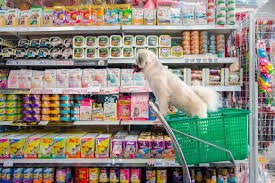
Thailand Sets Sights on Five-Billion-Dollar Pet Food Export Milestone by 2030
With annual exports nearing three billion dollars, Thailand aims to become Asia’s key pet-food manufacturing hub.
Thailand has solidified its position as the world’s second-largest exporter of pet food—behind Germany—with the domestic industry projecting export values to reach five billion US dollars by 2030. The country’s pet-food market also continues to expand rapidly, with market valuations expected to hit 92 billion baht in 2025, representing around a 13 per cent increase from the prior year, and projected to surpass 100 billion baht in 2026, according to government data released at the opening of the annual pet-industry trade fair in Bangkok.
The export figures are particularly striking: Thailand’s pet-food exports are forecast to hit approximately three billion US dollars this year—coming after a robust 50 per cent surge over last year, during which growth was already recorded at 28 per cent.
This growth trajectory reflects the industry’s ambitious leap from roughly one billion US dollars a decade ago to nearly three billion today.
The domestic pet-food segment itself is projected to reach 46 billion baht in 2025, expanding by 12 per cent year-on-year, with total sales volume estimated at about 400 000 tonnes.
Thai pet owners are now spending an average of 50 500 baht per pet annually—up around 23 per cent compared with the previous year—underscoring a rising trend in pet humanisation.
Industry officials highlight the strategic importance of the sector to the broader Thai economy.
“The pet industry is a vital part of the broader industrial value chain, including agriculture, food processing, manufacturing technologies, and animal-health services,” said the Ministry of Industry’s Chief of Inspectors General.
Complementing this view, a senior representative of the Thai Chamber of Commerce described pet food as “a new S-curve for Thai industry,” pointing to the dramatic export leap in recent years despite headwinds such as a two-month shipping suspension to the United States, Thailand’s largest pet-food market.
In response, the Thai government has unveiled a range of support measures aimed at strengthening the sector’s global competitiveness.
These include enhanced production standards and certification schemes, promotion of alternative proteins such as insect-based ingredients, and sustainability-oriented measures aimed at traceability of raw materials and environmentally conscious production.
Thailand’s competitive landscape in pet food has intensified: the market now hosts 317 brands, including 36 that entered in 2024 alone.
Imports—particularly from China—have seen compound annual growth of about 17 per cent in recent years and now account for some 40 per cent of total imports.
Meanwhile, major export destinations for Thai pet food include the United States, Japan, and Italy, with emerging opportunities in the United Kingdom and New Zealand.
In a recent development, a framework agreement announced between Thailand and the United States has brought renewed focus on trade negotiations specific to the food-sector and pet-food exports.
The annual trade fair—Pet Fair Southeast Asia 2025—opened today at the Bangkok International Trade & Exhibition Centre in Bangkok.
Running for three days, the event features 450 exhibiting companies from 35 countries across 9,500 square metres of exhibition space and includes 12 international pavilions representing Canada, China, Italy, Japan, Korea, Taiwan, Thailand, Spain, the United Kingdom and the United States.
Around 60 per cent of the exhibition space is dedicated to pet food, ingredients, treats and healthcare; 30 per cent to hygiene, accessories and grooming; and 10 per cent to emerging segments such as pet technology, apparel, furniture, toys, packaging and carriers.
Trade-fair organisers expect business-to-business deals to exceed one billion baht over the three-day period, underscoring the event’s role as a strategic platform for Asia’s pet-industry growth.
The show is positioning Thailand as a regional hub for pet-industry production and trade, leveraging the country’s logistic networks and connectivity to serve the rapidly expanding Asian market.
As Thailand advances toward its five-billion-dollar export target by 2030, industry leaders and government officials alike are emphasising the need for continued regulatory support, trade liberalisation and global market access to sustain the sector’s elevated growth trajectory.
The export figures are particularly striking: Thailand’s pet-food exports are forecast to hit approximately three billion US dollars this year—coming after a robust 50 per cent surge over last year, during which growth was already recorded at 28 per cent.
This growth trajectory reflects the industry’s ambitious leap from roughly one billion US dollars a decade ago to nearly three billion today.
The domestic pet-food segment itself is projected to reach 46 billion baht in 2025, expanding by 12 per cent year-on-year, with total sales volume estimated at about 400 000 tonnes.
Thai pet owners are now spending an average of 50 500 baht per pet annually—up around 23 per cent compared with the previous year—underscoring a rising trend in pet humanisation.
Industry officials highlight the strategic importance of the sector to the broader Thai economy.
“The pet industry is a vital part of the broader industrial value chain, including agriculture, food processing, manufacturing technologies, and animal-health services,” said the Ministry of Industry’s Chief of Inspectors General.
Complementing this view, a senior representative of the Thai Chamber of Commerce described pet food as “a new S-curve for Thai industry,” pointing to the dramatic export leap in recent years despite headwinds such as a two-month shipping suspension to the United States, Thailand’s largest pet-food market.
In response, the Thai government has unveiled a range of support measures aimed at strengthening the sector’s global competitiveness.
These include enhanced production standards and certification schemes, promotion of alternative proteins such as insect-based ingredients, and sustainability-oriented measures aimed at traceability of raw materials and environmentally conscious production.
Thailand’s competitive landscape in pet food has intensified: the market now hosts 317 brands, including 36 that entered in 2024 alone.
Imports—particularly from China—have seen compound annual growth of about 17 per cent in recent years and now account for some 40 per cent of total imports.
Meanwhile, major export destinations for Thai pet food include the United States, Japan, and Italy, with emerging opportunities in the United Kingdom and New Zealand.
In a recent development, a framework agreement announced between Thailand and the United States has brought renewed focus on trade negotiations specific to the food-sector and pet-food exports.
The annual trade fair—Pet Fair Southeast Asia 2025—opened today at the Bangkok International Trade & Exhibition Centre in Bangkok.
Running for three days, the event features 450 exhibiting companies from 35 countries across 9,500 square metres of exhibition space and includes 12 international pavilions representing Canada, China, Italy, Japan, Korea, Taiwan, Thailand, Spain, the United Kingdom and the United States.
Around 60 per cent of the exhibition space is dedicated to pet food, ingredients, treats and healthcare; 30 per cent to hygiene, accessories and grooming; and 10 per cent to emerging segments such as pet technology, apparel, furniture, toys, packaging and carriers.
Trade-fair organisers expect business-to-business deals to exceed one billion baht over the three-day period, underscoring the event’s role as a strategic platform for Asia’s pet-industry growth.
The show is positioning Thailand as a regional hub for pet-industry production and trade, leveraging the country’s logistic networks and connectivity to serve the rapidly expanding Asian market.
As Thailand advances toward its five-billion-dollar export target by 2030, industry leaders and government officials alike are emphasising the need for continued regulatory support, trade liberalisation and global market access to sustain the sector’s elevated growth trajectory.