Thailand Tightens Cannabis and Hemp Extract Rules as Regulatory Framework Takes Effect
New controls reshape Thailand’s once-liberal cannabis market, clarifying medical use, restricting extracts, and tightening enforcement across the supply chain.
SYSTEM-DRIVEN regulatory reform is reshaping Thailand’s cannabis and hemp industry as new rules governing cannabis extracts formally take effect, marking a decisive shift from the country’s earlier liberalized approach toward a more tightly controlled medical framework.
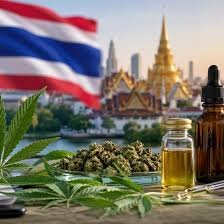
What is confirmed is that Thailand’s revised regulatory structure introduces stricter oversight of cannabis-derived extracts, including products such as oils, concentrates, and infused formulations.
The new framework places tighter controls on production, distribution, and permitted usage, reinforcing the classification of cannabis primarily as a regulated medical substance rather than a broadly accessible consumer product.
The policy shift follows several years of rapid and uneven expansion in Thailand’s cannabis sector after partial decriminalization opened the market to widespread cultivation, retail dispensaries, and wellness-focused products.
That initial policy change created one of the most open cannabis environments in Asia, but it also led to regulatory ambiguity, inconsistent enforcement, and concerns about recreational use outpacing medical oversight.
Under the updated rules, extract-based products face clearer licensing requirements and stricter compliance standards.
Producers are expected to meet defined quality controls, traceability requirements, and restrictions on THC content, the psychoactive compound in cannabis.
Distribution channels are also subject to tighter regulation, with an emphasis on medical access and controlled commercial pathways rather than open retail availability.
The key issue driving the reform is regulatory consolidation.
Authorities are seeking to resolve contradictions between earlier liberalization policies and the lack of a fully developed legal infrastructure governing production and consumption.
This includes addressing concerns raised by public health officials, law enforcement agencies, and policymakers about uncontrolled retail expansion and inconsistent product standards.
For businesses operating in the sector, the new rules create both compliance pressure and market uncertainty.
Licensed operators must adjust to more stringent documentation, product testing, and approval processes, while smaller retailers and informal sellers face increased risk of exclusion from the legal market.
The shift is expected to consolidate activity among larger, more compliant producers and distributors.
The medical cannabis framework remains a central justification for the policy direction.
Authorities continue to emphasize therapeutic applications such as pain management, epilepsy treatment, and other medically supervised uses.
Recreational use, while not always explicitly defined in enforcement terms, is increasingly restricted through indirect regulatory controls.
The broader economic context is significant.
Thailand had positioned itself as a potential regional hub for cannabis-based medical products and wellness tourism following its earlier policy liberalization.
The tightening of rules signals a recalibration of that ambition, prioritizing regulatory stability and public health oversight over rapid market expansion.
Enforcement will be the determining factor in how the new framework functions in practice.
Past experience with cannabis regulation in Thailand has shown gaps between formal policy and on-the-ground implementation.
The effectiveness of the current rules will depend on inspection capacity, licensing transparency, and coordination between health authorities and law enforcement agencies.
The result is a transition from an open, loosely regulated cannabis environment to a more controlled and medically oriented system.
The direction is clear: Thailand is not reversing legalization entirely, but it is narrowing the scope of legal cannabis activity and embedding it more firmly within a pharmaceutical-style regulatory model.
What is confirmed is that Thailand’s revised regulatory structure introduces stricter oversight of cannabis-derived extracts, including products such as oils, concentrates, and infused formulations.
The new framework places tighter controls on production, distribution, and permitted usage, reinforcing the classification of cannabis primarily as a regulated medical substance rather than a broadly accessible consumer product.
The policy shift follows several years of rapid and uneven expansion in Thailand’s cannabis sector after partial decriminalization opened the market to widespread cultivation, retail dispensaries, and wellness-focused products.
That initial policy change created one of the most open cannabis environments in Asia, but it also led to regulatory ambiguity, inconsistent enforcement, and concerns about recreational use outpacing medical oversight.
Under the updated rules, extract-based products face clearer licensing requirements and stricter compliance standards.
Producers are expected to meet defined quality controls, traceability requirements, and restrictions on THC content, the psychoactive compound in cannabis.
Distribution channels are also subject to tighter regulation, with an emphasis on medical access and controlled commercial pathways rather than open retail availability.
The key issue driving the reform is regulatory consolidation.
Authorities are seeking to resolve contradictions between earlier liberalization policies and the lack of a fully developed legal infrastructure governing production and consumption.
This includes addressing concerns raised by public health officials, law enforcement agencies, and policymakers about uncontrolled retail expansion and inconsistent product standards.
For businesses operating in the sector, the new rules create both compliance pressure and market uncertainty.
Licensed operators must adjust to more stringent documentation, product testing, and approval processes, while smaller retailers and informal sellers face increased risk of exclusion from the legal market.
The shift is expected to consolidate activity among larger, more compliant producers and distributors.
The medical cannabis framework remains a central justification for the policy direction.
Authorities continue to emphasize therapeutic applications such as pain management, epilepsy treatment, and other medically supervised uses.
Recreational use, while not always explicitly defined in enforcement terms, is increasingly restricted through indirect regulatory controls.
The broader economic context is significant.
Thailand had positioned itself as a potential regional hub for cannabis-based medical products and wellness tourism following its earlier policy liberalization.
The tightening of rules signals a recalibration of that ambition, prioritizing regulatory stability and public health oversight over rapid market expansion.
Enforcement will be the determining factor in how the new framework functions in practice.
Past experience with cannabis regulation in Thailand has shown gaps between formal policy and on-the-ground implementation.
The effectiveness of the current rules will depend on inspection capacity, licensing transparency, and coordination between health authorities and law enforcement agencies.
The result is a transition from an open, loosely regulated cannabis environment to a more controlled and medically oriented system.
The direction is clear: Thailand is not reversing legalization entirely, but it is narrowing the scope of legal cannabis activity and embedding it more firmly within a pharmaceutical-style regulatory model.