Trump Readies New Tariffs as Temporary Global Levy Nears Expiry
The administration is preparing duties on dozens of trading partners under alternative statutes after the Supreme Court rejected its earlier use of emergency powers.
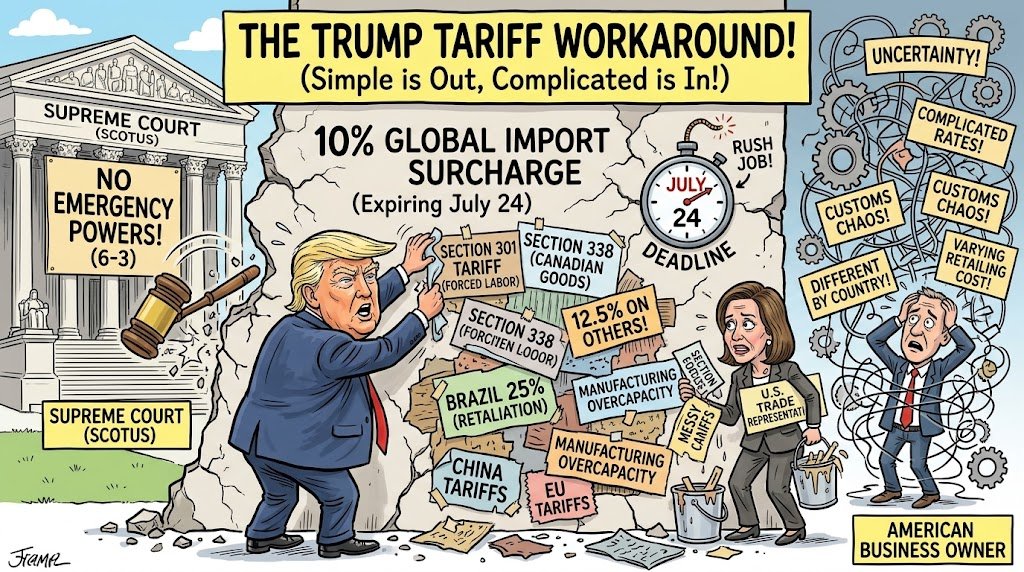
A temporary ten percent United States import surcharge is due to expire on July 24, forcing President Donald Trump’s administration to replace a broad but time-limited measure if it intends to preserve tariffs across most international trade.
The approaching deadline is accelerating plans for a new collection of country-specific duties constructed under trade laws that provide narrower authority than the emergency statute used for Trump’s original reciprocal tariff program.
The existing surcharge took effect on February 24 and was authorized for 150 days under Section 122 of the Trade Act of 1974. That provision allows a president to impose temporary duties of as much as fifteen percent in response to serious international-payment problems, but it does not provide an indefinite foundation for a universal tariff.
A federal appeals court has allowed the government to continue collecting the charge while litigation over its legality proceeds.
Trump turned to Section 122 after the Supreme Court ruled in February that the International Emergency Economic Powers Act did not authorize the sweeping reciprocal and drug-trafficking tariffs imposed during 2025. The six-to-three decision did not eliminate presidential tariff authority.
It required the administration to rely on statutes in which Congress expressly delegated that power, each carrying its own evidentiary, procedural and temporal constraints.
The administration’s principal replacement mechanism is Section 301 of the Trade Act of 1974. It permits retaliation against foreign government practices judged unreasonable, discriminatory or harmful to United States commerce, but ordinarily requires an investigation, findings, consultation, public submissions and an opportunity for hearings before duties are finalized.
The Office of the United States Trade Representative has completed findings concerning 60 economies that it says fail to prohibit, or effectively prevent, the importation of goods made with forced labor.
Its proposed response would add tariffs of ten percent on imports from jurisdictions deemed to have some relevant restrictions and twelve and a half percent on goods from other affected economies.
The prospective targets encompass major partners, including China, Japan, Britain and members of the European Union, as well as numerous developing economies.
Public hearings on the forced-labor cases were held from July 7 through July 9. Foreign governments and affected industries disputed parts of the American assessment, with some arguing that they already maintain modern-slavery legislation or import controls.
The United States position is that having rules on paper is insufficient when enforcement allows products linked to forced labor to circulate through domestic markets and compete with American goods.
These proceedings allow Washington to present the tariffs as a response to identified commercial practices rather than a universal levy imposed solely because of bilateral trade deficits.
They also create a more defensible administrative record.
Section 301 actions can nevertheless be challenged in court, particularly if the duties appear disproportionate to the conduct documented in an investigation or if required procedures are abbreviated.
A second set of Section 301 investigations examines structural manufacturing overcapacity in 16 economies.
Those cases could eventually produce additional tariffs, although they remain distinct from the forced-labor proceedings and require separate findings.
Together, the investigations show how the administration is reconstructing its trade policy through multiple statutory channels instead of attempting to restore the invalidated emergency program in its original form.
Recent actions against individual partners illustrate that approach.
The administration has announced a twenty-five percent tariff on selected Brazilian imports following a yearlong Section 301 investigation, while exempting products considered important to American consumers or supply chains.
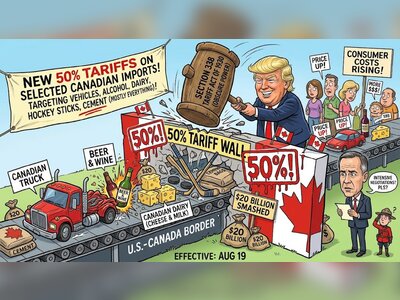
It has also invoked Section 338 of the Tariff Act of 1930 for additional duties on Canadian goods.
Existing national-security tariffs on metals and other products operate under still another authority and were not nullified by the Supreme Court ruling.
For importers, the result is a tariff system becoming less uniform but more intricate.
Rates may differ by country, product, statutory justification and exemption, complicating contracts, customs classifications and sourcing decisions.
Foreign governments must decide whether to negotiate, alter domestic enforcement or retaliate, while American businesses face uncertainty over which duties will replace the expiring surcharge and whether several levies may apply to the same shipment.
The administration argues that tariffs can counter unfair competition, strengthen domestic production and provide leverage in negotiations.
Critics contend that importers frequently pass at least part of the cost to manufacturers, retailers and consumers, creating particular exposure for businesses unable to change suppliers quickly.
The economic effect will depend on the final product coverage, available exemptions, foreign retaliation and whether the new duties supplement or replace the expiring ten percent charge.
With the temporary surcharge reaching its statutory limit, the next phase of Trump’s trade program will rest on completed investigations and targeted legal authorities.
The forced-labor hearings have concluded, and the trade representative can now determine which of the proposed duties on the 60 examined economies will be adopted.
The approaching deadline is accelerating plans for a new collection of country-specific duties constructed under trade laws that provide narrower authority than the emergency statute used for Trump’s original reciprocal tariff program.
The existing surcharge took effect on February 24 and was authorized for 150 days under Section 122 of the Trade Act of 1974. That provision allows a president to impose temporary duties of as much as fifteen percent in response to serious international-payment problems, but it does not provide an indefinite foundation for a universal tariff.
A federal appeals court has allowed the government to continue collecting the charge while litigation over its legality proceeds.
Trump turned to Section 122 after the Supreme Court ruled in February that the International Emergency Economic Powers Act did not authorize the sweeping reciprocal and drug-trafficking tariffs imposed during 2025. The six-to-three decision did not eliminate presidential tariff authority.
It required the administration to rely on statutes in which Congress expressly delegated that power, each carrying its own evidentiary, procedural and temporal constraints.
The administration’s principal replacement mechanism is Section 301 of the Trade Act of 1974. It permits retaliation against foreign government practices judged unreasonable, discriminatory or harmful to United States commerce, but ordinarily requires an investigation, findings, consultation, public submissions and an opportunity for hearings before duties are finalized.
The Office of the United States Trade Representative has completed findings concerning 60 economies that it says fail to prohibit, or effectively prevent, the importation of goods made with forced labor.
Its proposed response would add tariffs of ten percent on imports from jurisdictions deemed to have some relevant restrictions and twelve and a half percent on goods from other affected economies.
The prospective targets encompass major partners, including China, Japan, Britain and members of the European Union, as well as numerous developing economies.
Public hearings on the forced-labor cases were held from July 7 through July 9. Foreign governments and affected industries disputed parts of the American assessment, with some arguing that they already maintain modern-slavery legislation or import controls.
The United States position is that having rules on paper is insufficient when enforcement allows products linked to forced labor to circulate through domestic markets and compete with American goods.
These proceedings allow Washington to present the tariffs as a response to identified commercial practices rather than a universal levy imposed solely because of bilateral trade deficits.
They also create a more defensible administrative record.
Section 301 actions can nevertheless be challenged in court, particularly if the duties appear disproportionate to the conduct documented in an investigation or if required procedures are abbreviated.
A second set of Section 301 investigations examines structural manufacturing overcapacity in 16 economies.
Those cases could eventually produce additional tariffs, although they remain distinct from the forced-labor proceedings and require separate findings.
Together, the investigations show how the administration is reconstructing its trade policy through multiple statutory channels instead of attempting to restore the invalidated emergency program in its original form.
Recent actions against individual partners illustrate that approach.
The administration has announced a twenty-five percent tariff on selected Brazilian imports following a yearlong Section 301 investigation, while exempting products considered important to American consumers or supply chains.
It has also invoked Section 338 of the Tariff Act of 1930 for additional duties on Canadian goods.
Existing national-security tariffs on metals and other products operate under still another authority and were not nullified by the Supreme Court ruling.
For importers, the result is a tariff system becoming less uniform but more intricate.
Rates may differ by country, product, statutory justification and exemption, complicating contracts, customs classifications and sourcing decisions.
Foreign governments must decide whether to negotiate, alter domestic enforcement or retaliate, while American businesses face uncertainty over which duties will replace the expiring surcharge and whether several levies may apply to the same shipment.
The administration argues that tariffs can counter unfair competition, strengthen domestic production and provide leverage in negotiations.
Critics contend that importers frequently pass at least part of the cost to manufacturers, retailers and consumers, creating particular exposure for businesses unable to change suppliers quickly.
The economic effect will depend on the final product coverage, available exemptions, foreign retaliation and whether the new duties supplement or replace the expiring ten percent charge.
With the temporary surcharge reaching its statutory limit, the next phase of Trump’s trade program will rest on completed investigations and targeted legal authorities.
The forced-labor hearings have concluded, and the trade representative can now determine which of the proposed duties on the 60 examined economies will be adopted.