Continental Expands Thailand Tire Plant as Global Auto Supply Chains Shift Toward Southeast Asia
The German manufacturer’s investment in Rayong strengthens Thailand’s position as a regional automotive production hub while reflecting wider changes in electric vehicle demand, export strategy, and industrial competition.
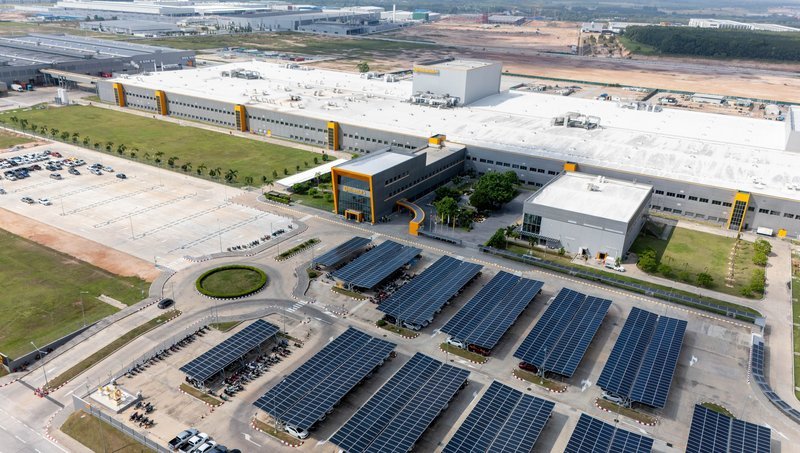
Continental, the German automotive technology and tire manufacturer, has inaugurated a major expansion of its tire production plant in Rayong, Thailand, deepening the company’s manufacturing footprint in Southeast Asia at a time when global automotive supply chains are rapidly reorganizing around cost efficiency, electric vehicle growth, and regional diversification.
The expansion increases production capacity at Continental’s Rayong facility, which first began operations in 2019 and has become one of the company’s strategic export-oriented manufacturing bases in Asia.
The company confirmed that the new investment adds substantial output capability for passenger and light truck tires while integrating more advanced manufacturing systems and automation technologies.
The development is significant not simply because of the factory itself, but because it reflects a broader industrial realignment underway across the global automotive sector.
Manufacturers are increasingly shifting production toward Southeast Asia as companies attempt to reduce dependence on single-country supply chains, manage geopolitical risks, and position themselves closer to growing Asian consumer markets.
Thailand sits at the center of that transition.
The country remains Southeast Asia’s largest automotive manufacturing base and one of the world’s major vehicle export centers.
Decades of investment by Japanese, European, American, and increasingly Chinese automakers have created a deeply integrated industrial ecosystem that includes parts suppliers, logistics operators, petrochemical producers, steel manufacturers, and electronics firms.
Rayong province, located within Thailand’s Eastern Economic Corridor development zone, has emerged as one of the country’s most important industrial clusters.
The region hosts factories operated by global automotive brands and suppliers producing vehicles, batteries, electronics, and tires for both domestic consumption and export.
Continental’s decision to expand there reflects confidence in Thailand’s infrastructure, labor force, export logistics, and government incentives.
Thai authorities have aggressively promoted advanced manufacturing and electric vehicle investment through tax incentives, customs privileges, land-use support, and industrial development programs.
The expansion also aligns with changing demand patterns in the tire industry itself.
Tire manufacturers are adapting to the rapid growth of electric vehicles, which require different performance characteristics than conventional internal combustion engine vehicles.
Electric vehicles are typically heavier because of battery systems and generate instant torque, increasing demands on tire durability, rolling resistance, energy efficiency, and noise reduction.
Continental has increasingly focused its global tire strategy on premium products, intelligent manufacturing, and tires designed specifically for EV platforms.
The Rayong plant now plays a larger role in that strategy, serving both Asian markets and export destinations worldwide.
The timing is commercially important.
Global automotive manufacturers are facing pressure from slower economic growth in parts of Europe and China, fluctuating raw material costs, and increasingly aggressive competition from Chinese electric vehicle companies expanding internationally.
Suppliers are responding by optimizing production networks and prioritizing facilities capable of flexible, lower-cost, high-volume manufacturing.
Thailand has become a key beneficiary of that shift.
Chinese EV manufacturers including BYD, Great Wall Motor, and SAIC Motor have all expanded production activities in the country.
Western and Japanese suppliers are simultaneously increasing investments to maintain proximity to those new manufacturing ecosystems.
The result is intensifying competition across Southeast Asia for industrial capital.
Indonesia has attempted to leverage its large nickel reserves to dominate electric vehicle battery production, while Vietnam has pushed aggressively into electronics and EV manufacturing.
Thailand’s strategy has focused on preserving its existing automotive dominance while upgrading toward higher-value production.
Continental’s investment therefore carries wider economic implications for Thailand beyond tire production alone.
Industrial expansions of this scale support employment, supplier networks, export revenues, logistics activity, and technology transfer.
They also reinforce Thailand’s ambition to remain central to Asia’s next-generation automotive economy rather than losing ground to regional competitors.
The company has also emphasized sustainability and energy efficiency in the expanded facility.
Tire manufacturing is energy-intensive and faces increasing scrutiny over emissions, water usage, and material sourcing.
Continental says the Rayong operation incorporates more efficient production systems designed to reduce environmental impact while improving operational productivity.
That sustainability push is no longer optional for multinational manufacturers.
Automakers and suppliers increasingly face pressure from regulators, institutional investors, and major fleet buyers to reduce carbon intensity throughout the supply chain.
Production sites that fail to modernize risk becoming less competitive as environmental standards tighten globally.
For Thailand, the expansion provides another signal that multinational manufacturers still view the country as a stable long-term industrial base despite global economic uncertainty and regional political competition.
The Thai government has spent years attempting to reassure investors that the country can remain competitive even as labor costs rise and supply chains evolve.
The Rayong expansion also demonstrates how the automotive industry’s transformation extends far beyond vehicle brands themselves.
Tire manufacturers, battery producers, semiconductor firms, software developers, and industrial logistics companies are all repositioning simultaneously as electric mobility reshapes global manufacturing patterns.
Continental’s enlarged Thai operation is now positioned as part of that transition, supplying a market increasingly defined by electric vehicles, regionalized production networks, and technologically advanced automotive components.
The expanded Rayong facility has officially entered operation and will serve as one of Continental’s major tire production and export bases for Asia and international markets.
The expansion increases production capacity at Continental’s Rayong facility, which first began operations in 2019 and has become one of the company’s strategic export-oriented manufacturing bases in Asia.
The company confirmed that the new investment adds substantial output capability for passenger and light truck tires while integrating more advanced manufacturing systems and automation technologies.
The development is significant not simply because of the factory itself, but because it reflects a broader industrial realignment underway across the global automotive sector.
Manufacturers are increasingly shifting production toward Southeast Asia as companies attempt to reduce dependence on single-country supply chains, manage geopolitical risks, and position themselves closer to growing Asian consumer markets.
Thailand sits at the center of that transition.
The country remains Southeast Asia’s largest automotive manufacturing base and one of the world’s major vehicle export centers.
Decades of investment by Japanese, European, American, and increasingly Chinese automakers have created a deeply integrated industrial ecosystem that includes parts suppliers, logistics operators, petrochemical producers, steel manufacturers, and electronics firms.
Rayong province, located within Thailand’s Eastern Economic Corridor development zone, has emerged as one of the country’s most important industrial clusters.
The region hosts factories operated by global automotive brands and suppliers producing vehicles, batteries, electronics, and tires for both domestic consumption and export.
Continental’s decision to expand there reflects confidence in Thailand’s infrastructure, labor force, export logistics, and government incentives.
Thai authorities have aggressively promoted advanced manufacturing and electric vehicle investment through tax incentives, customs privileges, land-use support, and industrial development programs.
The expansion also aligns with changing demand patterns in the tire industry itself.
Tire manufacturers are adapting to the rapid growth of electric vehicles, which require different performance characteristics than conventional internal combustion engine vehicles.
Electric vehicles are typically heavier because of battery systems and generate instant torque, increasing demands on tire durability, rolling resistance, energy efficiency, and noise reduction.
Continental has increasingly focused its global tire strategy on premium products, intelligent manufacturing, and tires designed specifically for EV platforms.
The Rayong plant now plays a larger role in that strategy, serving both Asian markets and export destinations worldwide.
The timing is commercially important.
Global automotive manufacturers are facing pressure from slower economic growth in parts of Europe and China, fluctuating raw material costs, and increasingly aggressive competition from Chinese electric vehicle companies expanding internationally.
Suppliers are responding by optimizing production networks and prioritizing facilities capable of flexible, lower-cost, high-volume manufacturing.
Thailand has become a key beneficiary of that shift.
Chinese EV manufacturers including BYD, Great Wall Motor, and SAIC Motor have all expanded production activities in the country.
Western and Japanese suppliers are simultaneously increasing investments to maintain proximity to those new manufacturing ecosystems.
The result is intensifying competition across Southeast Asia for industrial capital.
Indonesia has attempted to leverage its large nickel reserves to dominate electric vehicle battery production, while Vietnam has pushed aggressively into electronics and EV manufacturing.
Thailand’s strategy has focused on preserving its existing automotive dominance while upgrading toward higher-value production.
Continental’s investment therefore carries wider economic implications for Thailand beyond tire production alone.
Industrial expansions of this scale support employment, supplier networks, export revenues, logistics activity, and technology transfer.
They also reinforce Thailand’s ambition to remain central to Asia’s next-generation automotive economy rather than losing ground to regional competitors.
The company has also emphasized sustainability and energy efficiency in the expanded facility.
Tire manufacturing is energy-intensive and faces increasing scrutiny over emissions, water usage, and material sourcing.
Continental says the Rayong operation incorporates more efficient production systems designed to reduce environmental impact while improving operational productivity.
That sustainability push is no longer optional for multinational manufacturers.
Automakers and suppliers increasingly face pressure from regulators, institutional investors, and major fleet buyers to reduce carbon intensity throughout the supply chain.
Production sites that fail to modernize risk becoming less competitive as environmental standards tighten globally.
For Thailand, the expansion provides another signal that multinational manufacturers still view the country as a stable long-term industrial base despite global economic uncertainty and regional political competition.
The Thai government has spent years attempting to reassure investors that the country can remain competitive even as labor costs rise and supply chains evolve.
The Rayong expansion also demonstrates how the automotive industry’s transformation extends far beyond vehicle brands themselves.
Tire manufacturers, battery producers, semiconductor firms, software developers, and industrial logistics companies are all repositioning simultaneously as electric mobility reshapes global manufacturing patterns.
Continental’s enlarged Thai operation is now positioned as part of that transition, supplying a market increasingly defined by electric vehicles, regionalized production networks, and technologically advanced automotive components.
The expanded Rayong facility has officially entered operation and will serve as one of Continental’s major tire production and export bases for Asia and international markets.