
Iran Conflict Jolts Thai Tourism as Airspace Closures and Rising Fares Put 36 Million Visitor Target at Risk
Flight disruptions and surging fuel costs cloud outlook for Thailand’s recovery-driven tourism ambitions
Escalating conflict involving Iran has begun to unsettle Thailand’s tourism outlook, with airspace closures across parts of the Middle East and higher airfares threatening the country’s goal of attracting 36 million international visitors this year.
Airlines have rerouted or suspended services linking Europe, the Middle East and Asia after several countries restricted access to their airspace.
The longer flight paths have increased fuel consumption and operating costs, prompting carriers to adjust schedules and raise ticket prices.
Industry operators warn that sustained disruptions could dampen demand during a critical phase of Thailand’s tourism recovery.
Thailand, one of the world’s most tourism-dependent economies, has been targeting 36 million foreign arrivals as part of its post-pandemic rebound strategy.
The sector contributes significantly to employment, foreign exchange earnings and domestic consumption.
Officials have promoted visa facilitation measures and expanded marketing campaigns to reach the annual target.
Tourism analysts caution that higher fares may discourage long-haul travelers, particularly from Europe, where economic pressures are already affecting discretionary spending.
Short-haul markets within Asia are seen as more resilient, though flight frequency adjustments and insurance costs could still influence pricing.
Airspace volatility has also affected transit hubs in the Gulf, complicating connections for passengers en route to Southeast Asia.
Some carriers have reduced capacity or redeployed aircraft to alternative routes, tightening seat availability.
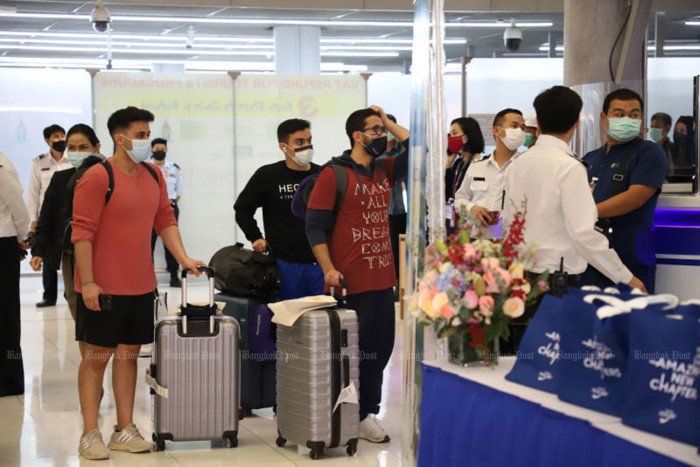
Thai authorities have emphasized that airports and tourism infrastructure remain fully operational.
Officials are working with airlines and international partners to maintain connectivity and mitigate potential disruptions.
Industry groups say contingency planning is under way to shift marketing efforts toward markets less affected by the current conflict.
While the 36 million visitor goal remains in place, stakeholders acknowledge that geopolitical instability introduces uncertainty into demand forecasts.
The trajectory of the Iran conflict, along with global fuel prices and airline capacity decisions, will play a decisive role in determining whether Thailand can sustain its tourism momentum in the months ahead.
Airlines have rerouted or suspended services linking Europe, the Middle East and Asia after several countries restricted access to their airspace.
The longer flight paths have increased fuel consumption and operating costs, prompting carriers to adjust schedules and raise ticket prices.
Industry operators warn that sustained disruptions could dampen demand during a critical phase of Thailand’s tourism recovery.
Thailand, one of the world’s most tourism-dependent economies, has been targeting 36 million foreign arrivals as part of its post-pandemic rebound strategy.
The sector contributes significantly to employment, foreign exchange earnings and domestic consumption.
Officials have promoted visa facilitation measures and expanded marketing campaigns to reach the annual target.
Tourism analysts caution that higher fares may discourage long-haul travelers, particularly from Europe, where economic pressures are already affecting discretionary spending.
Short-haul markets within Asia are seen as more resilient, though flight frequency adjustments and insurance costs could still influence pricing.
Airspace volatility has also affected transit hubs in the Gulf, complicating connections for passengers en route to Southeast Asia.
Some carriers have reduced capacity or redeployed aircraft to alternative routes, tightening seat availability.
Thai authorities have emphasized that airports and tourism infrastructure remain fully operational.
Officials are working with airlines and international partners to maintain connectivity and mitigate potential disruptions.
Industry groups say contingency planning is under way to shift marketing efforts toward markets less affected by the current conflict.
While the 36 million visitor goal remains in place, stakeholders acknowledge that geopolitical instability introduces uncertainty into demand forecasts.
The trajectory of the Iran conflict, along with global fuel prices and airline capacity decisions, will play a decisive role in determining whether Thailand can sustain its tourism momentum in the months ahead.