Thailand Charts Multi-Province Strategy for SEA Games 2025 Across Ten Provinces
Host nation spreads events across Bangkok and nine key provinces to deliver inclusive and region-wide Games experience
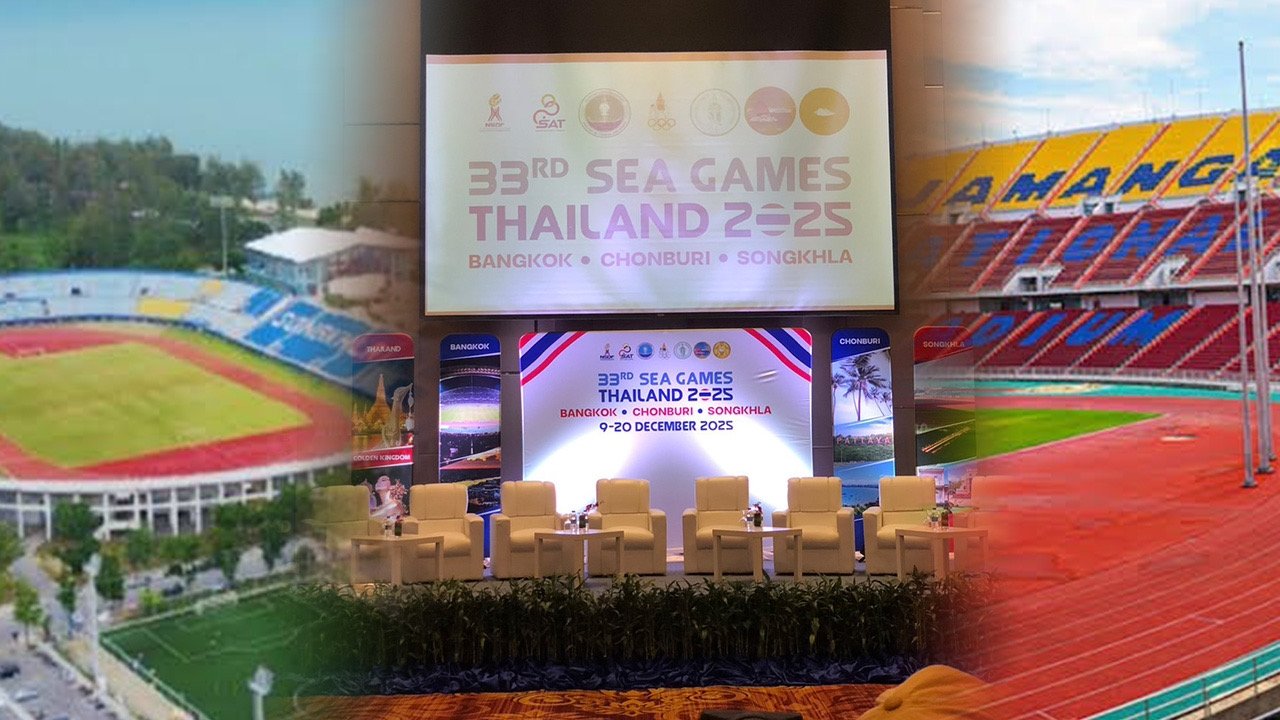
Thailand has unveiled an expansive venue layout for the 33rd Southeast Asian Games, featuring events across ten provinces from December 9 to 20 2025. This wider geographical spread is designed to engage communities beyond the capital and enhance nationwide participation.
Bangkok remains the central hub, where major ceremonies and over thirty sports will be contested at landmarks such as Rajamangala National Stadium, Suphachalasai Stadium and Indoor Stadium Huamark.
Nearby Nonthaburi will host futsal, table tennis, tennis and mixed martial arts at venues including the Central Chaengwattana mall and The Mall Ngamwongwan.
Pathum Thani is set to stage eleven disciplines — ranging from rugby 7s at Dhupatemiya Stadium to badminton, gymnastics and cricket at Thammasat University.
Samut Prakan will host seven sports such as polo at VS Polo Club and Siam Polo Club, diving and kick-boxing at Assumption University, and pencak silat.
Nakhon Pathom will stage sepak takraw and chinlone at its municipal sports stadium.
In the eastern provinces, Chonburi and Rayong together will handle more than fifteen events, including women’s football at the Physical Education Institute Chonburi Campus, golf at Amata Spring Country Club and canoe/triathlon in Rayong.
Songkhla in the south will anchor nine sports, with men’s football group stages at Tinsulanon Stadium, and regional crafts like wushu, judo and Muay Thai.
Outlying venues include Chiang Mai (men’s football group stages) and Ratchaburi (skeet shooting at Photharam Shooting Range).
Notably, three demonstration sports will debut: flying disc (with ultimate and disc golf formats), air sports (paragliding and powered paragliding) and tug-of-war.
These additions are intended to broaden viewer appeal and reflect evolving regional sporting interests.
MMA (mixed martial arts) will also feature more prominently, combining elements from Muay Thai, judo, wrestling and Brazilian Jiu-Jitsu.
The multi-province format underscores Thailand’s strategy to distribute economic and social benefits across regions, while improving legacy infrastructure and promoting tourism.
Organisers emphasise that the games are not just a sporting event, but also a catalyst for regional growth and community engagement ahead of the tournament.
Bangkok remains the central hub, where major ceremonies and over thirty sports will be contested at landmarks such as Rajamangala National Stadium, Suphachalasai Stadium and Indoor Stadium Huamark.
Nearby Nonthaburi will host futsal, table tennis, tennis and mixed martial arts at venues including the Central Chaengwattana mall and The Mall Ngamwongwan.
Pathum Thani is set to stage eleven disciplines — ranging from rugby 7s at Dhupatemiya Stadium to badminton, gymnastics and cricket at Thammasat University.
Samut Prakan will host seven sports such as polo at VS Polo Club and Siam Polo Club, diving and kick-boxing at Assumption University, and pencak silat.
Nakhon Pathom will stage sepak takraw and chinlone at its municipal sports stadium.
In the eastern provinces, Chonburi and Rayong together will handle more than fifteen events, including women’s football at the Physical Education Institute Chonburi Campus, golf at Amata Spring Country Club and canoe/triathlon in Rayong.
Songkhla in the south will anchor nine sports, with men’s football group stages at Tinsulanon Stadium, and regional crafts like wushu, judo and Muay Thai.
Outlying venues include Chiang Mai (men’s football group stages) and Ratchaburi (skeet shooting at Photharam Shooting Range).
Notably, three demonstration sports will debut: flying disc (with ultimate and disc golf formats), air sports (paragliding and powered paragliding) and tug-of-war.
These additions are intended to broaden viewer appeal and reflect evolving regional sporting interests.
MMA (mixed martial arts) will also feature more prominently, combining elements from Muay Thai, judo, wrestling and Brazilian Jiu-Jitsu.
The multi-province format underscores Thailand’s strategy to distribute economic and social benefits across regions, while improving legacy infrastructure and promoting tourism.
Organisers emphasise that the games are not just a sporting event, but also a catalyst for regional growth and community engagement ahead of the tournament.