Thailand’s Biomass Energy Expansion Collides With Pollution, Poverty and Policy Trade-Offs
Biomass dominates Thailand’s renewable energy mix, but rising environmental costs, farm-level incentives, and tightening climate targets are exposing deep structural tensions in the country’s green transition.
Thailand’s biomass energy strategy sits at the center of a SYSTEM-DRIVEN energy transition that has long defined the country’s renewable power mix, but is now increasingly constrained by environmental, agricultural, and policy contradictions.
Biomass—primarily derived from agricultural residues such as rice husks, sugarcane bagasse, palm waste, and wood chips—remains one of Thailand’s most important renewable energy sources, supplying a large share of renewable electricity and even more of its industrial heat demand.
What is confirmed is that Thailand has built one of the most biomass-dependent renewable energy systems in Asia, supported by long-standing government policy frameworks aimed at reducing fossil fuel imports and advancing carbon neutrality goals.
Biomass capacity has expanded steadily over the past decade, supported by feed-in tariffs, co-generation programs, and industrial demand for stable, dispatchable power that complements intermittent solar and wind.
Agricultural abundance has made this model structurally attractive, with millions of tonnes of crop residue produced annually across sugar, rice, and palm industries.
The key issue is that this system depends on a fragile feedstock chain.
Biomass fuel is not a mined or imported commodity but a distributed agricultural byproduct that must be collected, transported, and stored efficiently.
In practice, supply volatility, seasonal harvest cycles, and rising competition for residues have created price instability and logistical bottlenecks.
Studies of Thailand’s energy system show that feedstock insecurity and unclear regulatory coordination are among the main constraints limiting further expansion of biomass capacity, despite strong policy intent.
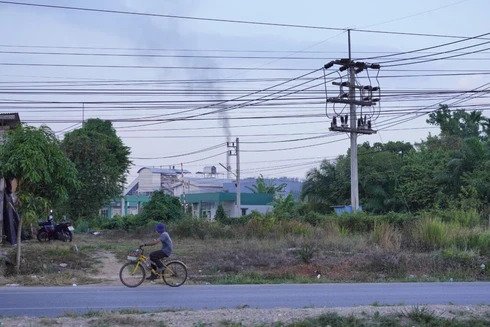
At the same time, Thailand’s biomass model is increasingly entangled with the country’s air pollution crisis.
Agricultural burning—particularly of rice straw and sugarcane residues—remains a widely used cost-saving method for clearing fields after harvest.
While not identical to industrial biomass fuel supply, the two systems draw from the same agricultural base.
This creates a structural contradiction: the same residues that are burned in open fields and contribute to seasonal PM2.5 pollution are also required as inputs for formal biomass power generation.
Environmental policy has attempted to reconcile this tension through incentives that discourage burning and encourage residue collection, but economic reality in rural areas remains decisive.
For many farmers, burning is still the cheapest and fastest method of field preparation, especially in regions where labor shortages and machinery costs make alternatives financially prohibitive.
This creates persistent emissions during dry-season agricultural cycles, which overlap with peak pollution periods in northern and central Thailand.
Thailand’s broader energy transition strategy—anchored in carbon neutrality targets for mid-century—has therefore had to balance three competing priorities: maintaining energy security, expanding renewable capacity, and reducing particulate pollution.
Government planning documents increasingly emphasize circular economy models, including initiatives to convert agricultural waste into commercial fuel streams, but implementation remains uneven across provinces and supply chains.
Recent policy experimentation has moved toward integrating environmental enforcement with economic incentives.
Programs designed to turn crop residues into marketable biomass fuel aim to reduce open burning while strengthening formal supply chains for power generation.
Early-stage pilots suggest that structured collection systems and payments for agricultural waste could reduce emissions, but scaling these systems requires sustained investment in rural logistics infrastructure and enforcement capacity.
The implications extend beyond energy policy.
Biomass is now a cross-sector issue linking agriculture, public health, industrial energy demand, and climate commitments.
If Thailand expands biomass power without stabilizing feedstock governance, competition for agricultural residues could intensify price volatility and undermine power plant efficiency.
Conversely, if open burning is reduced without viable alternative income streams for farmers, rural compliance risks weakening.
The trajectory of Thailand’s biomass sector will therefore be determined less by installed capacity targets than by whether the country can align agricultural incentives with energy system needs.
The outcome will directly shape both the stability of its renewable electricity supply and the severity of its recurring seasonal pollution crises.
Biomass—primarily derived from agricultural residues such as rice husks, sugarcane bagasse, palm waste, and wood chips—remains one of Thailand’s most important renewable energy sources, supplying a large share of renewable electricity and even more of its industrial heat demand.
What is confirmed is that Thailand has built one of the most biomass-dependent renewable energy systems in Asia, supported by long-standing government policy frameworks aimed at reducing fossil fuel imports and advancing carbon neutrality goals.
Biomass capacity has expanded steadily over the past decade, supported by feed-in tariffs, co-generation programs, and industrial demand for stable, dispatchable power that complements intermittent solar and wind.
Agricultural abundance has made this model structurally attractive, with millions of tonnes of crop residue produced annually across sugar, rice, and palm industries.
The key issue is that this system depends on a fragile feedstock chain.
Biomass fuel is not a mined or imported commodity but a distributed agricultural byproduct that must be collected, transported, and stored efficiently.
In practice, supply volatility, seasonal harvest cycles, and rising competition for residues have created price instability and logistical bottlenecks.
Studies of Thailand’s energy system show that feedstock insecurity and unclear regulatory coordination are among the main constraints limiting further expansion of biomass capacity, despite strong policy intent.
At the same time, Thailand’s biomass model is increasingly entangled with the country’s air pollution crisis.
Agricultural burning—particularly of rice straw and sugarcane residues—remains a widely used cost-saving method for clearing fields after harvest.
While not identical to industrial biomass fuel supply, the two systems draw from the same agricultural base.
This creates a structural contradiction: the same residues that are burned in open fields and contribute to seasonal PM2.5 pollution are also required as inputs for formal biomass power generation.
Environmental policy has attempted to reconcile this tension through incentives that discourage burning and encourage residue collection, but economic reality in rural areas remains decisive.
For many farmers, burning is still the cheapest and fastest method of field preparation, especially in regions where labor shortages and machinery costs make alternatives financially prohibitive.
This creates persistent emissions during dry-season agricultural cycles, which overlap with peak pollution periods in northern and central Thailand.
Thailand’s broader energy transition strategy—anchored in carbon neutrality targets for mid-century—has therefore had to balance three competing priorities: maintaining energy security, expanding renewable capacity, and reducing particulate pollution.
Government planning documents increasingly emphasize circular economy models, including initiatives to convert agricultural waste into commercial fuel streams, but implementation remains uneven across provinces and supply chains.
Recent policy experimentation has moved toward integrating environmental enforcement with economic incentives.
Programs designed to turn crop residues into marketable biomass fuel aim to reduce open burning while strengthening formal supply chains for power generation.
Early-stage pilots suggest that structured collection systems and payments for agricultural waste could reduce emissions, but scaling these systems requires sustained investment in rural logistics infrastructure and enforcement capacity.
The implications extend beyond energy policy.
Biomass is now a cross-sector issue linking agriculture, public health, industrial energy demand, and climate commitments.
If Thailand expands biomass power without stabilizing feedstock governance, competition for agricultural residues could intensify price volatility and undermine power plant efficiency.
Conversely, if open burning is reduced without viable alternative income streams for farmers, rural compliance risks weakening.
The trajectory of Thailand’s biomass sector will therefore be determined less by installed capacity targets than by whether the country can align agricultural incentives with energy system needs.
The outcome will directly shape both the stability of its renewable electricity supply and the severity of its recurring seasonal pollution crises.