
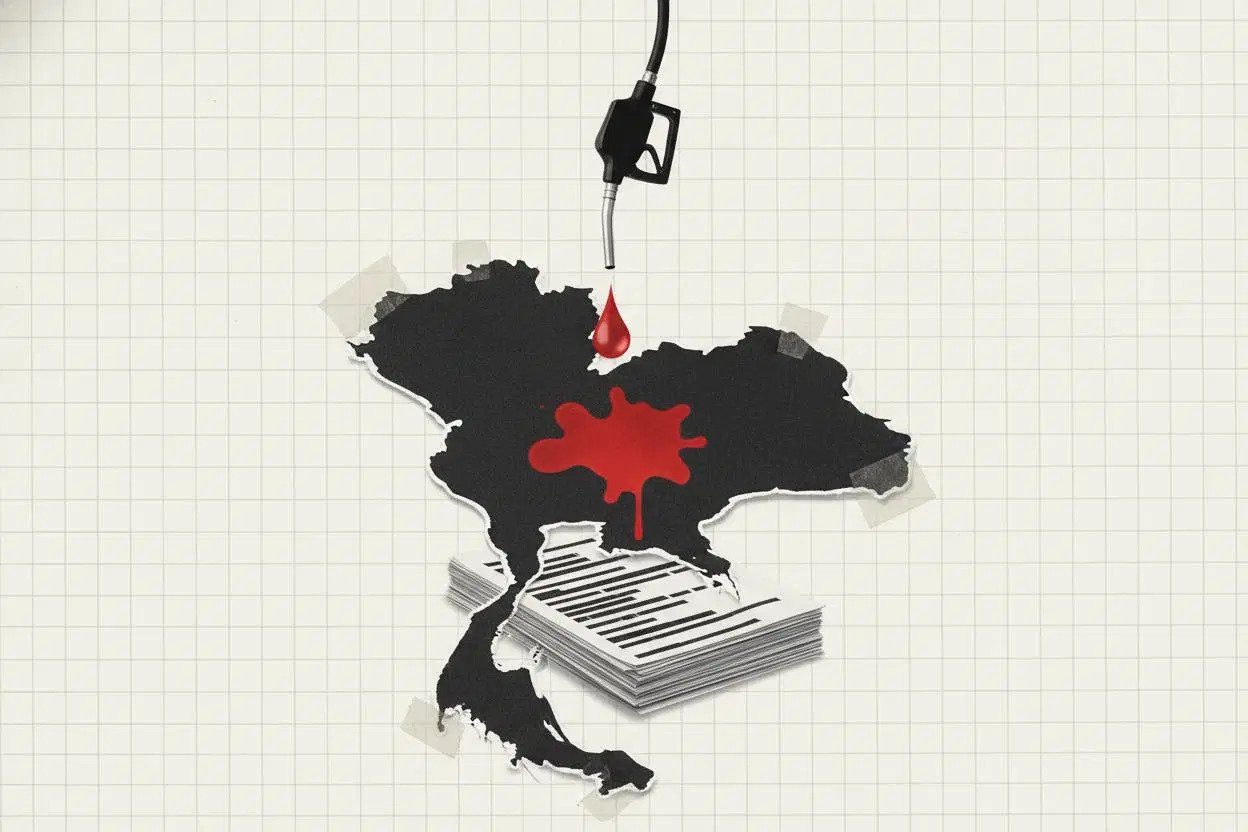
Thailand’s Central Bank Holds Rates as Growth Outlook Weakens Under External Pressures
The Bank of Thailand is keeping interest rates unchanged at historically low levels, but signaling that economic growth is slowing due to weak demand, tight credit conditions, and external shocks.
Thailand’s monetary policy stance reflects a system-driven tension between stabilizing inflation and supporting an economy that is expanding below potential amid tightening financial conditions and external shocks.
What is confirmed is that the Bank of Thailand has kept its benchmark policy rate at 1.00 percent following recent policy meetings, maintaining one of the lowest rate environments in several years.
The decision reflects a cautious assessment that while inflation is influenced largely by supply-side factors, domestic growth is weakening and financial conditions remain tight.
At the same time, the central bank has explicitly warned that Thailand’s economic expansion is likely to remain below its long-term potential in the coming years.
Policymakers have pointed to weak credit growth, high household debt, and uneven recovery across sectors as structural constraints limiting the pace of expansion.
A key mechanism behind this outlook is subdued domestic demand.
Household consumption remains constrained by high debt burdens and limited wage growth, while small and medium-sized enterprises continue to face restricted access to affordable credit.
These conditions reduce the effectiveness of monetary easing alone in stimulating broader economic activity.
External pressures are also shaping the central bank’s assessment.
Global energy price volatility, geopolitical tensions affecting trade routes, and fluctuations in the Thai baht are increasing uncertainty for exporters and import-dependent sectors.
These factors feed directly into inflation expectations and business costs, complicating policy decisions.
Inflation dynamics present an additional constraint.
While headline inflation remains within the central bank’s target range over the medium term, it is heavily influenced by external energy and food prices rather than strong domestic demand.
This creates a situation where inflation risks and growth risks move in opposite directions, limiting the scope for aggressive policy adjustments.
The Bank of Thailand’s policy framework is therefore operating in a narrow corridor.
Cutting rates too aggressively risks undermining currency stability and fueling imported inflation, while maintaining rates for too long could further suppress already weak credit expansion and investment activity.
Recent policy decisions reflect this balance.
The central bank has opted to hold rates steady after prior easing steps, signaling that previous cuts are still working through the economy while officials monitor incoming data on inflation, credit conditions, and global risk factors.
The broader implication is that Thailand’s slowdown is increasingly seen as structural rather than cyclical.
Even with supportive monetary policy, growth is constrained by demographic trends, productivity challenges, and a financial system cautious about expanding credit to riskier borrowers.
In this environment, policymakers are increasingly emphasizing that interest rates alone cannot resolve underlying growth constraints.
Fiscal policy, investment incentives, and structural reforms are being positioned as necessary complements to monetary stability.
The current stance therefore signals continuity rather than reversal: Thailand’s central bank is prioritizing financial stability while acknowledging that economic momentum is weakening, leaving growth recovery dependent on factors beyond the reach of interest rate policy alone.
What is confirmed is that the Bank of Thailand has kept its benchmark policy rate at 1.00 percent following recent policy meetings, maintaining one of the lowest rate environments in several years.
The decision reflects a cautious assessment that while inflation is influenced largely by supply-side factors, domestic growth is weakening and financial conditions remain tight.
At the same time, the central bank has explicitly warned that Thailand’s economic expansion is likely to remain below its long-term potential in the coming years.
Policymakers have pointed to weak credit growth, high household debt, and uneven recovery across sectors as structural constraints limiting the pace of expansion.
A key mechanism behind this outlook is subdued domestic demand.
Household consumption remains constrained by high debt burdens and limited wage growth, while small and medium-sized enterprises continue to face restricted access to affordable credit.
These conditions reduce the effectiveness of monetary easing alone in stimulating broader economic activity.
External pressures are also shaping the central bank’s assessment.
Global energy price volatility, geopolitical tensions affecting trade routes, and fluctuations in the Thai baht are increasing uncertainty for exporters and import-dependent sectors.
These factors feed directly into inflation expectations and business costs, complicating policy decisions.
Inflation dynamics present an additional constraint.
While headline inflation remains within the central bank’s target range over the medium term, it is heavily influenced by external energy and food prices rather than strong domestic demand.
This creates a situation where inflation risks and growth risks move in opposite directions, limiting the scope for aggressive policy adjustments.
The Bank of Thailand’s policy framework is therefore operating in a narrow corridor.
Cutting rates too aggressively risks undermining currency stability and fueling imported inflation, while maintaining rates for too long could further suppress already weak credit expansion and investment activity.
Recent policy decisions reflect this balance.
The central bank has opted to hold rates steady after prior easing steps, signaling that previous cuts are still working through the economy while officials monitor incoming data on inflation, credit conditions, and global risk factors.
The broader implication is that Thailand’s slowdown is increasingly seen as structural rather than cyclical.
Even with supportive monetary policy, growth is constrained by demographic trends, productivity challenges, and a financial system cautious about expanding credit to riskier borrowers.
In this environment, policymakers are increasingly emphasizing that interest rates alone cannot resolve underlying growth constraints.
Fiscal policy, investment incentives, and structural reforms are being positioned as necessary complements to monetary stability.
The current stance therefore signals continuity rather than reversal: Thailand’s central bank is prioritizing financial stability while acknowledging that economic momentum is weakening, leaving growth recovery dependent on factors beyond the reach of interest rate policy alone.