Thailand Turns ‘White Lotus’ Into a Tourism Strategy as Visitor Interest Surges
Thai officials say the HBO series generated more than $36 million in local spending and triggered a sharp jump in travel demand, reinforcing the country’s push toward high-value tourism and global cultural branding.
Thailand’s tourism strategy is increasingly being driven by entertainment exports and global media exposure, and the latest example is the economic impact of the television series “The White Lotus.” Thai trade and tourism officials now say production of the show’s Thailand-based season generated approximately 1.3 billion baht, or about 36.5 million US dollars, in direct local spending during filming and helped trigger a major surge in international travel interest.
What is confirmed is that the production spent months filming across multiple Thai locations, including Koh Samui, Phuket and Bangkok, employing local crews, renting hospitality facilities and using domestic production services.
Thai authorities have publicly tied the project to a sharp increase in tourism-related searches and bookings connected to featured destinations.
Officials have also claimed that online travel interest in some featured locations rose by as much as 300 percent after the show’s release and promotional campaign.
The exact methodology behind that figure varies depending on the platform and measurement period, but travel operators, hotel groups and tourism agencies have all reported substantial increases in inquiries tied directly to the series.
The deeper story is not the popularity of one television show.
It is Thailand’s deliberate effort to transform film and streaming productions into a long-term economic development tool.
Bangkok has aggressively expanded incentives for foreign productions, including cash rebates, streamlined permits and logistical support, in an attempt to position the country as Asia’s most competitive filming destination.
That strategy reflects a broader shift inside Thailand’s tourism industry.
Instead of relying primarily on mass-market arrivals, authorities are increasingly pursuing what they describe as “value over volume” tourism.
The objective is to attract travelers who spend more money per trip, stay longer and consume premium hospitality, wellness and cultural services.
“The White Lotus” aligns closely with that model.
The series markets luxury resorts, tropical landscapes and high-end travel experiences to affluent global audiences.
Unlike conventional tourism advertising, entertainment-driven promotion embeds destinations inside cultural conversation and social media trends, often producing stronger consumer engagement than traditional campaigns.
Thailand’s government believes this approach can help stabilize a tourism sector that remains economically critical but structurally vulnerable.
Tourism contributes heavily to national employment, regional development and foreign exchange earnings.
However, the industry has struggled with uneven recovery patterns after the pandemic, weaker Chinese outbound travel and rising competition from countries such as Vietnam and Japan.
Official figures show Thailand welcomed nearly thirty-three million foreign visitors in 2025, below earlier expectations but still generating approximately 2.7 trillion baht in tourism revenue.
For 2026, authorities are targeting roughly 36.7 million international arrivals and as much as 3 trillion baht in total tourism income.
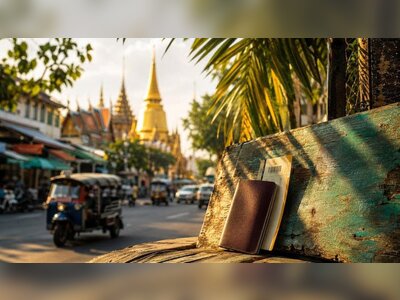
The government’s current tourism framework places heavy emphasis on luxury travel, wellness tourism, cultural soft power and destination branding.
Film and television productions now sit directly inside that strategy.
Officials increasingly view streaming platforms as global advertising networks capable of shaping consumer behavior at enormous scale.
Thailand is not alone in pursuing screen-driven tourism economics.
Countries including South Korea, New Zealand and Croatia previously benefited from visitor surges linked to internationally successful productions.
What makes Thailand’s case notable is the speed and coordination of the state response.
Trade agencies, tourism authorities and investment bodies have all integrated entertainment exposure into broader economic planning.
The financial impact extends beyond hotels and airlines.
Large-scale productions create temporary employment for local crews, construction teams, transport operators, catering companies and creative service providers.
They also strengthen Thailand’s domestic media infrastructure by increasing technical capability and international production experience.
At the same time, the tourism surge creates pressure points.
Popular destinations such as Koh Samui and Phuket already face concerns over infrastructure strain, rising property prices, congestion and environmental degradation.
Luxury-driven tourism growth can increase local inequality if economic gains concentrate primarily among large hotel operators and international brands.
There is also the question of sustainability.
Entertainment-driven tourism often produces rapid spikes in demand that are difficult for local economies to absorb smoothly.
Hotel prices in some featured areas have reportedly risen sharply following the show’s popularity, particularly during peak travel periods.
Still, the immediate outcome for Thailand is unmistakably positive.
The country has secured global visibility through one of the world’s most commercially influential television franchises at a moment when competition for international travelers is intensifying across Asia.
The larger implication is that Thailand is no longer treating tourism promotion as a standalone marketing exercise.
It is integrating media production, soft power, investment policy and luxury hospitality into a single economic strategy designed to generate long-term international demand and higher-spending visitors.
What is confirmed is that the production spent months filming across multiple Thai locations, including Koh Samui, Phuket and Bangkok, employing local crews, renting hospitality facilities and using domestic production services.
Thai authorities have publicly tied the project to a sharp increase in tourism-related searches and bookings connected to featured destinations.
Officials have also claimed that online travel interest in some featured locations rose by as much as 300 percent after the show’s release and promotional campaign.
The exact methodology behind that figure varies depending on the platform and measurement period, but travel operators, hotel groups and tourism agencies have all reported substantial increases in inquiries tied directly to the series.
The deeper story is not the popularity of one television show.
It is Thailand’s deliberate effort to transform film and streaming productions into a long-term economic development tool.
Bangkok has aggressively expanded incentives for foreign productions, including cash rebates, streamlined permits and logistical support, in an attempt to position the country as Asia’s most competitive filming destination.
That strategy reflects a broader shift inside Thailand’s tourism industry.
Instead of relying primarily on mass-market arrivals, authorities are increasingly pursuing what they describe as “value over volume” tourism.
The objective is to attract travelers who spend more money per trip, stay longer and consume premium hospitality, wellness and cultural services.
“The White Lotus” aligns closely with that model.
The series markets luxury resorts, tropical landscapes and high-end travel experiences to affluent global audiences.
Unlike conventional tourism advertising, entertainment-driven promotion embeds destinations inside cultural conversation and social media trends, often producing stronger consumer engagement than traditional campaigns.
Thailand’s government believes this approach can help stabilize a tourism sector that remains economically critical but structurally vulnerable.
Tourism contributes heavily to national employment, regional development and foreign exchange earnings.
However, the industry has struggled with uneven recovery patterns after the pandemic, weaker Chinese outbound travel and rising competition from countries such as Vietnam and Japan.
Official figures show Thailand welcomed nearly thirty-three million foreign visitors in 2025, below earlier expectations but still generating approximately 2.7 trillion baht in tourism revenue.
For 2026, authorities are targeting roughly 36.7 million international arrivals and as much as 3 trillion baht in total tourism income.
The government’s current tourism framework places heavy emphasis on luxury travel, wellness tourism, cultural soft power and destination branding.
Film and television productions now sit directly inside that strategy.
Officials increasingly view streaming platforms as global advertising networks capable of shaping consumer behavior at enormous scale.
Thailand is not alone in pursuing screen-driven tourism economics.
Countries including South Korea, New Zealand and Croatia previously benefited from visitor surges linked to internationally successful productions.
What makes Thailand’s case notable is the speed and coordination of the state response.
Trade agencies, tourism authorities and investment bodies have all integrated entertainment exposure into broader economic planning.
The financial impact extends beyond hotels and airlines.
Large-scale productions create temporary employment for local crews, construction teams, transport operators, catering companies and creative service providers.
They also strengthen Thailand’s domestic media infrastructure by increasing technical capability and international production experience.
At the same time, the tourism surge creates pressure points.
Popular destinations such as Koh Samui and Phuket already face concerns over infrastructure strain, rising property prices, congestion and environmental degradation.
Luxury-driven tourism growth can increase local inequality if economic gains concentrate primarily among large hotel operators and international brands.
There is also the question of sustainability.
Entertainment-driven tourism often produces rapid spikes in demand that are difficult for local economies to absorb smoothly.
Hotel prices in some featured areas have reportedly risen sharply following the show’s popularity, particularly during peak travel periods.
Still, the immediate outcome for Thailand is unmistakably positive.
The country has secured global visibility through one of the world’s most commercially influential television franchises at a moment when competition for international travelers is intensifying across Asia.
The larger implication is that Thailand is no longer treating tourism promotion as a standalone marketing exercise.
It is integrating media production, soft power, investment policy and luxury hospitality into a single economic strategy designed to generate long-term international demand and higher-spending visitors.