Another AI Genius Left the United States — and Silicon Valley Is Starting to Worry
Behind Kimi K3, the new Chinese artificial-intelligence model astonishing experts, is Yang Zhilin, a rock-music enthusiast who emerged as a coveted talent in Silicon Valley before making the unexpected decision to return home to China.
He is not alone.
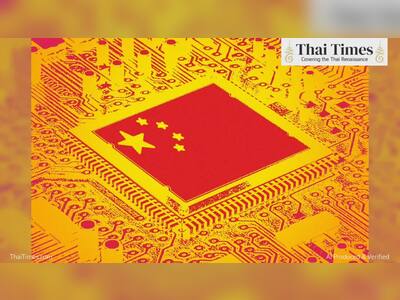
Growing numbers of senior Chinese-born researchers in America are choosing to go back, an unsettling shift already described as a “reverse brain drain.”
Last week, Beijing artificial-intelligence company Moonshot launched Kimi K3, a large language model that experts immediately ranked alongside the most highly regarded and advanced systems from OpenAI and Anthropic.
Even Elon Musk called it “impressive work.”
The Chinese achievement would have attracted less attention without the driving force behind the company: its energetic 34-year-old founder.
Yang received his advanced education in the United States, completing a doctorate at Carnegie Mellon University in 2019 in only four years.
During his time there, Yang co-authored papers that included research into transformer technology, the breakthrough that astonished the world by enabling chatbots to conduct humanlike conversations.
Silicon Valley quickly recognised his potential.
Apple pursued him vigorously; Google and Meta rolled out the red carpet; Stanford and the Massachusetts Institute of Technology were prepared to receive him for postdoctoral work.
He chose none of them.
Defying the conventional path, he returned to China.
How did America, the land of limitless opportunity and the source of ambition for tens of thousands of exceptional young Chinese, Indian and Israeli researchers, lose its next great talent so easily?
One theory held that Yang had been alarmed by stricter immigration policies and mounting American suspicions of Chinese industrial espionage.
People close to him offered a different explanation: his overriding ambition had always been to establish his own artificial-intelligence company in China.
He repeatedly told them that failing to do so would leave him with lifelong regret.
Apple even offered Yang a senior position in Beijing, potentially allowing him to return home while retaining an exceptional corporate career.
He declined.
Determined to pursue his original plan, he founded Moonshot, naming the company after his favourite Pink Floyd album, “The Dark Side of the Moon.”
Meeting rooms at the company’s headquarters in Beijing’s Haidian district are named after rock bands, and a white piano occupies the centre of the office.
Many of the researchers Yang recruited had studied alongside him at Tsinghua University, where he completed his undergraduate degree.
Among them is Zhou Xinyu, who organised campus music competitions with him.
Yang himself played drums in the student band Splay.
That journey culminated last week with the launch of K3.
The release provoked alarm in the West over China’s advancing artificial-intelligence capabilities, recalling the reaction to DeepSeek’s debut the previous year.
In only three years, Yang’s 300-person team produced an artificial-intelligence model capable of competing with the world’s best.
Success did not arrive immediately.
Many participants in China’s artificial-intelligence industry predicted that Moonshot would not survive the brutal and expensive contest to develop large language models.
The start-up generated only $2.4 million in 2024 while the costs of training models and recruiting researchers soared.
Yang decided to abandon chatbot development and, in another decisive move, committed to releasing his model as open-source software.
The result followed swiftly.
Moonshot is now among China’s fastest-growing model providers, with annualised revenue reaching approximately $300 million in June.
China’s developing artificial-intelligence ecosystem is exerting an increasingly powerful attraction on Chinese entrepreneurs and researchers, and Yang is far from the only one returning home.
Dr Harry Shum, formerly Microsoft’s chief researcher and an executive vice-president of its artificial-intelligence and research group, returned to China after a distinguished career at the summit of American technology.
He was appointed chairman of the International Institute of Data Science and Artificial Intelligence at Shenzhen University of Science and Technology.
Professor Qi Yuan, who served as a senior vice-president at Yahoo and later at Microsoft, returned to China in 2017 to become president and chief operating officer of technology group Baidu.
Professor Zhu Songchun, one of the world’s leading authorities on computer vision, moved back to Beijing in 2020. He now heads the capital’s institute for general artificial intelligence and directs Chinese research into the prospective field of artificial general intelligence.
The list extends considerably further.
Historically, most Chinese doctoral students in science, mathematics and technology chose to remain in the United States after graduating, joining the prestigious research laboratories of its largest technology companies.
A 2024 survey of 1,304 Chinese-American scientists, however, found that 73 per cent felt “unsafe” as academic researchers, while 65 per cent expressed concern about “anti-Asian hatred and violence.”
Chinese founders from similar backgrounds have said they now feel more comfortable establishing start-ups in China.
They cite extensive professional networks, familiarity with the local culture, a clearer regulatory framework and a deep pool of talent.
Many also invoke patriotism, believing that their contribution to China’s artificial-intelligence development will help their homeland lead the global technological revolution.
Debate over Yang’s departure has broadened into American anxiety about retaining artificial-intelligence talent.
This week, Silicon Valley even heard a proposal to grant an automatic green card to every foreign resident who completes a doctorate in artificial intelligence, encouraging graduates to remain in the United States.
China is no longer merely importing talent educated in America; it is increasingly producing that talent itself.
An examination of 356 researchers behind DeepSeek’s principal models found that 53.5 per cent had never studied or worked outside China.
Of those with American experience, 70 per cent ultimately returned home.
For decades, American technological dominance rested on a simple formula: attract the world’s brightest minds and nurture them inside the United States.
Yang Zhilin’s story suggests that this approach is being tested—not only because America has become less welcoming, but because China has become more attractive.
The question is not whether Yang made the right choice.
It is what happens to America if its gravitational pull continues to weaken.