War, Youth Revolt and the Global Struggle for Control
Escalating conflict around Iran is threatening energy routes and inflation as India faces a widening youth rebellion, Venezuela struggles through earthquake devastation, Britain decentralizes power and Washington opens another front in global trade.
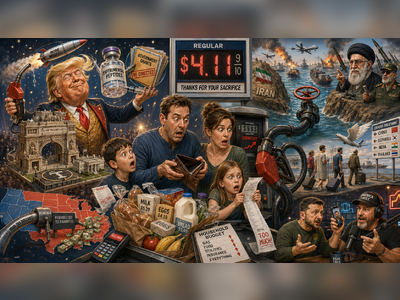
The United States-Iran war is expanding across two of the world's most important maritime chokepoints, raising the risk that a regional military confrontation will become a wider economic shock.
American forces have completed a thirteenth consecutive night of strikes on Iran, targeting command centers and drone-storage facilities, while Tehran says it has attacked United States-linked interests in Kuwait, Bahrain and Jordan.
President Donald Trump has said he is considering a substantially larger offensive, and Israeli Prime Minister Benjamin Netanyahu is expected at the White House as Washington weighs its next move.
The military pressure is spreading beyond the Strait of Hormuz.
Yemen's Iran-aligned Houthi movement says it has attacked Saudi oil tankers and imposed a blockade on Saudi-bound shipping through the Bab el-Mandeb Strait, the southern gateway to the Red Sea.
Saudi authorities confirmed that one tanker caught fire, although no casualties were reported.
With Hormuz already severely disrupted, instability at a second strategic passage threatens oil and gas flows, commercial shipping and supply chains connecting Asia, Europe and the Middle East.
That danger is already visible in energy markets.
Brent crude briefly climbed above one hundred dollars a barrel before retreating, far above its level a month earlier.
Sustained increases would raise fuel, freight and food costs, reinforce inflation and complicate anticipated interest-rate cuts.
The economic pressure is being intensified by a new United States tariff regime covering sixty countries, including Canada, India, Japan, South Korea, Britain and members of the European Union.
The import taxes, generally ranging from ten to twelve-point-five percent, replace earlier tariffs struck down by the Supreme Court and rely on a trade investigation concerning forced labor in global supply chains.
The contest over economic opportunity is producing a very different form of instability in India, where a youth movement known as the Cockroach Janata Party has transformed an online meme into one of the largest student mobilizations of Narendra Modi's premiership.
The protests were triggered by repeated leaks and alleged irregularities in competitive examinations that determine access to medical education, government employment and other paths to social mobility.
Demonstrators are demanding structural education reform, the dismantling of the National Testing Agency and the resignation of Education Minister Dharmendra Pradhan.
After weeks of avoiding direct engagement, Modi has promised fast-track courts and tougher penalties for those involved in examination leaks.
Senior members of the government and the governing Bharatiya Janata Party have held talks with protest representatives, although the demand for Pradhan's resignation remains unresolved.
Activist Sonam Wangchuk has ended a twenty-six-day hunger strike after appealing for protesters not to be prosecuted, while demonstrations have spread from Delhi to Kerala, Haryana, Uttar Pradesh and Kolkata.
Police say one hundred and eighteen officers were injured during recent unrest, while authorities reported at least sixty injured protesters; verified footage examined by the BBC appeared to show security personnel firing shotgun-style weapons, although Delhi police denied that pellet guns were used.
Youth anger over blocked opportunity contrasts with the struggle for basic survival in Venezuela, where families are still excavating collapsed homes one month after twin earthquakes devastated the northern coast.
More than five thousand three hundred deaths have been confirmed, while United Nations estimates cited in the reports suggest that as many as fifty thousand people may remain missing.
Rescue machinery is being withdrawn from some locations even as relatives continue searching with picks and shovels, forcing families to abandon efforts that have become too dangerous to conduct alone.
The disaster has deepened scrutiny of Venezuela's transitional authorities following the United States removal of Nicolás Maduro.
Acting President Delcy Rodríguez has defended the response and announced housing assistance, but survivors have described delayed rescue equipment, weak coordination and concern that some state-built housing was poorly constructed.
Washington has supplied substantial aid and exercises extensive influence over Venezuela's oil revenue and political transition, yet the exact division of authority between Rodríguez's administration and the United States remains opaque.
For displaced families living beside the ruins, access to shelter, food and the recovery of missing relatives remains more immediate than the country's unresolved constitutional future.
Britain is attempting a more orderly redistribution of power through Prime Minister Andy Burnham's new Number Ten North operation in Manchester.
Cabinet ministers and cross-departmental teams are expected to work regularly from the northern office, which Burnham presents as both a challenge to London's institutional dominance and a mechanism for accelerating growth policy.
His government has paired the initiative with measures involving bus fares, energy costs, rough sleeping and relief for pubs and music venues, while businesses have warned that deeper devolution could create a patchwork of planning, skills and funding regimes.
A similarly symbolic restoration effort is beginning in German football, where former Liverpool manager Jürgen Klopp has been appointed national coach after Germany's latest early World Cup elimination.
Klopp has been tasked with rebuilding cohesion and public confidence before the European Championship, describing the appointment as the professional high point of his life.
He has also warned that he would resign if media coverage intruded into his family's private life, establishing a firm boundary as he begins the job of reconnecting Germany's national team with its supporters.
American forces have completed a thirteenth consecutive night of strikes on Iran, targeting command centers and drone-storage facilities, while Tehran says it has attacked United States-linked interests in Kuwait, Bahrain and Jordan.
President Donald Trump has said he is considering a substantially larger offensive, and Israeli Prime Minister Benjamin Netanyahu is expected at the White House as Washington weighs its next move.
The military pressure is spreading beyond the Strait of Hormuz.
Yemen's Iran-aligned Houthi movement says it has attacked Saudi oil tankers and imposed a blockade on Saudi-bound shipping through the Bab el-Mandeb Strait, the southern gateway to the Red Sea.
Saudi authorities confirmed that one tanker caught fire, although no casualties were reported.
With Hormuz already severely disrupted, instability at a second strategic passage threatens oil and gas flows, commercial shipping and supply chains connecting Asia, Europe and the Middle East.
That danger is already visible in energy markets.
Brent crude briefly climbed above one hundred dollars a barrel before retreating, far above its level a month earlier.
Sustained increases would raise fuel, freight and food costs, reinforce inflation and complicate anticipated interest-rate cuts.
The economic pressure is being intensified by a new United States tariff regime covering sixty countries, including Canada, India, Japan, South Korea, Britain and members of the European Union.
The import taxes, generally ranging from ten to twelve-point-five percent, replace earlier tariffs struck down by the Supreme Court and rely on a trade investigation concerning forced labor in global supply chains.
The contest over economic opportunity is producing a very different form of instability in India, where a youth movement known as the Cockroach Janata Party has transformed an online meme into one of the largest student mobilizations of Narendra Modi's premiership.
The protests were triggered by repeated leaks and alleged irregularities in competitive examinations that determine access to medical education, government employment and other paths to social mobility.
Demonstrators are demanding structural education reform, the dismantling of the National Testing Agency and the resignation of Education Minister Dharmendra Pradhan.
After weeks of avoiding direct engagement, Modi has promised fast-track courts and tougher penalties for those involved in examination leaks.
Senior members of the government and the governing Bharatiya Janata Party have held talks with protest representatives, although the demand for Pradhan's resignation remains unresolved.
Activist Sonam Wangchuk has ended a twenty-six-day hunger strike after appealing for protesters not to be prosecuted, while demonstrations have spread from Delhi to Kerala, Haryana, Uttar Pradesh and Kolkata.
Police say one hundred and eighteen officers were injured during recent unrest, while authorities reported at least sixty injured protesters; verified footage examined by the BBC appeared to show security personnel firing shotgun-style weapons, although Delhi police denied that pellet guns were used.
Youth anger over blocked opportunity contrasts with the struggle for basic survival in Venezuela, where families are still excavating collapsed homes one month after twin earthquakes devastated the northern coast.
More than five thousand three hundred deaths have been confirmed, while United Nations estimates cited in the reports suggest that as many as fifty thousand people may remain missing.
Rescue machinery is being withdrawn from some locations even as relatives continue searching with picks and shovels, forcing families to abandon efforts that have become too dangerous to conduct alone.
The disaster has deepened scrutiny of Venezuela's transitional authorities following the United States removal of Nicolás Maduro.
Acting President Delcy Rodríguez has defended the response and announced housing assistance, but survivors have described delayed rescue equipment, weak coordination and concern that some state-built housing was poorly constructed.
Washington has supplied substantial aid and exercises extensive influence over Venezuela's oil revenue and political transition, yet the exact division of authority between Rodríguez's administration and the United States remains opaque.
For displaced families living beside the ruins, access to shelter, food and the recovery of missing relatives remains more immediate than the country's unresolved constitutional future.
Britain is attempting a more orderly redistribution of power through Prime Minister Andy Burnham's new Number Ten North operation in Manchester.
Cabinet ministers and cross-departmental teams are expected to work regularly from the northern office, which Burnham presents as both a challenge to London's institutional dominance and a mechanism for accelerating growth policy.
His government has paired the initiative with measures involving bus fares, energy costs, rough sleeping and relief for pubs and music venues, while businesses have warned that deeper devolution could create a patchwork of planning, skills and funding regimes.
A similarly symbolic restoration effort is beginning in German football, where former Liverpool manager Jürgen Klopp has been appointed national coach after Germany's latest early World Cup elimination.
Klopp has been tasked with rebuilding cohesion and public confidence before the European Championship, describing the appointment as the professional high point of his life.
He has also warned that he would resign if media coverage intruded into his family's private life, establishing a firm boundary as he begins the job of reconnecting Germany's national team with its supporters.