Cambodia Denies Responsibility for Landmine Blast Injuring Thai Soldiers
The Cambodian Mine Action and Victim Assistance Authority rejects allegations of landmine use in recent incident along the border.
The Cambodian Mine Action and Victim Assistance Authority (CMAA) has categorically denied claims by Thai media that Cambodian forces planted landmines responsible for injuring three Thai soldiers earlier this week.
In a statement released on Friday, the CMAA expressed regret over what it described as "baseless accusations" that Landmines had been newly laid in the Mom Bei area, where the incident occurred.
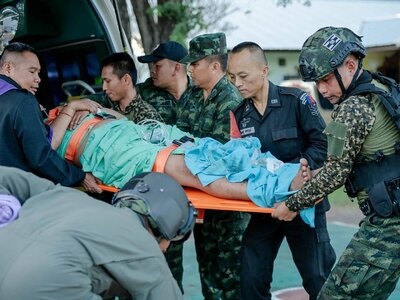
Reports from various Thai news outlets, citing senior officials, indicated that three soldiers were injured from landmines on Wednesday at coordinates WA 220 861.
The CMAA responded to these allegations by stating that it has firmly opposed the use of landmines and highlighted the country's extensive struggles with the long-lasting impacts of landmines and unexploded ordnance.
Cambodia, which has endured significant human and societal costs due to landmines, condemns their use, production, and stockpiling.
The CMAA accentuated its commitment to humanitarian principles and mine clearance efforts, emphasizing that Cambodia is a signatory to the Ottawa Convention, formally known as the Convention on the Prohibition of the Use, Stockpiling, Production and Transfer of Anti-Personnel Mines and on their Destruction.
The country has taken substantial measures to fulfill its international obligations concerning mine clearance and has gained recognition for its achievements in this area.
Notably, Cambodia hosted the 11th Meeting of the States Parties to the Ottawa Convention and the 5th Review Conference in 2024, events considered key milestones for global mine-free objectives.
In light of the injuries sustained by Thai soldiers, the CMAA called for any assessments related to the incident to be based on verified investigations rather than speculative claims.
It reaffirmed Cambodia’s commitment to the 2000 Memorandum of Understanding with Thailand, aimed at fostering peace, friendship, and collaborative development along the border.
The CMAA urged all parties to avoid premature judgment and instead collaborate in investigating the landmine incident, stressing the need for a joint effort to address the pervasive issue of landmines which pose a danger to all nations.
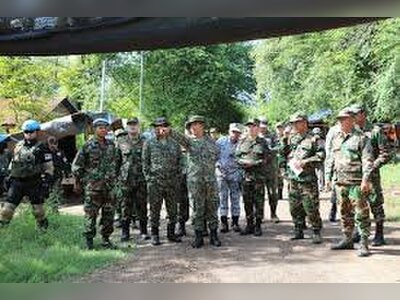
The incident reportedly occurred when Pvt Thanapat Huiwan triggered a landmine while his unit was patrolling from the Morakot Operations Base to Hill 481 in the Chong Bok area of Nam Yuen district, Ubon Ratchathani province, part of the Emerald Triangle that borders Thailand, Cambodia, and Laos.
This region has historical significance, having been a battleground during conflicts involving Thai and Vietnamese forces in the 1970s.
Recent tensions have seen a brief exchange of gunfire between Thailand and Cambodia in the area, highlighting ongoing border disputes.
In a statement released on Friday, the CMAA expressed regret over what it described as "baseless accusations" that Landmines had been newly laid in the Mom Bei area, where the incident occurred.
Reports from various Thai news outlets, citing senior officials, indicated that three soldiers were injured from landmines on Wednesday at coordinates WA 220 861.
The CMAA responded to these allegations by stating that it has firmly opposed the use of landmines and highlighted the country's extensive struggles with the long-lasting impacts of landmines and unexploded ordnance.
Cambodia, which has endured significant human and societal costs due to landmines, condemns their use, production, and stockpiling.
The CMAA accentuated its commitment to humanitarian principles and mine clearance efforts, emphasizing that Cambodia is a signatory to the Ottawa Convention, formally known as the Convention on the Prohibition of the Use, Stockpiling, Production and Transfer of Anti-Personnel Mines and on their Destruction.
The country has taken substantial measures to fulfill its international obligations concerning mine clearance and has gained recognition for its achievements in this area.
Notably, Cambodia hosted the 11th Meeting of the States Parties to the Ottawa Convention and the 5th Review Conference in 2024, events considered key milestones for global mine-free objectives.
In light of the injuries sustained by Thai soldiers, the CMAA called for any assessments related to the incident to be based on verified investigations rather than speculative claims.
It reaffirmed Cambodia’s commitment to the 2000 Memorandum of Understanding with Thailand, aimed at fostering peace, friendship, and collaborative development along the border.
The CMAA urged all parties to avoid premature judgment and instead collaborate in investigating the landmine incident, stressing the need for a joint effort to address the pervasive issue of landmines which pose a danger to all nations.
The incident reportedly occurred when Pvt Thanapat Huiwan triggered a landmine while his unit was patrolling from the Morakot Operations Base to Hill 481 in the Chong Bok area of Nam Yuen district, Ubon Ratchathani province, part of the Emerald Triangle that borders Thailand, Cambodia, and Laos.
This region has historical significance, having been a battleground during conflicts involving Thai and Vietnamese forces in the 1970s.
Recent tensions have seen a brief exchange of gunfire between Thailand and Cambodia in the area, highlighting ongoing border disputes.