China and Thailand Move to Make Visa-Free Travel Permanent, Deepening Tourism and Economic Integration
The policy shift cements reciprocal visa-free entry between two major Asian economies, reshaping travel flows, tourism recovery, and regional economic ties.
The central driver of this development is a SYSTEM-DRIVEN shift in cross-border mobility policy, where governments are structurally easing visa restrictions to restore tourism flows, strengthen economic links, and compete for international visitors in a post-pandemic travel market.
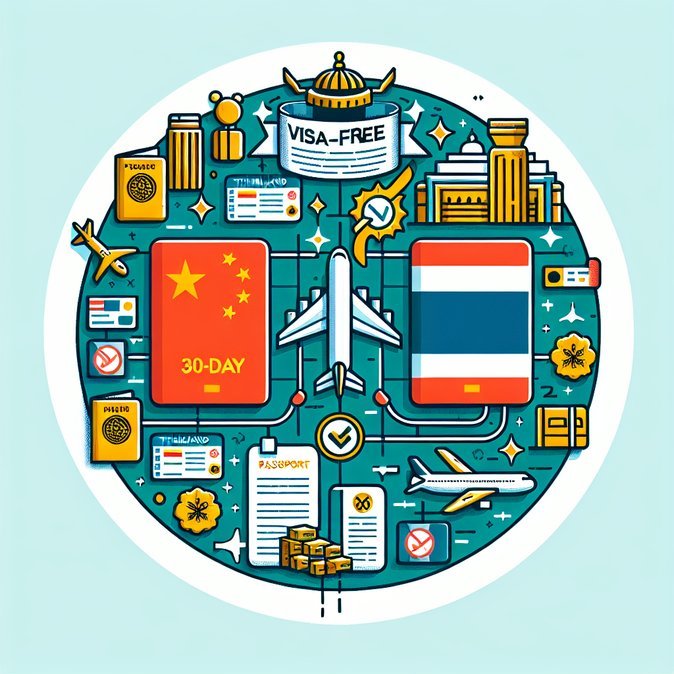
China and Thailand have agreed to make reciprocal visa-free travel permanent, extending a policy that allows citizens of both countries to enter without a visa for short stays.
The arrangement removes administrative barriers that previously required pre-approved travel documents and processing delays, effectively simplifying entry to passport-only travel for eligible visitors.
The decision builds on earlier temporary visa-free arrangements introduced after the collapse of global travel during the Covid-19 pandemic.
Those temporary measures were initially designed to revive tourism demand, particularly between two of Asia’s most important travel markets.
The move toward permanence signals that both governments now view visa-free access not as an emergency stimulus tool, but as a long-term economic policy instrument.
What is confirmed is that tourism between China and Thailand has been one of the fastest recovering international travel corridors in Asia.
Thailand, heavily dependent on tourism for foreign exchange earnings, has consistently ranked China among its largest source markets.
Chinese outbound tourism, meanwhile, has been recovering unevenly since pandemic-era restrictions were lifted, with Southeast Asia emerging as a key destination region due to proximity, affordability, and established infrastructure.
The mechanism behind the policy is straightforward but economically significant.
By removing visa friction, both countries reduce transaction costs for travelers, increase booking certainty for airlines and tour operators, and encourage repeat travel.
This typically leads to higher volume in short-term visits, especially for leisure tourism, family travel, and group tours, which dominate China–Thailand travel patterns.
The stakes extend beyond tourism.
For Thailand, Chinese visitors represent a major source of hotel occupancy, retail spending, and service-sector employment.
A stable visa-free regime provides predictability for businesses that rely on seasonal and high-volume inbound travel.
For China, the policy reinforces its broader strategy of regional economic integration through mobility agreements, especially in Southeast Asia where trade and investment ties are already dense.
There is also a geopolitical dimension.
Easier movement between China and Thailand strengthens people-to-people connectivity at a time when global mobility is increasingly shaped by security concerns and visa tightening in other regions.
It also reflects Thailand’s longstanding diplomatic balancing strategy between major powers, maintaining strong economic ties with China while engaging multiple global partners.
The implications are immediate for airlines, hospitality providers, and travel platforms.
Increased demand is expected on key routes such as Beijing–Bangkok, Shanghai–Phuket, and regional secondary city connections.
Hotels and tour operators are likely to expand capacity planning based on more predictable inbound flows rather than seasonal uncertainty.
The longer-term consequence is structural: visa policy is becoming a competitive economic tool rather than a purely administrative one.
As more countries in Asia relax entry rules to attract high-spending travelers, China and Thailand’s move signals a broader regional shift toward frictionless mobility as a baseline expectation in tourism strategy.
The policy now sets a durable framework for sustained travel growth between the two countries, locking in a channel of economic exchange that both governments are positioning as a permanent feature of their bilateral relationship.
China and Thailand have agreed to make reciprocal visa-free travel permanent, extending a policy that allows citizens of both countries to enter without a visa for short stays.
The arrangement removes administrative barriers that previously required pre-approved travel documents and processing delays, effectively simplifying entry to passport-only travel for eligible visitors.
The decision builds on earlier temporary visa-free arrangements introduced after the collapse of global travel during the Covid-19 pandemic.
Those temporary measures were initially designed to revive tourism demand, particularly between two of Asia’s most important travel markets.
The move toward permanence signals that both governments now view visa-free access not as an emergency stimulus tool, but as a long-term economic policy instrument.
What is confirmed is that tourism between China and Thailand has been one of the fastest recovering international travel corridors in Asia.
Thailand, heavily dependent on tourism for foreign exchange earnings, has consistently ranked China among its largest source markets.
Chinese outbound tourism, meanwhile, has been recovering unevenly since pandemic-era restrictions were lifted, with Southeast Asia emerging as a key destination region due to proximity, affordability, and established infrastructure.
The mechanism behind the policy is straightforward but economically significant.
By removing visa friction, both countries reduce transaction costs for travelers, increase booking certainty for airlines and tour operators, and encourage repeat travel.
This typically leads to higher volume in short-term visits, especially for leisure tourism, family travel, and group tours, which dominate China–Thailand travel patterns.
The stakes extend beyond tourism.
For Thailand, Chinese visitors represent a major source of hotel occupancy, retail spending, and service-sector employment.
A stable visa-free regime provides predictability for businesses that rely on seasonal and high-volume inbound travel.
For China, the policy reinforces its broader strategy of regional economic integration through mobility agreements, especially in Southeast Asia where trade and investment ties are already dense.
There is also a geopolitical dimension.
Easier movement between China and Thailand strengthens people-to-people connectivity at a time when global mobility is increasingly shaped by security concerns and visa tightening in other regions.
It also reflects Thailand’s longstanding diplomatic balancing strategy between major powers, maintaining strong economic ties with China while engaging multiple global partners.
The implications are immediate for airlines, hospitality providers, and travel platforms.
Increased demand is expected on key routes such as Beijing–Bangkok, Shanghai–Phuket, and regional secondary city connections.
Hotels and tour operators are likely to expand capacity planning based on more predictable inbound flows rather than seasonal uncertainty.
The longer-term consequence is structural: visa policy is becoming a competitive economic tool rather than a purely administrative one.
As more countries in Asia relax entry rules to attract high-spending travelers, China and Thailand’s move signals a broader regional shift toward frictionless mobility as a baseline expectation in tourism strategy.
The policy now sets a durable framework for sustained travel growth between the two countries, locking in a channel of economic exchange that both governments are positioning as a permanent feature of their bilateral relationship.