Cholera Outbreak on the Thailand-Myanmar Border Sparks Global Public Health Concerns
Rising cases challenge local readiness and highlight the need for international cooperation amid vulnerable migrant populations.
The recent cholera outbreak in the Tak province, located near the Thailand-Myanmar frontier, has reignited pressing questions about global public health preparedness and cross-border cooperation.
With around two hundred cases reported in Shwe Kokko, Myanmar, and spreading into Thailand's Mae Sot district with two confirmed cases, the outbreak has already resulted in two fatalities.
An emergency operations center has been swiftly established as local authorities scramble to contain the disease.
However, this outbreak transcends local boundaries, bringing to the forefront the resilience and readiness of not just regional but global public health systems.
Reflecting on the rapid spread of cholera in Yemen a few years ago, the current situation is an urgent reminder of how swiftly such diseases can spread if left unchecked.
The challenge is multi-faceted, encompassing not only medical readiness but also humanitarian concerns.
Migrant communities, among the hardest hit, already live in precarious conditions, underscoring the need for them not to become the 'invisible' sufferers in the crisis.
The diplomatic corridors are abuzz with calls for increased cross-border collaboration.
Yet, such efforts are often bogged down by the quagmire of geopolitical dynamics.
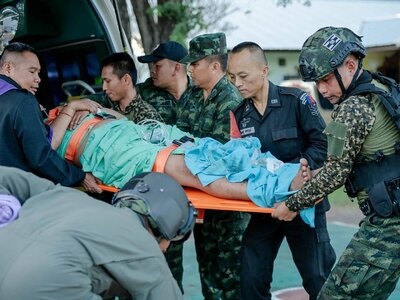
Soldiers are patrolling the borders, and medical supplies are being distributed, but questions loom large: Is there sufficient dialogue to tackle the root causes of the outbreak, such as inadequate clean water and sanitation facilities?
Public health challenges seldom occur in isolation; they reflect broader economic and political landscapes.
The response requires a shift towards community-driven strategies.
Public health messages promoting hygiene and proper food preparation need to be adapted to local cultures and contexts to effect real change.
The innovative use of technology, such as rapid diagnostic test kits, is currently part of the strategy, offering timely intervention in remote areas.
However, such technology necessitates proper infrastructure and, crucially, training.
Perhaps the future lies in the synthesis of traditional practices and modern technology, enhancing risk communication and empowering local communities to manage their health effectively.
This outbreak is a somber yet necessary reflection on the interplay between health, politics, and technology.
It challenges us to reconsider what health resilience means in this interconnected world and the roles we all must play.
'The health of a country is in many ways the fingerprints we leave on others,' as it was famously noted.
As we navigate these complexities, the conversation about international health cooperation must not only continue—it must evolve.
With around two hundred cases reported in Shwe Kokko, Myanmar, and spreading into Thailand's Mae Sot district with two confirmed cases, the outbreak has already resulted in two fatalities.
An emergency operations center has been swiftly established as local authorities scramble to contain the disease.
However, this outbreak transcends local boundaries, bringing to the forefront the resilience and readiness of not just regional but global public health systems.
Reflecting on the rapid spread of cholera in Yemen a few years ago, the current situation is an urgent reminder of how swiftly such diseases can spread if left unchecked.
The challenge is multi-faceted, encompassing not only medical readiness but also humanitarian concerns.
Migrant communities, among the hardest hit, already live in precarious conditions, underscoring the need for them not to become the 'invisible' sufferers in the crisis.
The diplomatic corridors are abuzz with calls for increased cross-border collaboration.
Yet, such efforts are often bogged down by the quagmire of geopolitical dynamics.
Soldiers are patrolling the borders, and medical supplies are being distributed, but questions loom large: Is there sufficient dialogue to tackle the root causes of the outbreak, such as inadequate clean water and sanitation facilities?
Public health challenges seldom occur in isolation; they reflect broader economic and political landscapes.
The response requires a shift towards community-driven strategies.
Public health messages promoting hygiene and proper food preparation need to be adapted to local cultures and contexts to effect real change.
The innovative use of technology, such as rapid diagnostic test kits, is currently part of the strategy, offering timely intervention in remote areas.
However, such technology necessitates proper infrastructure and, crucially, training.
Perhaps the future lies in the synthesis of traditional practices and modern technology, enhancing risk communication and empowering local communities to manage their health effectively.
This outbreak is a somber yet necessary reflection on the interplay between health, politics, and technology.
It challenges us to reconsider what health resilience means in this interconnected world and the roles we all must play.
'The health of a country is in many ways the fingerprints we leave on others,' as it was famously noted.
As we navigate these complexities, the conversation about international health cooperation must not only continue—it must evolve.