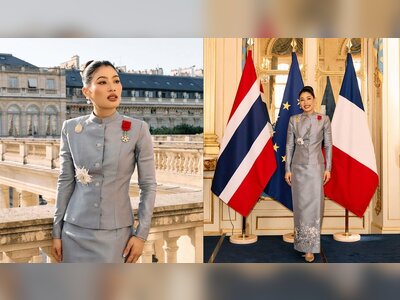
Kebaya: A Garment Uniting Southeast Asia
UNESCO's recognition of the kebaya underscores shared cultural heritage and bolsters Thailand's soft power strategy.
In an era marked by geopolitical tensions and divisive rhetoric, the elevation of the kebaya to Intangible Cultural Heritage status by UNESCO emerges as a refreshing testament to unity.
This accolade, achieved through the concerted efforts of Thailand, Brunei, Indonesia, Malaysia, and Singapore, is not merely a nod to a traditional garment but rather a celebration of cultural kinship.
The kebaya, an age-old attire resonating with historical gravitas, has ascended the global stage, encapsulating a shared legacy for these Southeast Asian nations.
For Thailand, this recognition is a cultural feather in its cap, aligning seamlessly with the country's broader strategy to harness 'soft power' on the international front.
By championing such culturally rich narratives, Thailand stands poised to invigorate its tourism and cultural sectors, fostering a narrative that is both commercially lucrative and socially cohesive.
The listing dovetails with global sustainable development priorities, emphasizing values such as gender equality and peace while catalyzing economic and social synergies.
Certainly, the path to this milestone has not been without criticism.
Yet, Thailand's government, often scrutinized for its bureaucratic inertia, deserves commendation for its proactive role in fostering cross-border cultural dialogue.
Such initiatives set a promising precedent for regional cooperation and provide a blueprint for future collaborative cultural endeavors.
However, with recognition comes the onus of preservation.
The onus now lies on Thai authorities to not only maintain these cultural treasures but to utilize this momentum to spur further efforts.
This cultural acknowledgment invites a reimagining of heritage as a dynamic force within modern society—an opportunity to embrace historical richness while paving the way for contemporary relevance.
The kebaya, therefore, emerges as more than a garment; it is a symbol of shared history and a canvas for future possibilities.
It prompts reflection on how cultural heritage can act as a bridge to foster unity and growth.
As Thailand revels in this acknowledgment, it must exhibit leadership in safeguarding and integrating its cultural treasures into the global narrative.
In contemplating this rich tapestry of heritage, we are reminded that culture indeed serves as a window to a nation's soul, inviting all of us to engage with, cherish, and propel our shared stories forward.
As this dialogue unfolds, one is invited to ponder: how can Thailand, and other nations, continue to harness their cultural wealth to build lasting, inclusive success?
This accolade, achieved through the concerted efforts of Thailand, Brunei, Indonesia, Malaysia, and Singapore, is not merely a nod to a traditional garment but rather a celebration of cultural kinship.
The kebaya, an age-old attire resonating with historical gravitas, has ascended the global stage, encapsulating a shared legacy for these Southeast Asian nations.
For Thailand, this recognition is a cultural feather in its cap, aligning seamlessly with the country's broader strategy to harness 'soft power' on the international front.
By championing such culturally rich narratives, Thailand stands poised to invigorate its tourism and cultural sectors, fostering a narrative that is both commercially lucrative and socially cohesive.
The listing dovetails with global sustainable development priorities, emphasizing values such as gender equality and peace while catalyzing economic and social synergies.
Certainly, the path to this milestone has not been without criticism.
Yet, Thailand's government, often scrutinized for its bureaucratic inertia, deserves commendation for its proactive role in fostering cross-border cultural dialogue.
Such initiatives set a promising precedent for regional cooperation and provide a blueprint for future collaborative cultural endeavors.
However, with recognition comes the onus of preservation.
The onus now lies on Thai authorities to not only maintain these cultural treasures but to utilize this momentum to spur further efforts.
This cultural acknowledgment invites a reimagining of heritage as a dynamic force within modern society—an opportunity to embrace historical richness while paving the way for contemporary relevance.
The kebaya, therefore, emerges as more than a garment; it is a symbol of shared history and a canvas for future possibilities.
It prompts reflection on how cultural heritage can act as a bridge to foster unity and growth.
As Thailand revels in this acknowledgment, it must exhibit leadership in safeguarding and integrating its cultural treasures into the global narrative.
In contemplating this rich tapestry of heritage, we are reminded that culture indeed serves as a window to a nation's soul, inviting all of us to engage with, cherish, and propel our shared stories forward.
As this dialogue unfolds, one is invited to ponder: how can Thailand, and other nations, continue to harness their cultural wealth to build lasting, inclusive success?