Southeast Asia Heat Crisis Disrupts Tourism as Thailand and Neighbours Face Extreme Humidity
Thailand, Vietnam, the Philippines, Malaysia and Indonesia are experiencing severe heatwaves that are straining public health systems, reducing outdoor activity, and reshaping travel patterns across the region.
System-driven climate stress across Southeast Asia is intensifying as Thailand, Vietnam, the Philippines, Malaysia and Indonesia face prolonged periods of extreme heat and humidity that are disrupting daily life, tourism flows and local economies.
What is confirmed is that large parts of the region have been experiencing sustained high temperatures combined with unusually high humidity levels, creating dangerous heat index conditions that exceed what many populations are accustomed to.
Meteorological agencies across multiple countries have issued repeated heat advisories, warning of elevated risks of heat exhaustion, dehydration and heat-related illness, particularly among outdoor workers, the elderly and tourists.
Thailand has been among the countries most affected, with central and northern provinces recording prolonged periods of extreme heat conditions that have driven up electricity demand as households and businesses rely heavily on air conditioning.
Similar conditions have been reported across Vietnam, where heatwaves have coincided with power strain and agricultural stress, and in the Philippines, where extreme heat has periodically forced temporary school closures in affected regions.
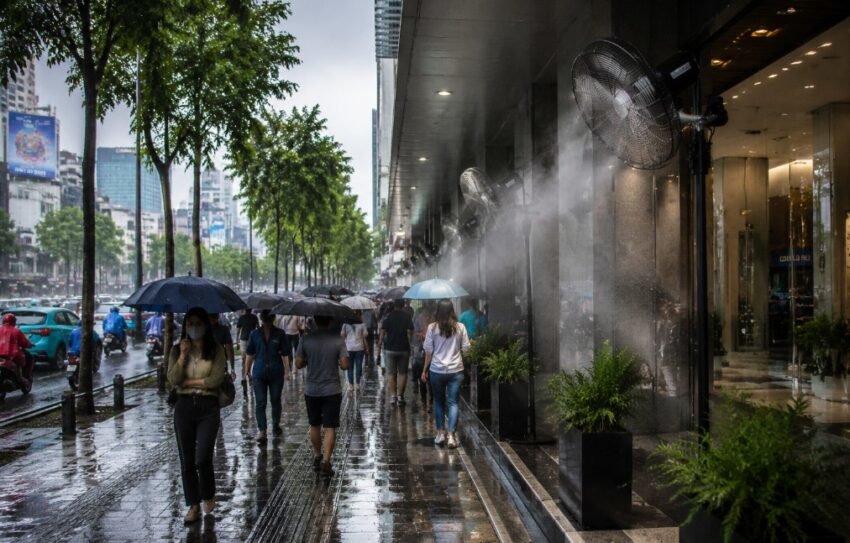
Malaysia and Indonesia have also experienced sustained hot spells, with urban centers facing intensified heat island effects due to dense infrastructure and limited cooling green space.
In several coastal and lowland areas, high humidity levels have made outdoor activity physically hazardous during peak daytime hours.
The tourism sector is directly affected.
Southeast Asia’s travel economy relies heavily on outdoor experiences, cultural tourism and beach destinations, all of which become less viable under extreme heat conditions.
Tour operators in Thailand and neighboring countries have reported shifts in visitor behavior, including reduced daytime excursions, increased demand for indoor attractions, and changes in travel scheduling to early morning or evening hours.
The broader mechanism behind the current conditions is a combination of seasonal monsoon patterns amplified by global climate warming trends and regional atmospheric anomalies.
Scientists have consistently warned that rising baseline temperatures increase the likelihood of extreme heat events, while high humidity compounds the physiological impact by limiting the body’s ability to cool itself through sweat evaporation.
Public health systems across the region are under pressure to manage heat-related illnesses.
Hospitals in several countries have reported increased cases of heat exhaustion and dehydration, particularly among construction workers, agricultural laborers and outdoor vendors.
Governments have responded with public warnings, hydration advisories and temporary work adjustments in high-risk sectors.
Energy systems are also being strained.
Air conditioning demand has surged during peak heat periods, contributing to higher electricity consumption and occasional localized grid stress.
This has prompted discussions in multiple countries about energy resilience, renewable integration and infrastructure upgrades to handle more frequent extreme temperature events.
Agriculture is another vulnerable sector.
High temperatures and inconsistent rainfall patterns are affecting crop yields in some areas, particularly for heat-sensitive produce.
Farmers in parts of Vietnam, Thailand and Indonesia have reported increased irrigation demands and water stress, raising concerns about longer-term food supply stability if extreme conditions persist.
The regional dimension of the crisis is significant.
Southeast Asia’s economies are highly interconnected through trade, tourism and supply chains, meaning that simultaneous heat stress across multiple countries amplifies economic disruption.
Tourism flows within the region, a major driver of income for Thailand and its neighbors, are especially sensitive to weather-related disruptions.
Climate scientists have long warned that Southeast Asia is among the global regions most exposed to the combined effects of heat and humidity due to its geography and rapid urbanization.
The current wave of extreme conditions reinforces those projections and highlights the gap between infrastructure development and climate adaptation needs.
Governments across the region are increasingly focusing on adaptation strategies, including urban greening, heat-resilient infrastructure, improved early warning systems and revised labor safety regulations for extreme heat conditions.
However, implementation remains uneven, particularly in fast-growing urban centers where construction and economic activity continue to expand rapidly.
The immediate trajectory of the heatwave depends on short-term weather patterns, but the structural trend is clear: extreme heat events are becoming more frequent, more intense and more disruptive to both economic activity and public health across Southeast Asia, forcing governments and industries to adjust operating models to a hotter baseline climate.
What is confirmed is that large parts of the region have been experiencing sustained high temperatures combined with unusually high humidity levels, creating dangerous heat index conditions that exceed what many populations are accustomed to.
Meteorological agencies across multiple countries have issued repeated heat advisories, warning of elevated risks of heat exhaustion, dehydration and heat-related illness, particularly among outdoor workers, the elderly and tourists.
Thailand has been among the countries most affected, with central and northern provinces recording prolonged periods of extreme heat conditions that have driven up electricity demand as households and businesses rely heavily on air conditioning.
Similar conditions have been reported across Vietnam, where heatwaves have coincided with power strain and agricultural stress, and in the Philippines, where extreme heat has periodically forced temporary school closures in affected regions.
Malaysia and Indonesia have also experienced sustained hot spells, with urban centers facing intensified heat island effects due to dense infrastructure and limited cooling green space.
In several coastal and lowland areas, high humidity levels have made outdoor activity physically hazardous during peak daytime hours.
The tourism sector is directly affected.
Southeast Asia’s travel economy relies heavily on outdoor experiences, cultural tourism and beach destinations, all of which become less viable under extreme heat conditions.
Tour operators in Thailand and neighboring countries have reported shifts in visitor behavior, including reduced daytime excursions, increased demand for indoor attractions, and changes in travel scheduling to early morning or evening hours.
The broader mechanism behind the current conditions is a combination of seasonal monsoon patterns amplified by global climate warming trends and regional atmospheric anomalies.
Scientists have consistently warned that rising baseline temperatures increase the likelihood of extreme heat events, while high humidity compounds the physiological impact by limiting the body’s ability to cool itself through sweat evaporation.
Public health systems across the region are under pressure to manage heat-related illnesses.
Hospitals in several countries have reported increased cases of heat exhaustion and dehydration, particularly among construction workers, agricultural laborers and outdoor vendors.
Governments have responded with public warnings, hydration advisories and temporary work adjustments in high-risk sectors.
Energy systems are also being strained.
Air conditioning demand has surged during peak heat periods, contributing to higher electricity consumption and occasional localized grid stress.
This has prompted discussions in multiple countries about energy resilience, renewable integration and infrastructure upgrades to handle more frequent extreme temperature events.
Agriculture is another vulnerable sector.
High temperatures and inconsistent rainfall patterns are affecting crop yields in some areas, particularly for heat-sensitive produce.
Farmers in parts of Vietnam, Thailand and Indonesia have reported increased irrigation demands and water stress, raising concerns about longer-term food supply stability if extreme conditions persist.
The regional dimension of the crisis is significant.
Southeast Asia’s economies are highly interconnected through trade, tourism and supply chains, meaning that simultaneous heat stress across multiple countries amplifies economic disruption.
Tourism flows within the region, a major driver of income for Thailand and its neighbors, are especially sensitive to weather-related disruptions.
Climate scientists have long warned that Southeast Asia is among the global regions most exposed to the combined effects of heat and humidity due to its geography and rapid urbanization.
The current wave of extreme conditions reinforces those projections and highlights the gap between infrastructure development and climate adaptation needs.
Governments across the region are increasingly focusing on adaptation strategies, including urban greening, heat-resilient infrastructure, improved early warning systems and revised labor safety regulations for extreme heat conditions.
However, implementation remains uneven, particularly in fast-growing urban centers where construction and economic activity continue to expand rapidly.
The immediate trajectory of the heatwave depends on short-term weather patterns, but the structural trend is clear: extreme heat events are becoming more frequent, more intense and more disruptive to both economic activity and public health across Southeast Asia, forcing governments and industries to adjust operating models to a hotter baseline climate.