Thailand and India Deepen Strategic Partnership as Trade, Security and Connectivity Agenda Expands
Bangkok and New Delhi are accelerating cooperation in infrastructure, defense, tourism and regional trade as both governments respond to economic fragmentation and geopolitical pressure across Asia.
System-driven realignment across Asia’s trade and security architecture is pushing Thailand and India into a closer strategic partnership, with both governments rapidly expanding cooperation in infrastructure, defense, investment, tourism and regional connectivity.
The relationship has moved beyond traditional diplomatic engagement and is increasingly being treated as a long-term economic and geopolitical alignment.
What is confirmed is that Thailand and India elevated bilateral ties to a strategic partnership during high-level meetings linked to regional summits and subsequent ministerial negotiations.
Since then, officials from both countries have accelerated talks covering trade access, logistics integration, maritime security, cybercrime cooperation and supply-chain resilience.
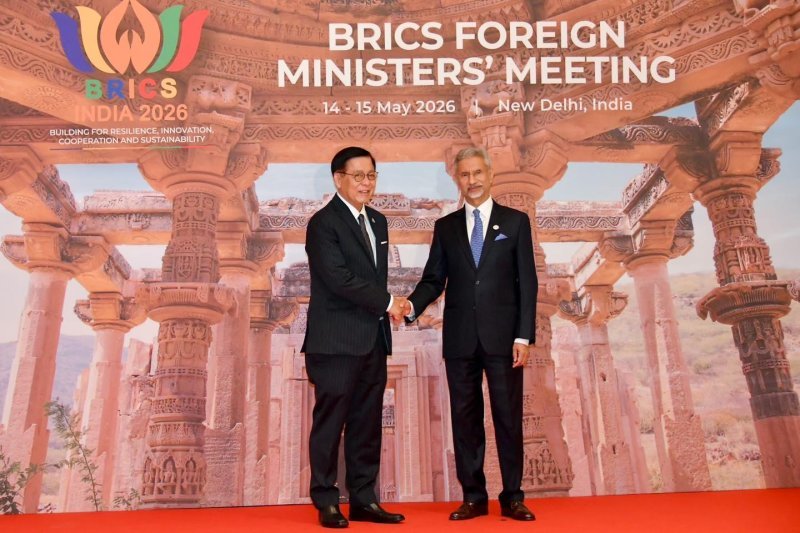
Recent meetings between Thai Foreign Minister Sihasak Phuangketkeow and Indian External Affairs Minister Subrahmanyam Jaishankar have focused heavily on connectivity projects linking mainland Southeast Asia with the Indian Ocean.
One major area of discussion is Thailand’s proposed Land Bridge megaproject, designed to connect the Gulf of Thailand with the Andaman Sea through transport infrastructure intended to bypass congestion in the Strait of Malacca.
The broader strategic logic is clear.
India is attempting to strengthen its economic and political footprint in Southeast Asia under its “Act East” policy, while Thailand is diversifying partnerships amid intensifying rivalry between the United States and China and rising uncertainty in global trade.
Trade is central to the relationship.
Thailand is pushing to upgrade the ASEAN-India Trade in Goods Agreement, arguing that current arrangements no longer reflect modern supply chains, digital commerce and investment flows.
Thai officials also see India’s expanding consumer market as a major growth opportunity for agriculture, food exports, tourism, healthcare and manufacturing.
At the same time, India is increasingly important to Thailand as a source of tourism revenue and outbound investment.
Indian visitor arrivals to Thailand have surged sharply since the pandemic recovery, supported by expanded flight capacity and visa facilitation policies.
Thailand’s tourism authorities are now targeting higher-spending Indian travelers through wellness tourism, weddings, medical tourism and premium leisure services.
The economic relationship is broadening beyond tourism and commodities.
Discussions between the two governments now include semiconductor cooperation, digital payments, startup ecosystems, artificial intelligence, clean energy and advanced manufacturing.
Both sides are also exploring greater cooperation in defense industries and maritime logistics.
Security concerns are becoming a larger part of the agenda.
Thailand and India have intensified cooperation against transnational crime networks, especially online fraud operations and trafficking systems operating across parts of mainland Southeast Asia.
Thai authorities have sought deeper coordination with India on cybercrime investigations and victim protection after large numbers of Indian nationals were targeted by regional scam compounds.
Myanmar is another major driver of closer ties.
Thailand and India share concerns about instability spilling across borders through refugee flows, criminal activity and disrupted trade routes.
Recent diplomatic exchanges show both governments increasingly favor coordinated regional engagement focused on pragmatic stabilization rather than ideological positioning.
The relationship also reflects a larger shift in Asian geopolitics.
Southeast Asian states are increasingly attempting to avoid overdependence on any single major power by building denser regional partnerships.
India benefits from this strategy because many ASEAN members see New Delhi as a balancing force that can contribute economically and strategically without dominating regional systems.
Infrastructure is emerging as one of the most consequential areas of cooperation.
Thailand wants stronger physical integration between South and Southeast Asia through road, port and shipping projects connected to the Bay of Bengal region.
India, meanwhile, views improved connectivity as essential to increasing trade access with ASEAN markets and strengthening its northeastern states.
Defense engagement has also expanded gradually.
Naval cooperation, maritime domain awareness and joint security discussions have become more frequent as both countries monitor shipping risks in the Indian Ocean and broader Indo-Pacific region.
Energy security concerns linked to Middle East instability have reinforced the importance of protecting maritime trade routes.
Economically, both countries are trying to position themselves for a more fragmented global system.
Companies across Asia are adjusting supply chains because of trade disputes, industrial policy competition and geopolitical risk.
Thailand wants to preserve its role as a regional manufacturing and logistics hub, while India is pushing to become a larger industrial and export power.
This convergence creates practical incentives for deeper cooperation.
Thailand offers established industrial infrastructure and ASEAN market access.
India offers scale, labor capacity, technology growth and a rapidly expanding domestic economy.
The relationship still faces constraints.
Bilateral trade remains below the level seen in many of Asia’s major strategic partnerships, regulatory barriers remain significant and infrastructure integration projects have historically moved slowly.
Competition from China’s economic dominance in the region also shapes the limits of how quickly India can expand influence.
Even so, momentum behind the partnership is accelerating because the regional environment increasingly rewards diversification, redundancy and strategic flexibility.
Thailand and India are no longer treating bilateral ties as symbolic diplomacy.
The relationship is being recast as part of a wider Asian restructuring shaped by supply-chain security, infrastructure competition and shifting geopolitical power.
The next phase is expected to focus on implementing connectivity projects, expanding trade negotiations and increasing institutional coordination across security and technology sectors, embedding the Thailand-India partnership more deeply into the economic architecture of the Indo-Pacific.
The relationship has moved beyond traditional diplomatic engagement and is increasingly being treated as a long-term economic and geopolitical alignment.
What is confirmed is that Thailand and India elevated bilateral ties to a strategic partnership during high-level meetings linked to regional summits and subsequent ministerial negotiations.
Since then, officials from both countries have accelerated talks covering trade access, logistics integration, maritime security, cybercrime cooperation and supply-chain resilience.
Recent meetings between Thai Foreign Minister Sihasak Phuangketkeow and Indian External Affairs Minister Subrahmanyam Jaishankar have focused heavily on connectivity projects linking mainland Southeast Asia with the Indian Ocean.
One major area of discussion is Thailand’s proposed Land Bridge megaproject, designed to connect the Gulf of Thailand with the Andaman Sea through transport infrastructure intended to bypass congestion in the Strait of Malacca.
The broader strategic logic is clear.
India is attempting to strengthen its economic and political footprint in Southeast Asia under its “Act East” policy, while Thailand is diversifying partnerships amid intensifying rivalry between the United States and China and rising uncertainty in global trade.
Trade is central to the relationship.
Thailand is pushing to upgrade the ASEAN-India Trade in Goods Agreement, arguing that current arrangements no longer reflect modern supply chains, digital commerce and investment flows.
Thai officials also see India’s expanding consumer market as a major growth opportunity for agriculture, food exports, tourism, healthcare and manufacturing.
At the same time, India is increasingly important to Thailand as a source of tourism revenue and outbound investment.
Indian visitor arrivals to Thailand have surged sharply since the pandemic recovery, supported by expanded flight capacity and visa facilitation policies.
Thailand’s tourism authorities are now targeting higher-spending Indian travelers through wellness tourism, weddings, medical tourism and premium leisure services.
The economic relationship is broadening beyond tourism and commodities.
Discussions between the two governments now include semiconductor cooperation, digital payments, startup ecosystems, artificial intelligence, clean energy and advanced manufacturing.
Both sides are also exploring greater cooperation in defense industries and maritime logistics.
Security concerns are becoming a larger part of the agenda.
Thailand and India have intensified cooperation against transnational crime networks, especially online fraud operations and trafficking systems operating across parts of mainland Southeast Asia.
Thai authorities have sought deeper coordination with India on cybercrime investigations and victim protection after large numbers of Indian nationals were targeted by regional scam compounds.
Myanmar is another major driver of closer ties.
Thailand and India share concerns about instability spilling across borders through refugee flows, criminal activity and disrupted trade routes.
Recent diplomatic exchanges show both governments increasingly favor coordinated regional engagement focused on pragmatic stabilization rather than ideological positioning.
The relationship also reflects a larger shift in Asian geopolitics.
Southeast Asian states are increasingly attempting to avoid overdependence on any single major power by building denser regional partnerships.
India benefits from this strategy because many ASEAN members see New Delhi as a balancing force that can contribute economically and strategically without dominating regional systems.
Infrastructure is emerging as one of the most consequential areas of cooperation.
Thailand wants stronger physical integration between South and Southeast Asia through road, port and shipping projects connected to the Bay of Bengal region.
India, meanwhile, views improved connectivity as essential to increasing trade access with ASEAN markets and strengthening its northeastern states.
Defense engagement has also expanded gradually.
Naval cooperation, maritime domain awareness and joint security discussions have become more frequent as both countries monitor shipping risks in the Indian Ocean and broader Indo-Pacific region.
Energy security concerns linked to Middle East instability have reinforced the importance of protecting maritime trade routes.
Economically, both countries are trying to position themselves for a more fragmented global system.
Companies across Asia are adjusting supply chains because of trade disputes, industrial policy competition and geopolitical risk.
Thailand wants to preserve its role as a regional manufacturing and logistics hub, while India is pushing to become a larger industrial and export power.
This convergence creates practical incentives for deeper cooperation.
Thailand offers established industrial infrastructure and ASEAN market access.
India offers scale, labor capacity, technology growth and a rapidly expanding domestic economy.
The relationship still faces constraints.
Bilateral trade remains below the level seen in many of Asia’s major strategic partnerships, regulatory barriers remain significant and infrastructure integration projects have historically moved slowly.
Competition from China’s economic dominance in the region also shapes the limits of how quickly India can expand influence.
Even so, momentum behind the partnership is accelerating because the regional environment increasingly rewards diversification, redundancy and strategic flexibility.
Thailand and India are no longer treating bilateral ties as symbolic diplomacy.
The relationship is being recast as part of a wider Asian restructuring shaped by supply-chain security, infrastructure competition and shifting geopolitical power.
The next phase is expected to focus on implementing connectivity projects, expanding trade negotiations and increasing institutional coordination across security and technology sectors, embedding the Thailand-India partnership more deeply into the economic architecture of the Indo-Pacific.