Taiwan’s Smart Tolling Technology Powers Thailand’s AI-Driven M81 Motorway Launch
Thailand’s M81 motorway adopts Taiwan-developed free-flow electronic tolling with AI systems enabling non-stop travel, improved traffic efficiency, and major travel time reductions.
Thailand has formally launched a new AI-powered tolling system on its Intercity Motorway No. 81 (M81), marking a significant milestone in the country’s transition toward fully digital highway infrastructure.
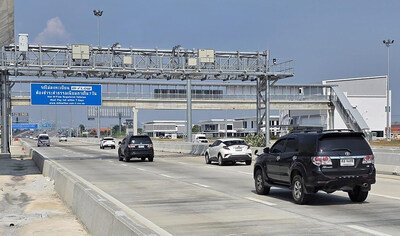
The system, developed with technology originating from Taiwan’s electronic tolling sector, is now operational along the Bangkok–Kanchanaburi route and is designed to allow vehicles to pass through toll points without stopping.
The M81 motorway, which connects Bang Yai to Kanchanaburi across western Thailand, has introduced a multi-lane free-flow tolling model known locally as M-Flow.
The system uses artificial intelligence-based automatic number plate recognition alongside Internet of Things infrastructure to identify vehicles in real time and calculate toll charges automatically based on distance travelled.
Drivers are able to continue at highway speed, with payments processed through digital platforms or linked accounts.
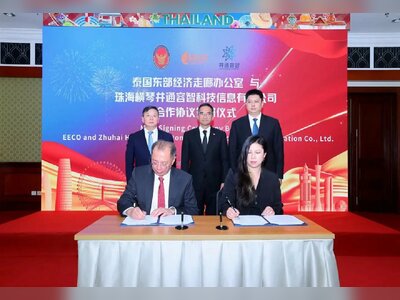
The technology behind the system has been implemented in cooperation with Taiwanese electronic toll collection specialists, who have long experience operating one of the world’s most advanced free-flow highway networks.
The same core technologies have been adapted for Thailand’s road conditions, including more complex vehicle plate formats and mixed traffic types, with AI systems trained to maintain high identification accuracy.
Officials involved in the project describe the M81 deployment as a step forward in regional transport modernisation.
The system is integrated with a central traffic operations centre, allowing real-time monitoring, data-driven traffic management, and rapid incident response.
It also supports future upgrades, including expanded enforcement tools and additional smart mobility functions.
The motorway itself is a key infrastructure corridor linking the capital region with western provinces and is expected to strengthen both tourism and logistics connectivity.
Early performance indicators suggest substantial improvements in travel efficiency, with journey times between Bangkok and Kanchanaburi significantly reduced compared to traditional toll road systems.
Weekend traffic volumes have already reached tens of thousands of vehicles daily, reflecting strong demand for the route.
Authorities have also highlighted broader benefits associated with the free-flow system, including reduced congestion at toll points, smoother traffic distribution, and lower fuel consumption due to uninterrupted driving conditions.
The digital tolling framework is part of a wider national push to modernise highway operations and expand intelligent transport systems across major routes.
The M81 project builds on earlier deployments of similar technology on other Thai motorways and is expected to serve as a model for future highway developments across the country as Thailand continues to expand its smart infrastructure network.
The system, developed with technology originating from Taiwan’s electronic tolling sector, is now operational along the Bangkok–Kanchanaburi route and is designed to allow vehicles to pass through toll points without stopping.
The M81 motorway, which connects Bang Yai to Kanchanaburi across western Thailand, has introduced a multi-lane free-flow tolling model known locally as M-Flow.
The system uses artificial intelligence-based automatic number plate recognition alongside Internet of Things infrastructure to identify vehicles in real time and calculate toll charges automatically based on distance travelled.
Drivers are able to continue at highway speed, with payments processed through digital platforms or linked accounts.
The technology behind the system has been implemented in cooperation with Taiwanese electronic toll collection specialists, who have long experience operating one of the world’s most advanced free-flow highway networks.
The same core technologies have been adapted for Thailand’s road conditions, including more complex vehicle plate formats and mixed traffic types, with AI systems trained to maintain high identification accuracy.
Officials involved in the project describe the M81 deployment as a step forward in regional transport modernisation.
The system is integrated with a central traffic operations centre, allowing real-time monitoring, data-driven traffic management, and rapid incident response.
It also supports future upgrades, including expanded enforcement tools and additional smart mobility functions.
The motorway itself is a key infrastructure corridor linking the capital region with western provinces and is expected to strengthen both tourism and logistics connectivity.
Early performance indicators suggest substantial improvements in travel efficiency, with journey times between Bangkok and Kanchanaburi significantly reduced compared to traditional toll road systems.
Weekend traffic volumes have already reached tens of thousands of vehicles daily, reflecting strong demand for the route.
Authorities have also highlighted broader benefits associated with the free-flow system, including reduced congestion at toll points, smoother traffic distribution, and lower fuel consumption due to uninterrupted driving conditions.
The digital tolling framework is part of a wider national push to modernise highway operations and expand intelligent transport systems across major routes.
The M81 project builds on earlier deployments of similar technology on other Thai motorways and is expected to serve as a model for future highway developments across the country as Thailand continues to expand its smart infrastructure network.