Thailand Moves to Restore 30-Day Visa-Free Stay in Policy Shift Aimed at Streamlining Tourism Entry Rules
Authorities have confirmed plans to reduce visa-free stays from 60 to 30 days, reversing a post-pandemic expansion while allowing extensions for longer visits.
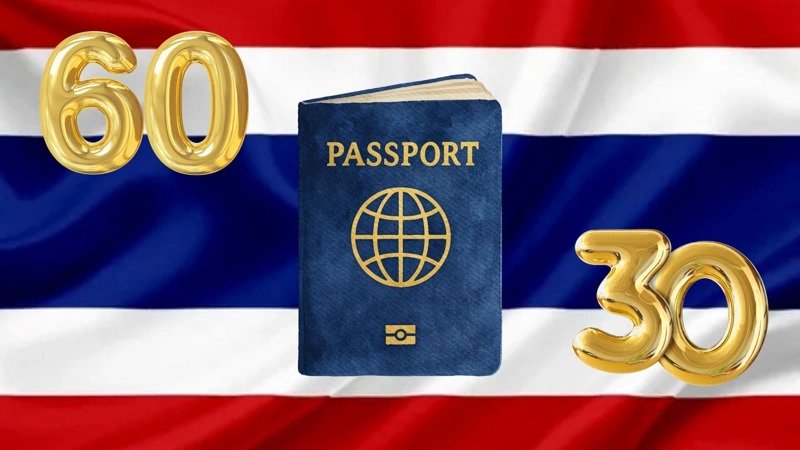
Thailand is moving ahead with a significant adjustment to its visa-exemption system, confirming plans to reduce the permitted visa-free stay for foreign visitors from 60 days back to 30 days.
The change marks a policy reversal from the post-pandemic expansion introduced in 2024, when the country doubled the standard allowance in an effort to strengthen tourism and support economic recovery.
Officials say the original 60-day measure successfully encouraged longer visits and helped revitalise the travel sector, but concerns have since grown that the extended stay period has been exploited in ways that go beyond its intended purpose.
Government reviews cited cases involving misuse of the scheme, including unauthorised work and other non-tourism activities, prompting a reassessment of entry rules to ensure they remain aligned with short-term travel objectives.
Under the proposed framework, visitors from eligible countries would again receive a 30-day stamp on arrival, consistent with earlier regulations that were in place prior to 2024. However, travellers would still be able to request a 30-day extension through local immigration offices, allowing flexibility for longer stays where needed.
The decision has been framed by authorities as part of a broader effort to refine immigration controls while maintaining Thailand’s openness to international tourism.
Officials emphasise that the policy is not directed at any specific nationality, but is intended to strengthen oversight and preserve the integrity of the visa-exemption system.
The measure remains subject to final implementation procedures, and no exact enforcement date has been formally confirmed.
Until the updated regulation is fully enacted, the existing 60-day visa-free arrangement continues to apply, leaving travellers in a transitional period as the new rules are prepared.
The change marks a policy reversal from the post-pandemic expansion introduced in 2024, when the country doubled the standard allowance in an effort to strengthen tourism and support economic recovery.
Officials say the original 60-day measure successfully encouraged longer visits and helped revitalise the travel sector, but concerns have since grown that the extended stay period has been exploited in ways that go beyond its intended purpose.
Government reviews cited cases involving misuse of the scheme, including unauthorised work and other non-tourism activities, prompting a reassessment of entry rules to ensure they remain aligned with short-term travel objectives.
Under the proposed framework, visitors from eligible countries would again receive a 30-day stamp on arrival, consistent with earlier regulations that were in place prior to 2024. However, travellers would still be able to request a 30-day extension through local immigration offices, allowing flexibility for longer stays where needed.
The decision has been framed by authorities as part of a broader effort to refine immigration controls while maintaining Thailand’s openness to international tourism.
Officials emphasise that the policy is not directed at any specific nationality, but is intended to strengthen oversight and preserve the integrity of the visa-exemption system.
The measure remains subject to final implementation procedures, and no exact enforcement date has been formally confirmed.
Until the updated regulation is fully enacted, the existing 60-day visa-free arrangement continues to apply, leaving travellers in a transitional period as the new rules are prepared.