Thailand Opens Largest Urban Rooftop Garden in Bangkok’s Silom District
A seven-rai rooftop park spanning 11,200 square metres opens at Dusit Central Park to draw visitors back to Bangkok’s historic business district.
Thailand’s largest urban rooftop garden is set to open to the public on 3 September atop the Dusit Central Park development in Bangkok.
The facility spans 11,200 square metres across the 4th to 7th floors of the mixed-use complex and can accommodate around 1,000 visitors daily, with advance registration required to manage capacity.
The project has been developed by Vimarn Suriya Company Limited as part of efforts to revive the Silom district, which has experienced a decline in commercial activity as businesses and entertainment venues have shifted to other parts of the capital.
The rooftop garden features exclusively Thai native plant species selected for high oxygen output and carbon dioxide absorption.
Visitors can access information about the flora through QR codes displayed throughout the site.
The garden follows universal design standards to ensure accessibility for people of all ages and abilities, including wheelchair users.
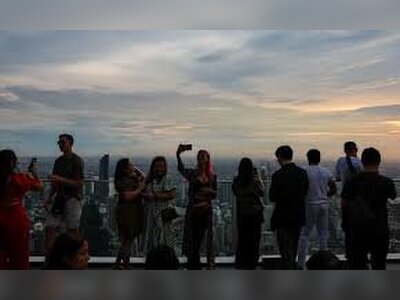
Facilities include a Food Passage dining area, the D Garden connecting to residential and hotel zones, a Bird Nest viewing platform overlooking the city skyline, a multipurpose amphitheatre, and tiered walkways designed for nature observation.
The park forms part of the 46,000-million-baht Dusit Central Park development, which includes retail, office, hotel, and residential components.
Construction is more than 80 percent complete, with the hotel already operational.
The shopping centre will open on 4 September, while residential units are scheduled for completion by mid-2026.
Sales of residential units have reached 91 percent of the 95 percent target set for 2025.
The rooftop garden will operate daily from 6 a.m. to 10 p.m. Access is available via BTS Sala Daeng Station and MRT Silom Station, with direct connections to the development.
The site is also served by multiple bus routes and offers parking for private vehicles.
The design incorporates biophilic design principles, including natural materials, textures, waterfalls, and native vegetation intended to connect visitors with nature.
The facility spans 11,200 square metres across the 4th to 7th floors of the mixed-use complex and can accommodate around 1,000 visitors daily, with advance registration required to manage capacity.
The project has been developed by Vimarn Suriya Company Limited as part of efforts to revive the Silom district, which has experienced a decline in commercial activity as businesses and entertainment venues have shifted to other parts of the capital.
The rooftop garden features exclusively Thai native plant species selected for high oxygen output and carbon dioxide absorption.
Visitors can access information about the flora through QR codes displayed throughout the site.
The garden follows universal design standards to ensure accessibility for people of all ages and abilities, including wheelchair users.
Facilities include a Food Passage dining area, the D Garden connecting to residential and hotel zones, a Bird Nest viewing platform overlooking the city skyline, a multipurpose amphitheatre, and tiered walkways designed for nature observation.
The park forms part of the 46,000-million-baht Dusit Central Park development, which includes retail, office, hotel, and residential components.
Construction is more than 80 percent complete, with the hotel already operational.
The shopping centre will open on 4 September, while residential units are scheduled for completion by mid-2026.
Sales of residential units have reached 91 percent of the 95 percent target set for 2025.
The rooftop garden will operate daily from 6 a.m. to 10 p.m. Access is available via BTS Sala Daeng Station and MRT Silom Station, with direct connections to the development.
The site is also served by multiple bus routes and offers parking for private vehicles.
The design incorporates biophilic design principles, including natural materials, textures, waterfalls, and native vegetation intended to connect visitors with nature.