Thailand's ERC Proposes a Reduction in Power Tariff Amid Renewable Energy Funding Adjustments
A potential 17 satang cut in electricity tariffs could ease financial burdens if state renewable energy expenditure is curtailed.
The Energy Regulatory Commission (ERC) of Thailand is poised to implement a reduction of 0.17 baht per kilowatt-hour (kWh) in the national power tariff, a move that promises to lower electricity bills for both households and businesses.
This potential reduction hinges on a government decision to decrease funding allocated for promoting renewable energy investments.
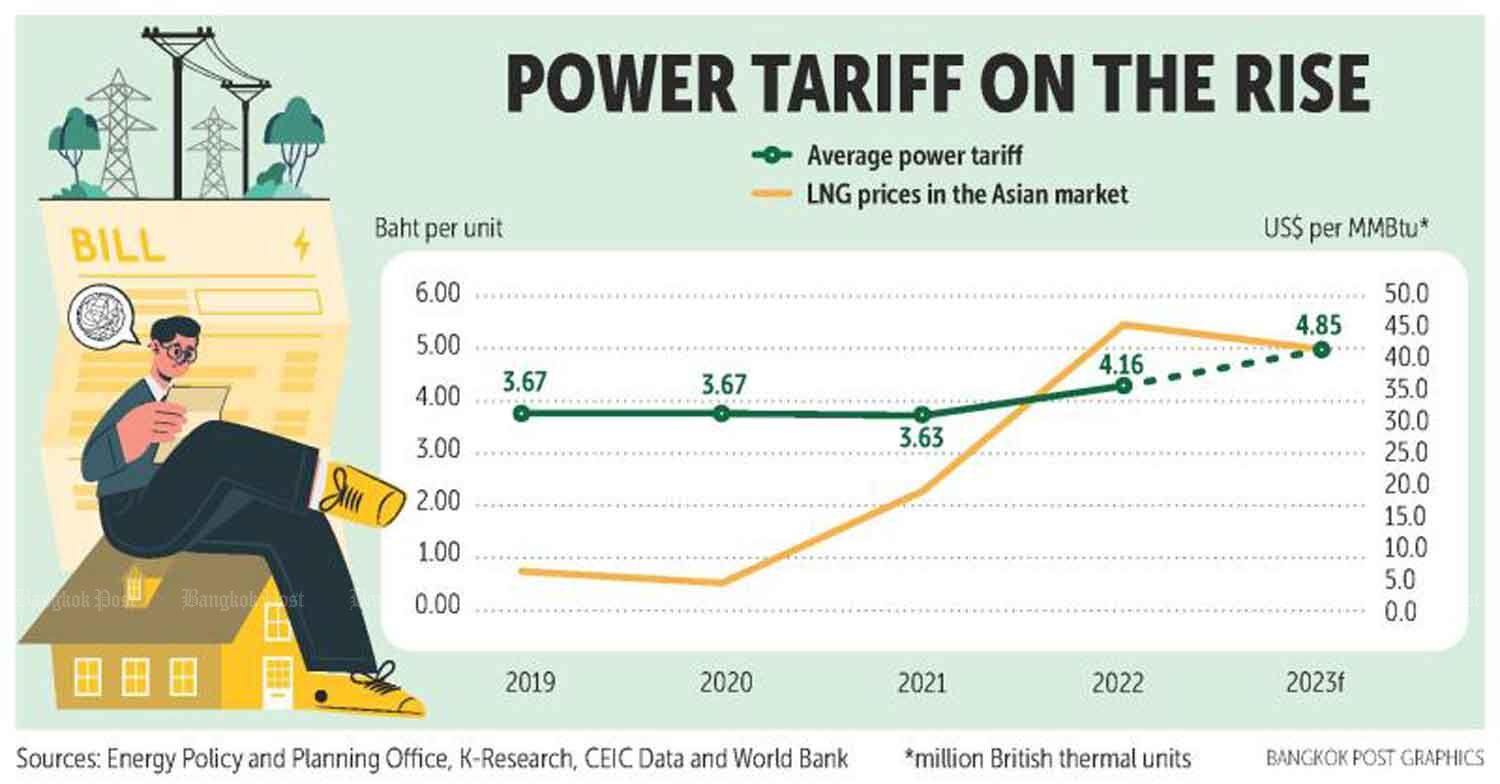
Currently, the electricity tariff in Thailand stands at 4.15 baht per kWh, with a portion of this cost directed towards supporting the country's renewable energy initiatives.
This allocation, while crucial for sustainable development, contributes to higher electricity costs, acknowledges the ERC.
'If the cabinet or the National Energy Policy Council agrees to reassess the current expenditure under the renewable energy policy, it would allow us to reduce power bills immediately by 0.17 baht per unit,' stated Poonpat Leesombatpiboon, secretary-general of the ERC.
This adjustment would effectively bring the power tariff down to 3.89 baht per kWh.
Prime Minister Paetongtarn Shinawatra has expressed commitment to maintaining electricity prices below 4 baht per unit, aiming to alleviate the economic pressure on Thai citizens.
Her father, Thaksin Shinawatra, perceived as the de facto leader of the ruling Pheu Thai Party, has previously advocated for a further reduction to 3.70 baht per unit.
'We intend to propose the ERC's 0.17-baht reduction measure to the Prime Minister this week,' Mr. Poonpat disclosed.
The possibility of the new tariff applying from May to August of this year will depend on timely revisions to the spending on renewable energy promotion, with the current tariff in effect until the end of April.
The ERC anticipates that Thailand's electricity consumption will reach 195 billion kWh this year.
A reduction in the power tariff by 0.17 baht could result in savings of up to 33.2 billion baht for consumers.
Government spending linked to renewable energy, primarily involving feed-in and adder tariffs, currently contributes to 4% of the overall power tariff.
These tariffs cover expenses related to state policies encouraging clean energy and supporting the Energy Development Fund.
State electricity agencies, under power purchase agreements with small and very small power producers, are committed to paying these tariffs.
These producers, with maximum capacities of 90 MW and 10 MW respectively, benefit from tariffs significantly higher than generation costs.
The aim is to incentivize renewable energy investments, although this setup inadvertently increases consumer electricity bills.
There are presently 533 projects, representing a combined capacity of 3,940 MW, benefiting from these tariffs.
Should the government's approval be secured, the ERC proposes adjusting these tariffs, as many involved companies are now in a financially robust position, partly due to declining solar panel costs.
'Adjustments are necessary because many companies have surpassed their break-even points,' explained Mr. Poonpat.
The policy encouraging renewable energy investment was originally put into motion in 2004.
The proposed reduction in the power tariff underscores a critical evaluation of Thailand's renewable energy funding strategy, balancing the need for sustainable energy development with economic pragmatism for consumers.
This potential reduction hinges on a government decision to decrease funding allocated for promoting renewable energy investments.
Currently, the electricity tariff in Thailand stands at 4.15 baht per kWh, with a portion of this cost directed towards supporting the country's renewable energy initiatives.
This allocation, while crucial for sustainable development, contributes to higher electricity costs, acknowledges the ERC.
'If the cabinet or the National Energy Policy Council agrees to reassess the current expenditure under the renewable energy policy, it would allow us to reduce power bills immediately by 0.17 baht per unit,' stated Poonpat Leesombatpiboon, secretary-general of the ERC.
This adjustment would effectively bring the power tariff down to 3.89 baht per kWh.
Prime Minister Paetongtarn Shinawatra has expressed commitment to maintaining electricity prices below 4 baht per unit, aiming to alleviate the economic pressure on Thai citizens.
Her father, Thaksin Shinawatra, perceived as the de facto leader of the ruling Pheu Thai Party, has previously advocated for a further reduction to 3.70 baht per unit.
'We intend to propose the ERC's 0.17-baht reduction measure to the Prime Minister this week,' Mr. Poonpat disclosed.
The possibility of the new tariff applying from May to August of this year will depend on timely revisions to the spending on renewable energy promotion, with the current tariff in effect until the end of April.
The ERC anticipates that Thailand's electricity consumption will reach 195 billion kWh this year.
A reduction in the power tariff by 0.17 baht could result in savings of up to 33.2 billion baht for consumers.
Government spending linked to renewable energy, primarily involving feed-in and adder tariffs, currently contributes to 4% of the overall power tariff.
These tariffs cover expenses related to state policies encouraging clean energy and supporting the Energy Development Fund.
State electricity agencies, under power purchase agreements with small and very small power producers, are committed to paying these tariffs.
These producers, with maximum capacities of 90 MW and 10 MW respectively, benefit from tariffs significantly higher than generation costs.
The aim is to incentivize renewable energy investments, although this setup inadvertently increases consumer electricity bills.
There are presently 533 projects, representing a combined capacity of 3,940 MW, benefiting from these tariffs.
Should the government's approval be secured, the ERC proposes adjusting these tariffs, as many involved companies are now in a financially robust position, partly due to declining solar panel costs.
'Adjustments are necessary because many companies have surpassed their break-even points,' explained Mr. Poonpat.
The policy encouraging renewable energy investment was originally put into motion in 2004.
The proposed reduction in the power tariff underscores a critical evaluation of Thailand's renewable energy funding strategy, balancing the need for sustainable energy development with economic pragmatism for consumers.