Thailand Seizes Mislabelled Canned Fish After Viral Complaint Sparks Food Safety Probe
Authorities have removed batches of canned seafood from shelves following allegations of incorrect labeling, exposing gaps in enforcement and raising wider questions about food traceability and consumer protection standards.
EVENT-DRIVEN
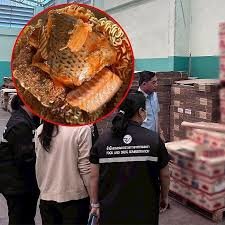
Thai authorities have seized batches of canned fish products after a viral consumer complaint triggered a formal food safety investigation into alleged mislabeling, highlighting ongoing weaknesses in product traceability and enforcement within parts of the country’s packaged food sector.
What is confirmed is that Thailand’s food regulatory agencies responded to public reports circulating on social media showing discrepancies between labeled product descriptions and the actual contents of canned seafood items sold domestically.
Following initial inspections, authorities ordered the removal of specific batches from retail distribution pending laboratory verification and supply chain review.
The incident began when consumers shared images and videos claiming that canned fish products did not match their labeling, either in species identification, ingredient composition, or production information.
These claims rapidly gained traction online, prompting regulatory scrutiny and coordinated inspections of distribution channels.
The mechanism of the issue centers on food labeling compliance rules, which require manufacturers to accurately declare product contents, origin, processing methods, and safety certifications.
Mislabeling in packaged food can arise from several points in the supply chain, including sourcing errors, subcontracted production, inadequate quality control, or deliberate cost-cutting substitutions.
Food regulators in Thailand have the authority to inspect manufacturing facilities, seize suspected non-compliant goods, and require companies to recall or withdraw products that fail to meet labeling and safety standards.
In this case, authorities have begun tracing supply chains linked to the affected canned fish batches to determine where discrepancies originated.
Canned seafood is a widely consumed and heavily traded category in Thailand’s food market, both for domestic consumption and export.
The sector includes multiple layers of processing, often involving imported raw fish, domestic canning operations, and third-party distributors.
This complexity increases the risk of labeling errors or non-compliance if oversight systems are not consistently enforced.
The key issue is not only whether specific products were mislabeled, but how such discrepancies were able to reach retail shelves in the first place.
That question places attention on inspection frequency, enforcement capacity, and the reliability of certification systems used to verify packaged food integrity.
Consumer protection agencies in Thailand regularly conduct random sampling and market inspections, but enforcement challenges can arise due to the scale of the packaged food industry and the number of small and medium-sized producers involved in supply chains.
The incident also illustrates the growing influence of social media in triggering regulatory action.
Viral consumer complaints increasingly serve as early warning signals for authorities, particularly in cases involving food safety, counterfeit goods, or misleading advertising.
This shifts part of the enforcement dynamic from routine inspection toward reactive investigation driven by public reporting.
If confirmed violations are found, companies involved may face penalties including fines, mandatory recalls, suspension of production licenses, or criminal liability depending on the severity of misrepresentation and potential health risk.
At this stage, regulators have focused on isolating affected batches rather than issuing a blanket recall of all canned fish products in the market.
This suggests the issue is currently treated as product-specific rather than industry-wide contamination or systemic food safety failure.
However, the broader implication is reputational.
Thailand’s food export sector relies heavily on consumer trust in labeling accuracy and quality assurance systems.
Any perception of weak oversight can affect both domestic confidence and international market positioning, particularly in high-value export categories.
Authorities are continuing laboratory testing and supplier audits to determine whether the issue stems from mislabeling at production level or downstream distribution errors.
The outcome of these investigations will determine whether enforcement expands beyond product seizure to broader regulatory or legal action against manufacturers or distributors.
The immediate consequence is that affected canned fish products have been pulled from circulation while investigations proceed, reinforcing regulatory oversight of packaged seafood and signaling stricter attention to labeling compliance in Thailand’s food supply chain.
Thai authorities have seized batches of canned fish products after a viral consumer complaint triggered a formal food safety investigation into alleged mislabeling, highlighting ongoing weaknesses in product traceability and enforcement within parts of the country’s packaged food sector.
What is confirmed is that Thailand’s food regulatory agencies responded to public reports circulating on social media showing discrepancies between labeled product descriptions and the actual contents of canned seafood items sold domestically.
Following initial inspections, authorities ordered the removal of specific batches from retail distribution pending laboratory verification and supply chain review.
The incident began when consumers shared images and videos claiming that canned fish products did not match their labeling, either in species identification, ingredient composition, or production information.
These claims rapidly gained traction online, prompting regulatory scrutiny and coordinated inspections of distribution channels.
The mechanism of the issue centers on food labeling compliance rules, which require manufacturers to accurately declare product contents, origin, processing methods, and safety certifications.
Mislabeling in packaged food can arise from several points in the supply chain, including sourcing errors, subcontracted production, inadequate quality control, or deliberate cost-cutting substitutions.
Food regulators in Thailand have the authority to inspect manufacturing facilities, seize suspected non-compliant goods, and require companies to recall or withdraw products that fail to meet labeling and safety standards.
In this case, authorities have begun tracing supply chains linked to the affected canned fish batches to determine where discrepancies originated.
Canned seafood is a widely consumed and heavily traded category in Thailand’s food market, both for domestic consumption and export.
The sector includes multiple layers of processing, often involving imported raw fish, domestic canning operations, and third-party distributors.
This complexity increases the risk of labeling errors or non-compliance if oversight systems are not consistently enforced.
The key issue is not only whether specific products were mislabeled, but how such discrepancies were able to reach retail shelves in the first place.
That question places attention on inspection frequency, enforcement capacity, and the reliability of certification systems used to verify packaged food integrity.
Consumer protection agencies in Thailand regularly conduct random sampling and market inspections, but enforcement challenges can arise due to the scale of the packaged food industry and the number of small and medium-sized producers involved in supply chains.
The incident also illustrates the growing influence of social media in triggering regulatory action.
Viral consumer complaints increasingly serve as early warning signals for authorities, particularly in cases involving food safety, counterfeit goods, or misleading advertising.
This shifts part of the enforcement dynamic from routine inspection toward reactive investigation driven by public reporting.
If confirmed violations are found, companies involved may face penalties including fines, mandatory recalls, suspension of production licenses, or criminal liability depending on the severity of misrepresentation and potential health risk.
At this stage, regulators have focused on isolating affected batches rather than issuing a blanket recall of all canned fish products in the market.
This suggests the issue is currently treated as product-specific rather than industry-wide contamination or systemic food safety failure.
However, the broader implication is reputational.
Thailand’s food export sector relies heavily on consumer trust in labeling accuracy and quality assurance systems.
Any perception of weak oversight can affect both domestic confidence and international market positioning, particularly in high-value export categories.
Authorities are continuing laboratory testing and supplier audits to determine whether the issue stems from mislabeling at production level or downstream distribution errors.
The outcome of these investigations will determine whether enforcement expands beyond product seizure to broader regulatory or legal action against manufacturers or distributors.
The immediate consequence is that affected canned fish products have been pulled from circulation while investigations proceed, reinforcing regulatory oversight of packaged seafood and signaling stricter attention to labeling compliance in Thailand’s food supply chain.