California Expands Trade Push Into Thailand as Exporters Target Southeast Asia Growth Corridor
A state-led trade mission highlights rising commercial ties, focusing on agriculture, clean energy, and technology exports amid shifting global supply chains
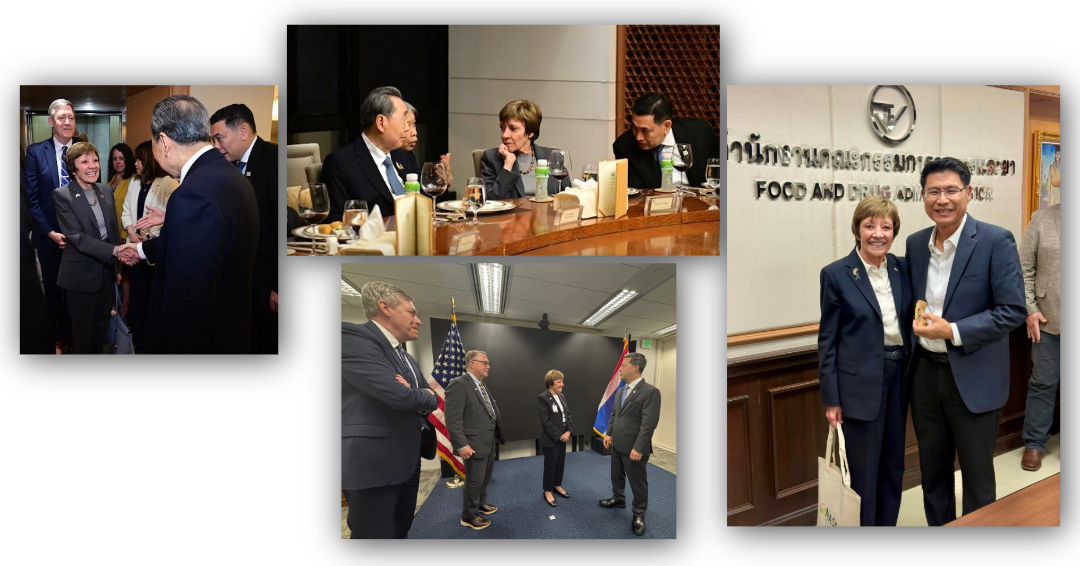
ACTOR-DRIVEN international trade diplomacy is shaping a new phase of economic engagement between California and Thailand as a state-led trade mission positions Southeast Asia’s second-largest economy as a strategic growth market for American exporters.
What is confirmed is that California has intensified efforts to expand its export footprint in Asia, with Thailand identified as a key partner economy due to its manufacturing base, consumer market growth, and integration within ASEAN supply chains.
The trade mission brings together public officials and private-sector exporters seeking to strengthen commercial ties in sectors ranging from agriculture and food products to clean energy technologies and advanced manufacturing inputs.
The rationale behind the mission reflects structural shifts in global trade.
Companies are increasingly diversifying supply chains away from concentrated production hubs and toward multi-country networks across Southeast Asia.
Thailand plays a central role in this reconfiguration due to its established industrial zones, automotive manufacturing capacity, and growing investment in electric vehicle production and renewable energy infrastructure.
For California exporters, the opportunity is concentrated in high-value sectors.
Agricultural producers are targeting Thailand’s large and increasingly urbanized consumer base, where demand for premium food products, dairy, wine, and packaged goods is expanding alongside rising incomes.
At the same time, technology and clean energy firms see Thailand as both a market and a regional distribution hub.
The trade relationship is also shaped by policy alignment around climate and energy transition goals.
California’s regulatory environment has accelerated adoption of clean energy technologies, electric mobility systems, and emissions reduction standards.
Thailand’s industrial policy has similarly prioritized electric vehicle supply chains and renewable energy expansion, creating overlap in areas of commercial interest.
However, market access is not frictionless.
Tariff structures, regulatory differences, and local competition remain significant constraints for foreign exporters.
Thailand’s domestic manufacturing sector is highly competitive in key industries, particularly food processing, automotive components, and electronics assembly, requiring foreign firms to differentiate through branding, quality, and technological advantage.
The broader implication of the trade mission is not immediate economic impact but long-term positioning.
As global supply chains continue to fragment and reassemble across Asia, trade relationships are increasingly shaped by sub-national actors such as US states, not only federal agreements.
California’s approach reflects this shift, leveraging its economic scale to build bilateral relationships that mirror national-level diplomacy.
For Thailand, engagement with sub-national US economies provides diversification in export partnerships and investment inflows, particularly as it navigates competition for foreign direct investment within ASEAN.
For California, the strategy is aimed at stabilizing export growth in a slower global demand environment by accessing high-growth Asian consumer markets.
The trajectory of this relationship will depend on whether trade missions translate into sustained commercial contracts and investment flows rather than symbolic engagement, but the structural incentives on both sides point toward deeper economic integration.
What is confirmed is that California has intensified efforts to expand its export footprint in Asia, with Thailand identified as a key partner economy due to its manufacturing base, consumer market growth, and integration within ASEAN supply chains.
The trade mission brings together public officials and private-sector exporters seeking to strengthen commercial ties in sectors ranging from agriculture and food products to clean energy technologies and advanced manufacturing inputs.
The rationale behind the mission reflects structural shifts in global trade.
Companies are increasingly diversifying supply chains away from concentrated production hubs and toward multi-country networks across Southeast Asia.
Thailand plays a central role in this reconfiguration due to its established industrial zones, automotive manufacturing capacity, and growing investment in electric vehicle production and renewable energy infrastructure.
For California exporters, the opportunity is concentrated in high-value sectors.
Agricultural producers are targeting Thailand’s large and increasingly urbanized consumer base, where demand for premium food products, dairy, wine, and packaged goods is expanding alongside rising incomes.
At the same time, technology and clean energy firms see Thailand as both a market and a regional distribution hub.
The trade relationship is also shaped by policy alignment around climate and energy transition goals.
California’s regulatory environment has accelerated adoption of clean energy technologies, electric mobility systems, and emissions reduction standards.
Thailand’s industrial policy has similarly prioritized electric vehicle supply chains and renewable energy expansion, creating overlap in areas of commercial interest.
However, market access is not frictionless.
Tariff structures, regulatory differences, and local competition remain significant constraints for foreign exporters.
Thailand’s domestic manufacturing sector is highly competitive in key industries, particularly food processing, automotive components, and electronics assembly, requiring foreign firms to differentiate through branding, quality, and technological advantage.
The broader implication of the trade mission is not immediate economic impact but long-term positioning.
As global supply chains continue to fragment and reassemble across Asia, trade relationships are increasingly shaped by sub-national actors such as US states, not only federal agreements.
California’s approach reflects this shift, leveraging its economic scale to build bilateral relationships that mirror national-level diplomacy.
For Thailand, engagement with sub-national US economies provides diversification in export partnerships and investment inflows, particularly as it navigates competition for foreign direct investment within ASEAN.
For California, the strategy is aimed at stabilizing export growth in a slower global demand environment by accessing high-growth Asian consumer markets.
The trajectory of this relationship will depend on whether trade missions translate into sustained commercial contracts and investment flows rather than symbolic engagement, but the structural incentives on both sides point toward deeper economic integration.