TrueMoney’s Stablecoin Push Signals Thailand’s Next Phase in Cross-Border Payments
Thailand’s largest digital wallet is exploring baht-pegged stablecoins to reduce friction in overseas spending and investment, but regulatory approval and banking integration remain major hurdles.
Thailand’s digital payments sector is entering a new phase as TrueMoney, the country’s largest e-wallet provider, moves to test stablecoin-based systems aimed at making overseas spending and investing faster, cheaper, and more seamless.
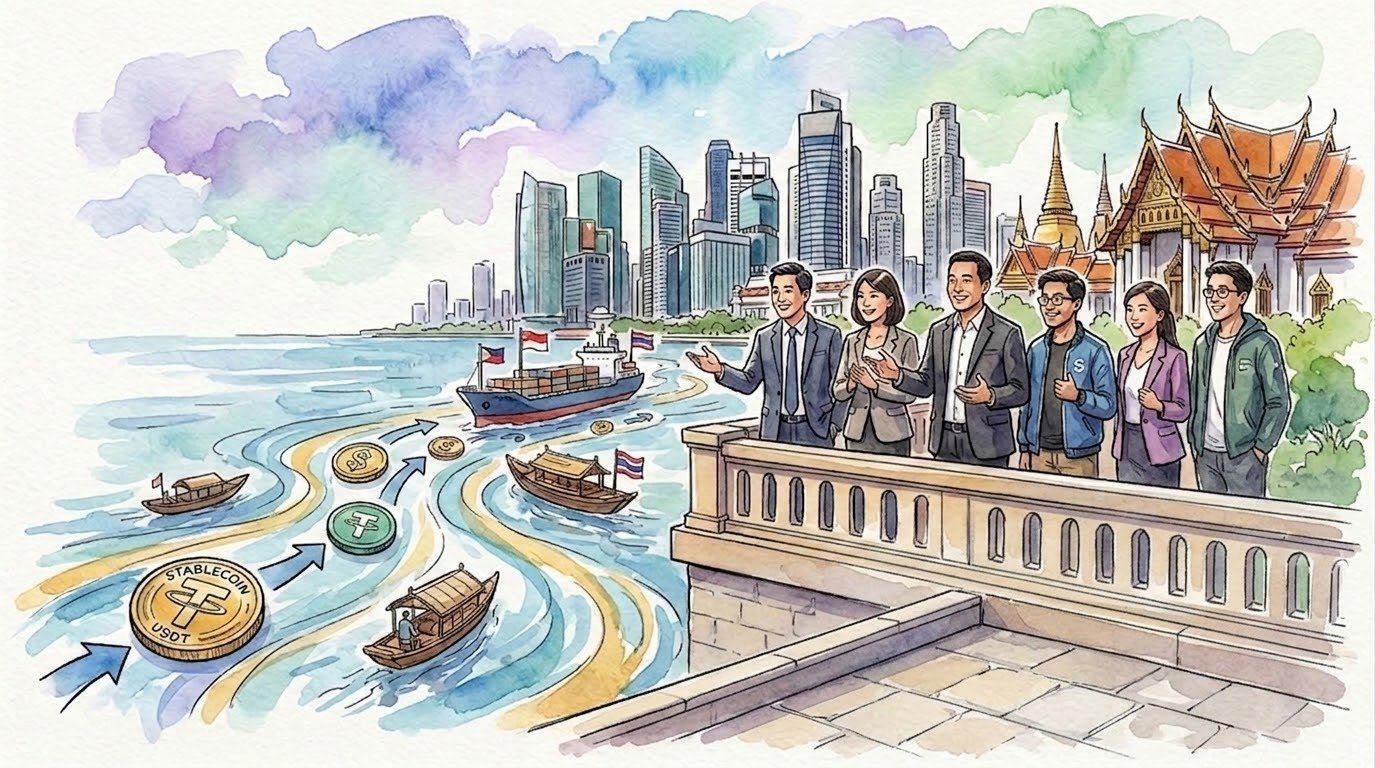
The initiative sits at the intersection of consumer payments, cross-border finance, and emerging crypto infrastructure, and it reflects a broader regional shift toward tokenized money flows.
TrueMoney, which serves tens of millions of users across Thailand and parts of Southeast Asia, has reportedly been exploring a Thai baht-pegged stablecoin model internally known in industry discussions as a digital representation of the local currency.
The goal is to allow users to convert baht into digital tokens that could be exchanged abroad for other currencies or stablecoin equivalents, reducing reliance on traditional foreign exchange channels, card networks, and ATM withdrawals.
The concept is framed as a way to simplify tourist spending, remittances, and cross-border investing.
At present, TrueMoney already operates a large-scale financial ecosystem that includes payments, transfers, savings tools, and investment-linked products, with extensive domestic adoption and cross-border remittance capabilities across dozens of countries.
Its existing overseas transfer system enables users to send money to more than forty countries via bank accounts, e-wallets, and cash pickup services, with fixed fees and real-time exchange rates.
The stablecoin concept would extend this infrastructure by removing intermediary banking layers and potentially enabling near-instant settlement across currencies.
The mechanism being discussed would rely on a baht-backed token that can be issued and redeemed within regulated channels.
In practice, a user could convert Thai baht into a digital token inside the wallet, transfer or spend it abroad where accepted, and then convert it back into local currency.
Industry framing suggests this could reduce foreign exchange spreads and lower transaction friction compared with card payments or traditional remittance rails.
However, the proposal sits in a tightly controlled regulatory environment.
Thailand does not currently recognize a central bank-issued stablecoin, and private digital assets remain subject to oversight by both the central bank and securities regulators.
Authorities have previously treated stablecoins such as USDT as quasi-cash instruments, subjecting them to increased scrutiny due to concerns over illicit capital flows and regulatory compliance.
This means any baht-pegged stablecoin issued or integrated by a major payment provider would likely require formal approval and a defined regulatory sandbox.
The stakes are significant for Thailand’s financial system.
If implemented, stablecoin-based payments could reduce dependence on correspondent banking networks for cross-border transfers and reshape how tourists and businesses move money in and out of the country.
It could also position Thailand as a regional testbed for regulated digital currency infrastructure, especially in tourism-heavy sectors and intra-ASEAN commerce.
At the same time, banks and regulators face risks related to capital controls, anti-money laundering enforcement, and tax transparency.
Digital wallets already sit at the edge of banking regulation, and introducing tokenized currency layers could complicate oversight unless tightly integrated with identity verification and transaction monitoring systems.
For consumers, the appeal is straightforward: lower fees, fewer intermediaries, and faster settlement when spending abroad or investing across borders.
For regulators and incumbent financial institutions, the challenge is ensuring that efficiency gains do not weaken financial controls or create parallel monetary systems outside traditional supervision.
TrueMoney’s exploration does not yet represent a launched product, but it signals a clear direction of travel.
Thailand’s payments market is moving toward deeper integration of digital assets into mainstream financial services, with stablecoins emerging as a potential bridge between conventional banking and blockchain-based settlement systems.
The initiative sits at the intersection of consumer payments, cross-border finance, and emerging crypto infrastructure, and it reflects a broader regional shift toward tokenized money flows.
TrueMoney, which serves tens of millions of users across Thailand and parts of Southeast Asia, has reportedly been exploring a Thai baht-pegged stablecoin model internally known in industry discussions as a digital representation of the local currency.
The goal is to allow users to convert baht into digital tokens that could be exchanged abroad for other currencies or stablecoin equivalents, reducing reliance on traditional foreign exchange channels, card networks, and ATM withdrawals.
The concept is framed as a way to simplify tourist spending, remittances, and cross-border investing.
At present, TrueMoney already operates a large-scale financial ecosystem that includes payments, transfers, savings tools, and investment-linked products, with extensive domestic adoption and cross-border remittance capabilities across dozens of countries.
Its existing overseas transfer system enables users to send money to more than forty countries via bank accounts, e-wallets, and cash pickup services, with fixed fees and real-time exchange rates.
The stablecoin concept would extend this infrastructure by removing intermediary banking layers and potentially enabling near-instant settlement across currencies.
The mechanism being discussed would rely on a baht-backed token that can be issued and redeemed within regulated channels.
In practice, a user could convert Thai baht into a digital token inside the wallet, transfer or spend it abroad where accepted, and then convert it back into local currency.
Industry framing suggests this could reduce foreign exchange spreads and lower transaction friction compared with card payments or traditional remittance rails.
However, the proposal sits in a tightly controlled regulatory environment.
Thailand does not currently recognize a central bank-issued stablecoin, and private digital assets remain subject to oversight by both the central bank and securities regulators.
Authorities have previously treated stablecoins such as USDT as quasi-cash instruments, subjecting them to increased scrutiny due to concerns over illicit capital flows and regulatory compliance.
This means any baht-pegged stablecoin issued or integrated by a major payment provider would likely require formal approval and a defined regulatory sandbox.
The stakes are significant for Thailand’s financial system.
If implemented, stablecoin-based payments could reduce dependence on correspondent banking networks for cross-border transfers and reshape how tourists and businesses move money in and out of the country.
It could also position Thailand as a regional testbed for regulated digital currency infrastructure, especially in tourism-heavy sectors and intra-ASEAN commerce.
At the same time, banks and regulators face risks related to capital controls, anti-money laundering enforcement, and tax transparency.
Digital wallets already sit at the edge of banking regulation, and introducing tokenized currency layers could complicate oversight unless tightly integrated with identity verification and transaction monitoring systems.
For consumers, the appeal is straightforward: lower fees, fewer intermediaries, and faster settlement when spending abroad or investing across borders.
For regulators and incumbent financial institutions, the challenge is ensuring that efficiency gains do not weaken financial controls or create parallel monetary systems outside traditional supervision.
TrueMoney’s exploration does not yet represent a launched product, but it signals a clear direction of travel.
Thailand’s payments market is moving toward deeper integration of digital assets into mainstream financial services, with stablecoins emerging as a potential bridge between conventional banking and blockchain-based settlement systems.