Ford Deepens Thailand Bet With $900 Million Factory Overhaul Amid Global Auto Industry Shift
The investment modernizes Ford’s Thai manufacturing base, expands pickup and SUV production, and reinforces Thailand’s role as a regional export hub during intensifying competition from Chinese electric vehicle makers
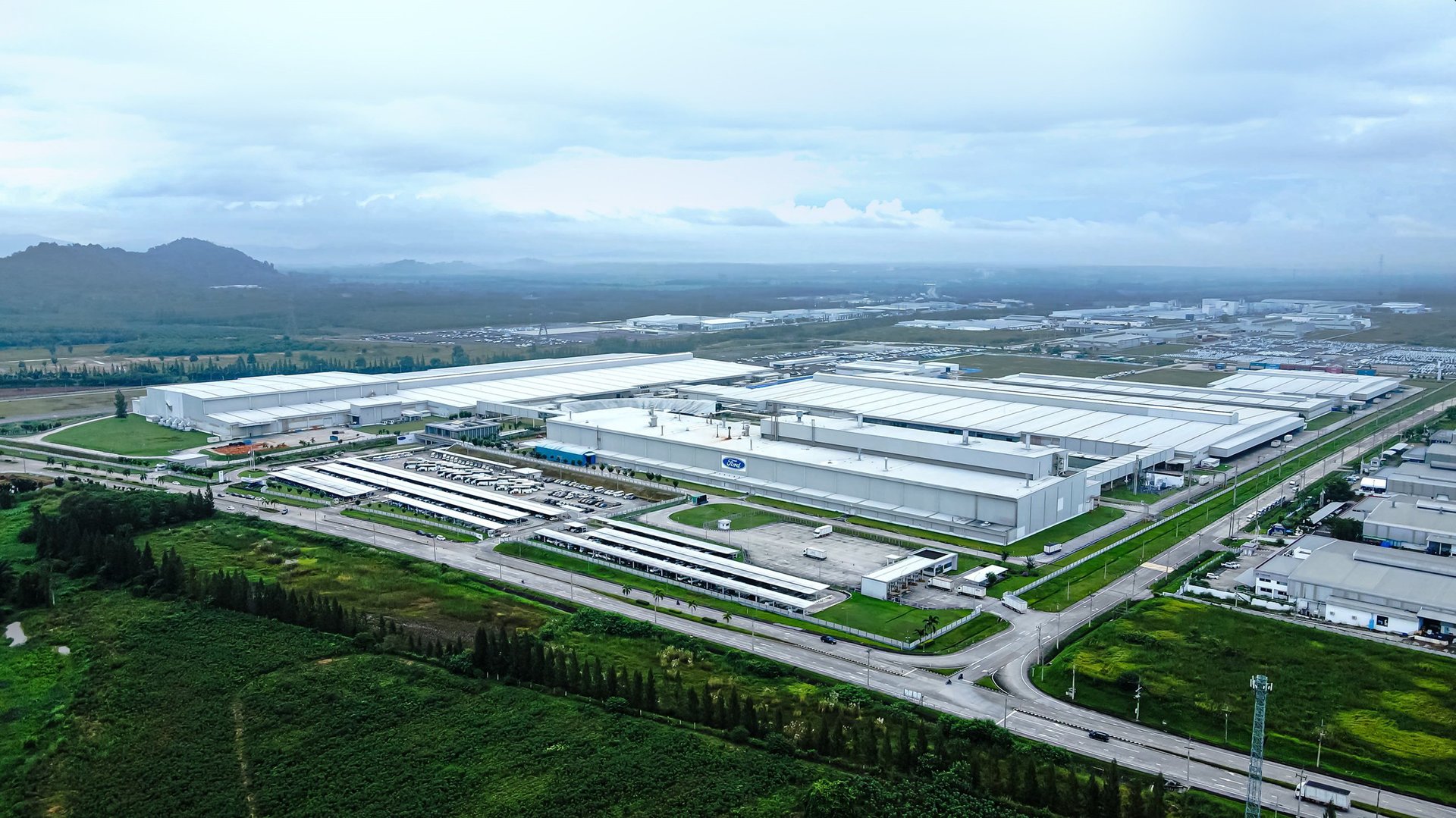
Ford Motor Company’s manufacturing strategy in Southeast Asia is driving a major industrial expansion in Thailand, where the American automaker has committed about $900 million to modernize its production facilities in Rayong province.
The investment is one of the largest recent commitments by a global carmaker in Thailand and reflects the country’s continuing importance as Asia’s leading pickup-truck manufacturing hub even as the global auto industry shifts toward electrification.
What is confirmed is that the investment targets Ford’s two main Thai production operations: the wholly owned Ford Thailand Manufacturing plant and the AutoAlliance Thailand joint venture with Mazda.
The modernization program includes new robotics, upgraded body and paint systems, digital manufacturing technology, supply-chain localization and expanded production capacity for the next-generation Ford Ranger pickup and Everest sport utility vehicle.
The core of the story is not a single factory upgrade.
It is Thailand’s struggle to maintain its position in the global automotive supply chain as Chinese electric vehicle manufacturers rapidly reshape the regional market.
Ford’s move signals that traditional combustion-engine and hybrid vehicle production remains commercially important in Southeast Asia, particularly in the profitable pickup segment where Thailand dominates regional exports.
Thailand has spent decades building itself into what industry executives often call the “Detroit of Asia.” The country combines established supplier networks, relatively advanced industrial infrastructure, export access across Southeast Asia and deep expertise in light-truck production.
Ford’s Ranger and Everest vehicles built in Thailand are exported to markets across Asia-Pacific, the Middle East and other regions.
The investment also reveals how global automakers are adapting without fully abandoning internal combustion platforms.
Rather than building a dedicated electric-vehicle mega-factory in Thailand, Ford chose to modernize existing plants to improve efficiency, flexibility and output quality.
The company added advanced automation systems and expanded production capability while retaining Thailand’s role as a large-scale export base for pickup trucks and SUVs.
Ford said the modernization program supports thousands of jobs directly and indirectly.
The company added a second production shift at Ford Thailand Manufacturing and expanded supplier investment across the domestic parts network.
Thai authorities have consistently promoted the automotive sector as a critical employer and export generator, particularly in the industrial corridor east of Bangkok.
The timing matters.
Thailand’s automotive market is undergoing one of its biggest structural transitions in decades.
Chinese electric vehicle manufacturers have rapidly expanded in the country with aggressive pricing, government incentives and large production investments.
Brands from China now compete directly with Japanese and Western manufacturers that historically dominated the Thai market.
Japanese automakers still control much of Thailand’s traditional automotive sector, but pressure is rising.
Some companies have reduced production or reassessed strategy after weaker domestic sales and stronger competition from electric vehicle imports.
Suzuki recently decided to exit Thai manufacturing entirely.
Ford, by contrast, has moved in the opposite direction by expanding its industrial footprint and even acquiring an additional factory site in Rayong for long-term regional growth.
The investment also highlights a broader industrial calculation.
Pickup trucks remain enormously profitable in Thailand, Australia and several emerging markets where electric adoption in commercial and utility vehicles is progressing more slowly than in passenger-car segments.
Ford’s Ranger has become one of the company’s most commercially important global vehicles outside North America.
For Thailand, retaining large-scale manufacturing investment from multinational companies has become increasingly important as regional competition intensifies.
Indonesia is pushing aggressively into electric vehicle production using its nickel reserves and battery ambitions, while Vietnam is building its own domestic automotive ecosystem.
Thailand is trying to balance legacy combustion-engine leadership with a transition into electric manufacturing.
The modernization program therefore serves two functions at once.
It strengthens Ford’s current truck and SUV business while preserving manufacturing flexibility for future production changes.
Advanced robotic systems, upgraded logistics integration and digitalized assembly operations allow factories to adapt faster to evolving market demand.
The economic implications extend beyond vehicle output.
Thailand’s automotive sector accounts for a significant share of industrial exports, manufacturing employment and foreign direct investment.
Large multinational commitments help stabilize supplier networks that support steel producers, electronics manufacturers, logistics operators and industrial service firms.
At the same time, the investment exposes the uneven pace of the global automotive transition.
While governments and manufacturers continue promoting electrification, demand for conventional trucks and hybrid utility vehicles remains strong across much of Southeast Asia.
Ford’s decision reflects a market reality that differs sharply from the rapid electric vehicle transition seen in parts of China and Europe.
Thailand’s government has welcomed the investment as evidence that the country remains strategically important to global manufacturers despite growing disruption in the sector.
The Rayong facilities now form part of Ford’s long-term regional production network, with expanded automation, larger export capacity and upgraded industrial systems designed to support future vehicle programs well beyond the current Ranger and Everest generation.
The investment is one of the largest recent commitments by a global carmaker in Thailand and reflects the country’s continuing importance as Asia’s leading pickup-truck manufacturing hub even as the global auto industry shifts toward electrification.
What is confirmed is that the investment targets Ford’s two main Thai production operations: the wholly owned Ford Thailand Manufacturing plant and the AutoAlliance Thailand joint venture with Mazda.
The modernization program includes new robotics, upgraded body and paint systems, digital manufacturing technology, supply-chain localization and expanded production capacity for the next-generation Ford Ranger pickup and Everest sport utility vehicle.
The core of the story is not a single factory upgrade.
It is Thailand’s struggle to maintain its position in the global automotive supply chain as Chinese electric vehicle manufacturers rapidly reshape the regional market.
Ford’s move signals that traditional combustion-engine and hybrid vehicle production remains commercially important in Southeast Asia, particularly in the profitable pickup segment where Thailand dominates regional exports.
Thailand has spent decades building itself into what industry executives often call the “Detroit of Asia.” The country combines established supplier networks, relatively advanced industrial infrastructure, export access across Southeast Asia and deep expertise in light-truck production.
Ford’s Ranger and Everest vehicles built in Thailand are exported to markets across Asia-Pacific, the Middle East and other regions.
The investment also reveals how global automakers are adapting without fully abandoning internal combustion platforms.
Rather than building a dedicated electric-vehicle mega-factory in Thailand, Ford chose to modernize existing plants to improve efficiency, flexibility and output quality.
The company added advanced automation systems and expanded production capability while retaining Thailand’s role as a large-scale export base for pickup trucks and SUVs.
Ford said the modernization program supports thousands of jobs directly and indirectly.
The company added a second production shift at Ford Thailand Manufacturing and expanded supplier investment across the domestic parts network.
Thai authorities have consistently promoted the automotive sector as a critical employer and export generator, particularly in the industrial corridor east of Bangkok.
The timing matters.
Thailand’s automotive market is undergoing one of its biggest structural transitions in decades.
Chinese electric vehicle manufacturers have rapidly expanded in the country with aggressive pricing, government incentives and large production investments.
Brands from China now compete directly with Japanese and Western manufacturers that historically dominated the Thai market.
Japanese automakers still control much of Thailand’s traditional automotive sector, but pressure is rising.
Some companies have reduced production or reassessed strategy after weaker domestic sales and stronger competition from electric vehicle imports.
Suzuki recently decided to exit Thai manufacturing entirely.
Ford, by contrast, has moved in the opposite direction by expanding its industrial footprint and even acquiring an additional factory site in Rayong for long-term regional growth.
The investment also highlights a broader industrial calculation.
Pickup trucks remain enormously profitable in Thailand, Australia and several emerging markets where electric adoption in commercial and utility vehicles is progressing more slowly than in passenger-car segments.
Ford’s Ranger has become one of the company’s most commercially important global vehicles outside North America.
For Thailand, retaining large-scale manufacturing investment from multinational companies has become increasingly important as regional competition intensifies.
Indonesia is pushing aggressively into electric vehicle production using its nickel reserves and battery ambitions, while Vietnam is building its own domestic automotive ecosystem.
Thailand is trying to balance legacy combustion-engine leadership with a transition into electric manufacturing.
The modernization program therefore serves two functions at once.
It strengthens Ford’s current truck and SUV business while preserving manufacturing flexibility for future production changes.
Advanced robotic systems, upgraded logistics integration and digitalized assembly operations allow factories to adapt faster to evolving market demand.
The economic implications extend beyond vehicle output.
Thailand’s automotive sector accounts for a significant share of industrial exports, manufacturing employment and foreign direct investment.
Large multinational commitments help stabilize supplier networks that support steel producers, electronics manufacturers, logistics operators and industrial service firms.
At the same time, the investment exposes the uneven pace of the global automotive transition.
While governments and manufacturers continue promoting electrification, demand for conventional trucks and hybrid utility vehicles remains strong across much of Southeast Asia.
Ford’s decision reflects a market reality that differs sharply from the rapid electric vehicle transition seen in parts of China and Europe.
Thailand’s government has welcomed the investment as evidence that the country remains strategically important to global manufacturers despite growing disruption in the sector.
The Rayong facilities now form part of Ford’s long-term regional production network, with expanded automation, larger export capacity and upgraded industrial systems designed to support future vehicle programs well beyond the current Ranger and Everest generation.