Thailand Expands Digital Nomad Strategy as Southeast Asia Competes for Remote Workers
Bangkok is using long-stay visas, tax incentives and lifestyle infrastructure to attract high-income foreign professionals as the country seeks new growth beyond mass tourism.
Thailand’s government is restructuring parts of its immigration and economic policy around a clear strategic calculation: remote workers and globally mobile professionals can generate long-term spending, investment and skills transfer without the infrastructure strain associated with traditional mass tourism.
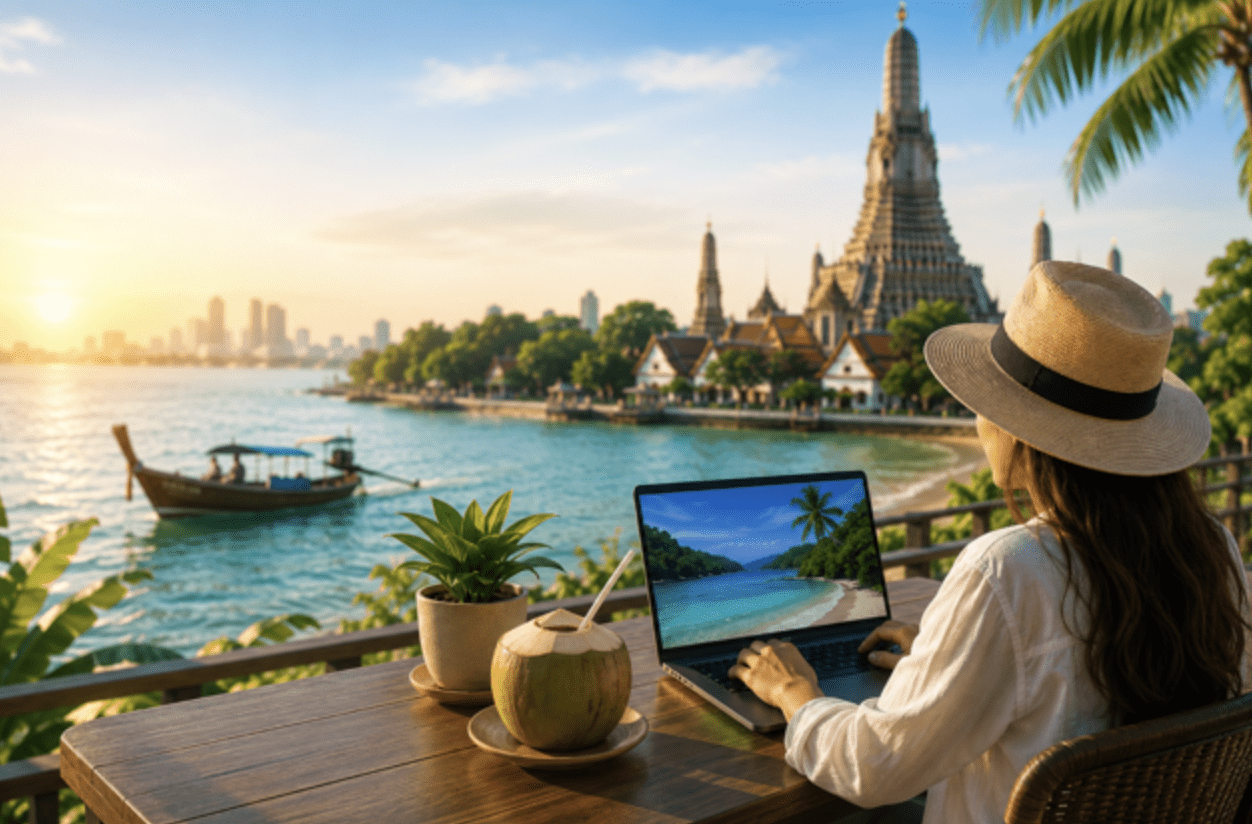
The country has accelerated efforts over the past two years to position itself as one of the world’s leading destinations for digital nomads, remote employees and location-independent entrepreneurs.
The strategy combines relaxed visa rules, lower living costs than many Western economies, strong tourism infrastructure and expanding digital services.
What is confirmed is that Thailand has broadened access to long-duration stay programs and remote-work-friendly visa categories while simplifying entry procedures for many nationalities.
Authorities have promoted the Destination Thailand Visa, introduced in 2024, as a central pillar of that effort.
The visa allows eligible foreign freelancers, remote workers and participants in cultural or training programs to stay in Thailand for extended periods with multiple-entry privileges.
The policy marks a shift from Thailand’s previous dependence on short-term tourism cycles.
Before the pandemic, the economy relied heavily on high visitor volumes, especially from China.
Covid-19 exposed the vulnerability of that model when border closures caused a severe contraction in tourism revenue.
The government’s response has been broader than simply restoring visitor numbers.
Policymakers increasingly want longer-staying foreigners who rent apartments, use local services, spend in regional economies and contribute to sectors such as technology, design, finance and education.
The strategy also reflects intensifying regional competition.
Countries across Southeast Asia are competing for the same globally mobile workforce.
Indonesia markets Bali as a remote-work hub.
Malaysia has launched digital nomad visa programs.
Vietnam is attracting startup founders and freelance technology workers through lower costs and fast-growing urban infrastructure.
Thailand’s advantage is scale and maturity.
Bangkok, Chiang Mai, Phuket and Koh Samui already possess established hospitality industries, extensive condominium markets, international schools, private hospitals and large expatriate communities.
The country also offers relatively affordable healthcare and transportation compared with many developed economies.
But the policy is not simply about lifestyle branding.
The key issue is economic restructuring.
Thailand faces slower long-term growth, an aging population, rising household debt and weakening industrial competitiveness in some sectors.
Remote workers are viewed by officials as one way to increase foreign spending while encouraging knowledge-based economic activity.
The government has linked the digital nomad push to broader ambitions around technology investment and regional innovation.
Officials want Thailand to become more attractive to startups, creative industries and international entrepreneurs who may eventually establish local companies or partnerships.
Recent investment trends support part of that narrative.
Thailand has continued attracting foreign direct investment into data centers, cloud infrastructure, electric vehicles and advanced manufacturing.
Authorities are betting that a larger foreign professional population could reinforce those sectors.
The property market is another major driver.
Condominium developers, especially in Bangkok and resort regions, increasingly market units to long-stay foreigners seeking flexible living arrangements.
Demand from remote workers has helped parts of the rental market recover after the pandemic downturn.
At the same time, the strategy carries significant tensions.
Local residents in some areas have raised concerns about rising rents, growing inequality and pressure on neighborhoods transformed by short-term foreign demand.
Similar disputes have emerged in Lisbon, Bali and Mexico City, where digital nomad inflows have fueled accusations of displacement and price inflation.
Thailand has also faced criticism over uneven enforcement of visa and work regulations.
Some foreign remote workers operate in legal gray zones involving taxation, employment status and local business activity.
Authorities have periodically tightened oversight, particularly in tourism-heavy provinces.
Tax policy remains especially sensitive.
Thailand introduced changes to overseas income taxation rules that created uncertainty among some expatriates and long-term residents.
Officials later clarified aspects of implementation, but questions about enforcement and future tax exposure continue to influence relocation decisions.
Infrastructure pressures are another challenge.
While Bangkok offers advanced urban amenities, problems involving pollution, traffic congestion and uneven public services remain substantial.
Internet reliability is generally strong in major cities, but quality varies across secondary destinations promoted to remote workers.
Political stability also shapes international perceptions.
Thailand has experienced repeated political disruptions over the past two decades, including coups, constitutional crises and court interventions.
Although the country remains highly functional operationally, some foreign professionals and investors continue to view political uncertainty as a structural risk.
Despite those concerns, demand remains strong.
Remote work patterns that expanded during the pandemic have become structurally embedded in parts of the global labor market, particularly in technology, consulting, design, media and online services.
Thailand’s appeal is strengthened by a practical reality: many remote workers earning salaries pegged to Western economies can significantly increase their purchasing power while maintaining high living standards in Bangkok or resort cities.
The country’s tourism recovery has also reinforced momentum.
International arrivals and airline capacity have continued rising, while hospitality operators increasingly blend tourism offerings with long-stay accommodation, coworking spaces and remote-work packages.
The next phase of Thailand’s strategy will depend less on marketing and more on execution.
Long-term success requires regulatory clarity, reliable digital infrastructure, stable visa administration and urban planning capable of managing population shifts without triggering local backlash.
For now, Thailand has moved decisively beyond treating digital nomads as a niche travel trend.
The government is positioning remote workers as part of a broader economic transition aimed at attracting higher-value foreign participation in the country’s post-pandemic economy.
The country has accelerated efforts over the past two years to position itself as one of the world’s leading destinations for digital nomads, remote employees and location-independent entrepreneurs.
The strategy combines relaxed visa rules, lower living costs than many Western economies, strong tourism infrastructure and expanding digital services.
What is confirmed is that Thailand has broadened access to long-duration stay programs and remote-work-friendly visa categories while simplifying entry procedures for many nationalities.
Authorities have promoted the Destination Thailand Visa, introduced in 2024, as a central pillar of that effort.
The visa allows eligible foreign freelancers, remote workers and participants in cultural or training programs to stay in Thailand for extended periods with multiple-entry privileges.
The policy marks a shift from Thailand’s previous dependence on short-term tourism cycles.
Before the pandemic, the economy relied heavily on high visitor volumes, especially from China.
Covid-19 exposed the vulnerability of that model when border closures caused a severe contraction in tourism revenue.
The government’s response has been broader than simply restoring visitor numbers.
Policymakers increasingly want longer-staying foreigners who rent apartments, use local services, spend in regional economies and contribute to sectors such as technology, design, finance and education.
The strategy also reflects intensifying regional competition.
Countries across Southeast Asia are competing for the same globally mobile workforce.
Indonesia markets Bali as a remote-work hub.
Malaysia has launched digital nomad visa programs.
Vietnam is attracting startup founders and freelance technology workers through lower costs and fast-growing urban infrastructure.
Thailand’s advantage is scale and maturity.
Bangkok, Chiang Mai, Phuket and Koh Samui already possess established hospitality industries, extensive condominium markets, international schools, private hospitals and large expatriate communities.
The country also offers relatively affordable healthcare and transportation compared with many developed economies.
But the policy is not simply about lifestyle branding.
The key issue is economic restructuring.
Thailand faces slower long-term growth, an aging population, rising household debt and weakening industrial competitiveness in some sectors.
Remote workers are viewed by officials as one way to increase foreign spending while encouraging knowledge-based economic activity.
The government has linked the digital nomad push to broader ambitions around technology investment and regional innovation.
Officials want Thailand to become more attractive to startups, creative industries and international entrepreneurs who may eventually establish local companies or partnerships.
Recent investment trends support part of that narrative.
Thailand has continued attracting foreign direct investment into data centers, cloud infrastructure, electric vehicles and advanced manufacturing.
Authorities are betting that a larger foreign professional population could reinforce those sectors.
The property market is another major driver.
Condominium developers, especially in Bangkok and resort regions, increasingly market units to long-stay foreigners seeking flexible living arrangements.
Demand from remote workers has helped parts of the rental market recover after the pandemic downturn.
At the same time, the strategy carries significant tensions.
Local residents in some areas have raised concerns about rising rents, growing inequality and pressure on neighborhoods transformed by short-term foreign demand.
Similar disputes have emerged in Lisbon, Bali and Mexico City, where digital nomad inflows have fueled accusations of displacement and price inflation.
Thailand has also faced criticism over uneven enforcement of visa and work regulations.
Some foreign remote workers operate in legal gray zones involving taxation, employment status and local business activity.
Authorities have periodically tightened oversight, particularly in tourism-heavy provinces.
Tax policy remains especially sensitive.
Thailand introduced changes to overseas income taxation rules that created uncertainty among some expatriates and long-term residents.
Officials later clarified aspects of implementation, but questions about enforcement and future tax exposure continue to influence relocation decisions.
Infrastructure pressures are another challenge.
While Bangkok offers advanced urban amenities, problems involving pollution, traffic congestion and uneven public services remain substantial.
Internet reliability is generally strong in major cities, but quality varies across secondary destinations promoted to remote workers.
Political stability also shapes international perceptions.
Thailand has experienced repeated political disruptions over the past two decades, including coups, constitutional crises and court interventions.
Although the country remains highly functional operationally, some foreign professionals and investors continue to view political uncertainty as a structural risk.
Despite those concerns, demand remains strong.
Remote work patterns that expanded during the pandemic have become structurally embedded in parts of the global labor market, particularly in technology, consulting, design, media and online services.
Thailand’s appeal is strengthened by a practical reality: many remote workers earning salaries pegged to Western economies can significantly increase their purchasing power while maintaining high living standards in Bangkok or resort cities.
The country’s tourism recovery has also reinforced momentum.
International arrivals and airline capacity have continued rising, while hospitality operators increasingly blend tourism offerings with long-stay accommodation, coworking spaces and remote-work packages.
The next phase of Thailand’s strategy will depend less on marketing and more on execution.
Long-term success requires regulatory clarity, reliable digital infrastructure, stable visa administration and urban planning capable of managing population shifts without triggering local backlash.
For now, Thailand has moved decisively beyond treating digital nomads as a niche travel trend.
The government is positioning remote workers as part of a broader economic transition aimed at attracting higher-value foreign participation in the country’s post-pandemic economy.