Miss Teen Cambodia’s Speech Sparks Diplomatic Tension with Thailand
Beauty pageant winner’s remarks demanding return of soldiers fuel online backlash amid Thai-Cambodia border dispute.
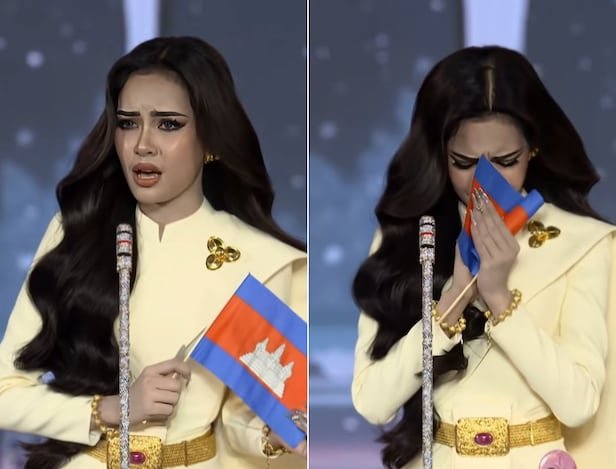
During a speech following her victory at the Miss Teen Cambodia 2025 pageant, Chouri Laorhours called on Thailand to return eighteen Cambodian soldiers and accused Thailand of ‘‘starting the war’’ that ended decades of peace between the two neighbouring countries.
She held the Cambodian flag while speaking and asserted that ‘‘We are not enemies.
We are neighbours.
We deserve a future without hatred and war.’’
The video of her remarks was posted on the pageant’s social-media account on 17 November and quickly went viral.
Cambodian netizens praised the speech as a patriotic stand, while many Thai users contested the appropriateness of political commentary at a beauty contest and accused Laorhours of stoking anti-Thailand sentiment during a diplomatically sensitive period.
The incident comes amid recent border skirmishes between Thailand and Cambodia in July, which resulted in at least forty-eight fatalities over five days and which drew mediation from the United States to halt escalation.
Thailand’s Ministry of Foreign Affairs has publicly challenged Cambodia over ‘‘war propaganda’’ and stated that Phnom Penh’s narrative is undermining the peace process.
Amid that backdrop, the pageant remarks have been seized upon as emblematic of how national-level disputes are playing out on social and cultural platforms.
Analysts note that while the contestant appealed to Cambodian national sentiment, the risk is that such public appearances may complicate bilateral efforts to manage the border situation and rebuild trust.
The pageant organisation has not issued a formal statement clarifying whether the speech was prepared or spontaneous.
Observers suggest that even as it galvanised support inside Cambodia, the remarks highlight how soft-power venues like pageants are increasingly entangled with geopolitical tensions in Southeast Asia.
As the digital backlash unfolds on both sides, Thailand and Cambodia face a renewed imperative to manage not only physical border risks but also narrative competition in the online space—where a beauty-pageant stage has become a proxy for national identity and diplomacy.
She held the Cambodian flag while speaking and asserted that ‘‘We are not enemies.
We are neighbours.
We deserve a future without hatred and war.’’
The video of her remarks was posted on the pageant’s social-media account on 17 November and quickly went viral.
Cambodian netizens praised the speech as a patriotic stand, while many Thai users contested the appropriateness of political commentary at a beauty contest and accused Laorhours of stoking anti-Thailand sentiment during a diplomatically sensitive period.
The incident comes amid recent border skirmishes between Thailand and Cambodia in July, which resulted in at least forty-eight fatalities over five days and which drew mediation from the United States to halt escalation.
Thailand’s Ministry of Foreign Affairs has publicly challenged Cambodia over ‘‘war propaganda’’ and stated that Phnom Penh’s narrative is undermining the peace process.
Amid that backdrop, the pageant remarks have been seized upon as emblematic of how national-level disputes are playing out on social and cultural platforms.
Analysts note that while the contestant appealed to Cambodian national sentiment, the risk is that such public appearances may complicate bilateral efforts to manage the border situation and rebuild trust.
The pageant organisation has not issued a formal statement clarifying whether the speech was prepared or spontaneous.
Observers suggest that even as it galvanised support inside Cambodia, the remarks highlight how soft-power venues like pageants are increasingly entangled with geopolitical tensions in Southeast Asia.
As the digital backlash unfolds on both sides, Thailand and Cambodia face a renewed imperative to manage not only physical border risks but also narrative competition in the online space—where a beauty-pageant stage has become a proxy for national identity and diplomacy.