
Nissan to Close Thai Factory Following Failed Merger Talks with Honda
The automaker plans to cut about one thousand jobs and reduce global production capacity amid major restructuring.
Japanese automaker Nissan has announced the closure of one of its two automobile factories in Thailand following the collapse of merger talks with Honda on Thursday.
The decision is part of a broader cost management strategy after a planned partnership deal worth US sixty billion dollars fell through.
Nissan stated that the move will lead to the reduction or transfer of approximately one thousand jobs in Thailand, where both of its factories are located within a single facility in Samut Prakan province.
The company aims to reduce operating costs by roughly four hundred billion yen in the fiscal year ending two thousand twenty-six in order to secure a stable operating profit margin of four percent.
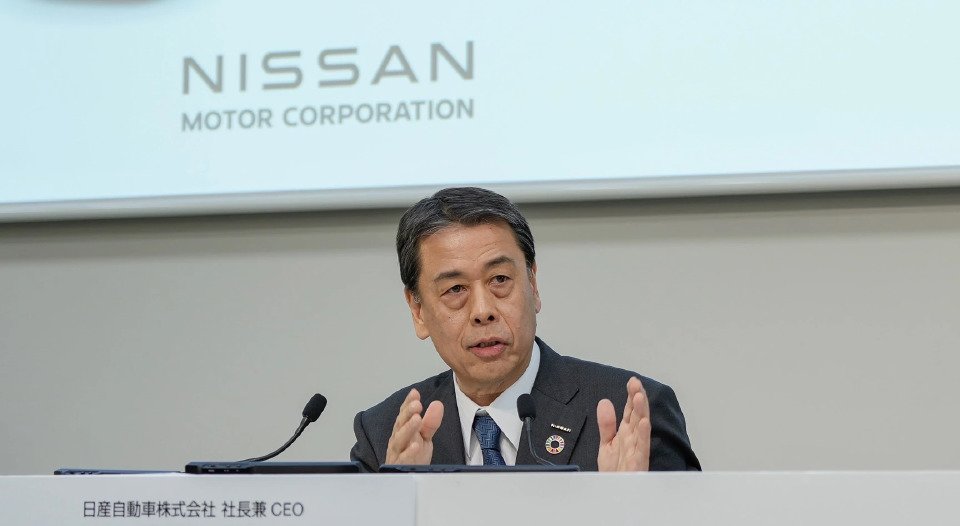
Nissan CEO Makoto Uchida explained that the restructuring, which includes factory closures and workforce reductions, is designed to boost efficiency, drive revenue growth, and improve competitiveness.
This action is part of a global plan to cut Nissan’s workforce by six thousand five hundred jobs out of a planned total of nine thousand redundancies, with further reductions among two thousand five hundred indirect employees.
The restructuring will also reduce Nissan’s global production capacity by twenty percent, from five million units to four million units by fiscal year two thousand twenty-six, while aiming to increase the plant utilization ratio from seventy percent to eighty-five percent in facilities outside China.
Additionally, Nissan plans to simplify its vehicle design to reduce manufacturing costs and parts complexity by up to seventy percent.
The automaker is set to launch new plug-in hybrid models in two thousand twenty-five and two thousand twenty-six, refresh its mini vehicles and large minivans, and expand its zero-emission electric vehicle lineup with a new Leaf compact electric vehicle and an energy-efficient model for the Chinese market.
Nissan reported a significant downturn in its financial performance, with operating profit dropping to thirty-one point one billion yen in the fiscal third quarter ending December thirty-first, down from one hundred forty-one point six billion yen a year earlier, alongside a net loss amid challenges such as bloated inventory, declining sales, and ongoing cash burn.
The decision is part of a broader cost management strategy after a planned partnership deal worth US sixty billion dollars fell through.
Nissan stated that the move will lead to the reduction or transfer of approximately one thousand jobs in Thailand, where both of its factories are located within a single facility in Samut Prakan province.
The company aims to reduce operating costs by roughly four hundred billion yen in the fiscal year ending two thousand twenty-six in order to secure a stable operating profit margin of four percent.
Nissan CEO Makoto Uchida explained that the restructuring, which includes factory closures and workforce reductions, is designed to boost efficiency, drive revenue growth, and improve competitiveness.
This action is part of a global plan to cut Nissan’s workforce by six thousand five hundred jobs out of a planned total of nine thousand redundancies, with further reductions among two thousand five hundred indirect employees.
The restructuring will also reduce Nissan’s global production capacity by twenty percent, from five million units to four million units by fiscal year two thousand twenty-six, while aiming to increase the plant utilization ratio from seventy percent to eighty-five percent in facilities outside China.
Additionally, Nissan plans to simplify its vehicle design to reduce manufacturing costs and parts complexity by up to seventy percent.
The automaker is set to launch new plug-in hybrid models in two thousand twenty-five and two thousand twenty-six, refresh its mini vehicles and large minivans, and expand its zero-emission electric vehicle lineup with a new Leaf compact electric vehicle and an energy-efficient model for the Chinese market.
Nissan reported a significant downturn in its financial performance, with operating profit dropping to thirty-one point one billion yen in the fiscal third quarter ending December thirty-first, down from one hundred forty-one point six billion yen a year earlier, alongside a net loss amid challenges such as bloated inventory, declining sales, and ongoing cash burn.