No Evidence of ‘Airport Flooding’ Surge at Narita Linked to Regional Nations
Claims of a massive spring departure wave involving South Korea, Taiwan, the US, Hong Kong, and Thailand are not supported by verified aviation data or airport reporting
An ACTOR-DRIVEN claim circulating around Narita International Airport suggests that coordinated travel surges from South Korea, Taiwan, the United States, Hong Kong, and Thailand are “flooding” the airport this spring, allegedly producing peak-day departures approaching 56,900 flights.
Verified aviation data and airport operational records do not support this characterization, and no credible evidence indicates a coordinated or exceptional multi-country surge of that magnitude.
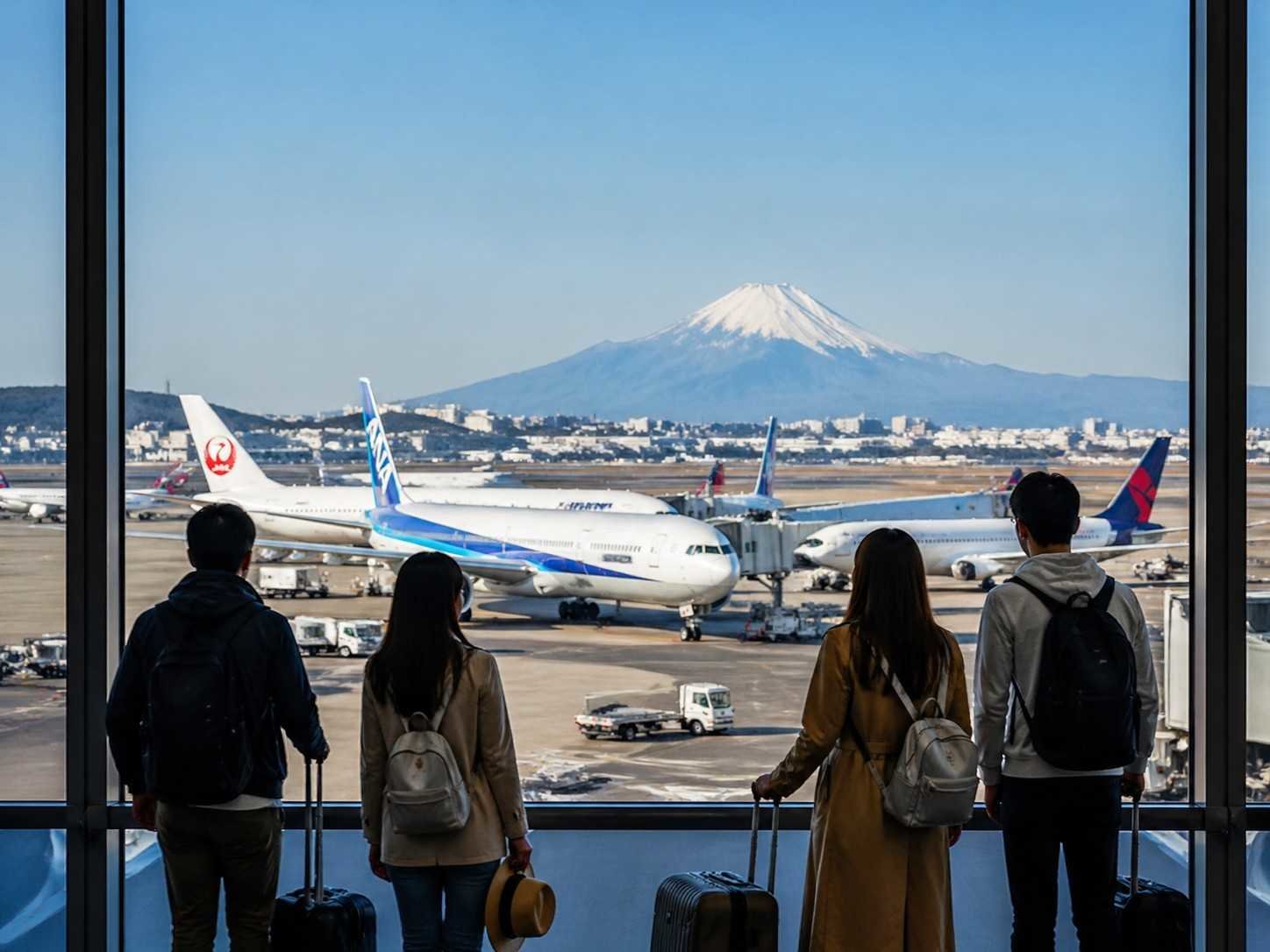
What is confirmed is that Narita International Airport in Japan operates as one of the country’s main international hubs, handling a wide mix of carriers including Japan Airlines, All Nippon Airways, Delta Air Lines, China Airlines, Korean Air, Cathay Pacific, and numerous low-cost and regional airlines.
The airport routinely processes high volumes of international departures and arrivals across East Asia, North America, and Europe, with traffic levels varying seasonally and by global travel demand patterns.
However, available operational data does not indicate any abnormal spring 2026 spike consistent with claims of tens of thousands of daily departures or a sudden multi-country coordinated surge.
Standard departure schedules show routine fluctuations typical of a major global hub, with hundreds of daily flights rather than tens of thousands of departures concentrated into a single peak day.
This aligns with established airport capacity constraints and historical traffic ranges for Narita, which handles large but structurally bounded volumes of international air traffic.
The alleged figure of 56,900 peak-day departures is not consistent with how commercial aviation systems operate.
Even major global airports do not process anything near that number of daily departures due to runway capacity limits, air traffic control constraints, and aircraft turnaround cycles.
Such a figure would exceed realistic operational capacity by a wide margin and would require systemic changes to global aviation infrastructure that have not occurred.
What is more consistent with verified patterns is seasonal travel variation driven by holidays, school breaks, and business cycles.
East Asian carriers, particularly those connecting Japan with South Korea, Taiwan, Hong Kong, and Southeast Asia, typically adjust capacity in response to demand peaks.
These adjustments can create busy periods at immigration halls and check-in counters, but they remain within normal operational ranges rather than indicating extraordinary structural surges.
Narita’s traffic profile is also shaped by broader post-pandemic recovery trends, where international travel has rebounded unevenly across regions.
While East Asia has seen strong recovery in outbound tourism, demand remains distributed across multiple airports in Tokyo’s system, including Haneda, which often absorbs significant international and domestic overflow traffic.
This reduces the likelihood of extreme congestion concentrated solely at Narita.
The mechanism behind the viral narrative appears to be aggregation of routine airline schedule data and seasonal travel commentary, reframed into a single exaggerated peak scenario.
In practice, airline networks such as Japan Airlines, ANA, Delta, and China Airlines operate independently scheduled services rather than coordinated surges tied to specific national groupings.
The consequence of such claims, when unverified, is distortion of public understanding of airport capacity and travel demand.
It can misrepresent how international aviation actually functions—through distributed scheduling, regulated airspace management, and incremental demand shifts rather than sudden multi-country flooding events.
The verified operational reality remains unchanged: Narita continues to function as a high-capacity but structurally constrained international airport handling routine seasonal fluctuations, with no evidence of an unprecedented spring surge or coordinated multinational departure wave.
Verified aviation data and airport operational records do not support this characterization, and no credible evidence indicates a coordinated or exceptional multi-country surge of that magnitude.
What is confirmed is that Narita International Airport in Japan operates as one of the country’s main international hubs, handling a wide mix of carriers including Japan Airlines, All Nippon Airways, Delta Air Lines, China Airlines, Korean Air, Cathay Pacific, and numerous low-cost and regional airlines.
The airport routinely processes high volumes of international departures and arrivals across East Asia, North America, and Europe, with traffic levels varying seasonally and by global travel demand patterns.
However, available operational data does not indicate any abnormal spring 2026 spike consistent with claims of tens of thousands of daily departures or a sudden multi-country coordinated surge.
Standard departure schedules show routine fluctuations typical of a major global hub, with hundreds of daily flights rather than tens of thousands of departures concentrated into a single peak day.
This aligns with established airport capacity constraints and historical traffic ranges for Narita, which handles large but structurally bounded volumes of international air traffic.
The alleged figure of 56,900 peak-day departures is not consistent with how commercial aviation systems operate.
Even major global airports do not process anything near that number of daily departures due to runway capacity limits, air traffic control constraints, and aircraft turnaround cycles.
Such a figure would exceed realistic operational capacity by a wide margin and would require systemic changes to global aviation infrastructure that have not occurred.
What is more consistent with verified patterns is seasonal travel variation driven by holidays, school breaks, and business cycles.
East Asian carriers, particularly those connecting Japan with South Korea, Taiwan, Hong Kong, and Southeast Asia, typically adjust capacity in response to demand peaks.
These adjustments can create busy periods at immigration halls and check-in counters, but they remain within normal operational ranges rather than indicating extraordinary structural surges.
Narita’s traffic profile is also shaped by broader post-pandemic recovery trends, where international travel has rebounded unevenly across regions.
While East Asia has seen strong recovery in outbound tourism, demand remains distributed across multiple airports in Tokyo’s system, including Haneda, which often absorbs significant international and domestic overflow traffic.
This reduces the likelihood of extreme congestion concentrated solely at Narita.
The mechanism behind the viral narrative appears to be aggregation of routine airline schedule data and seasonal travel commentary, reframed into a single exaggerated peak scenario.
In practice, airline networks such as Japan Airlines, ANA, Delta, and China Airlines operate independently scheduled services rather than coordinated surges tied to specific national groupings.
The consequence of such claims, when unverified, is distortion of public understanding of airport capacity and travel demand.
It can misrepresent how international aviation actually functions—through distributed scheduling, regulated airspace management, and incremental demand shifts rather than sudden multi-country flooding events.
The verified operational reality remains unchanged: Narita continues to function as a high-capacity but structurally constrained international airport handling routine seasonal fluctuations, with no evidence of an unprecedented spring surge or coordinated multinational departure wave.